A fresh diplomatic row has erupted between Iran and the United States after former President Donald Trump’s incendiary remark that he would formally claim the strategically critical Strait of Hormuz as American territory, drawing a sharp, uncompromising pushback from Iranian officials Saturday.
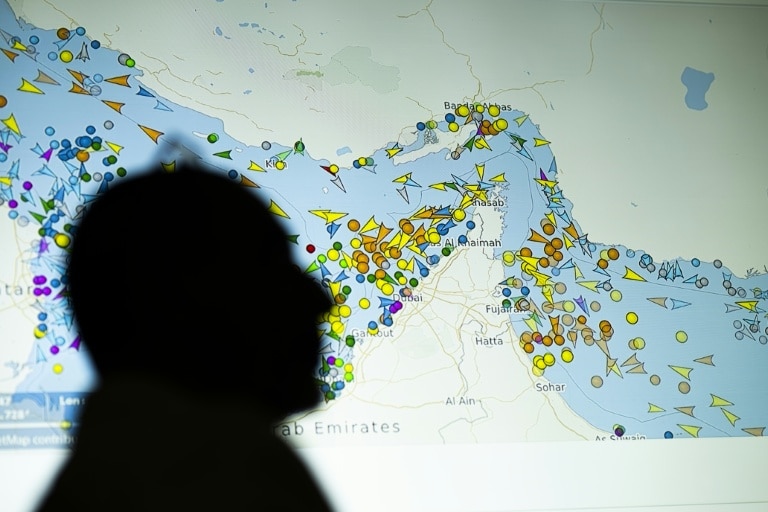
The dispute comes against a backdrop of months of open conflict between the two long-standing adversaries, after Tehran effectively closed the key energy chokepoint at the outbreak of a broader Middle East war in late February. Trump has repeatedly asserted the strait is under U.S. control, a claim that the Islamic Republic has flatly rejected from the start.
In a public post on X, Iranian Deputy Foreign Minister Kazem Gharibabadi made Tehran’s position unambiguous: “The Strait of Hormuz has been Iranian, is Iranian, and will remain Iranian. This strait will only be closed and opened under Iran’s command.”
Gharibabadi’s remarks came in direct response to comments Trump made Friday during a political rally in New York state, where he told supporters, “after the US defeats Iran, pretty soon I’ll be declaring the Hormuz Strait a territory of the United States,” adding, “It’s true” to confirm the statement. The Wall Street Journal later reported that an anonymous senior White House official walked back the comment, clarifying Trump had been speaking in jest.
Weeks prior to this exchange, a top Iranian official outlined a detailed set of non-negotiable conditions for reopening the strait to global commercial traffic. Among these demands are an immediate end to “war and aggression against Iran and its allies in Lebanon, Palestine, Yemen, and Iraq”, the removal of sweeping, economy-crippling U.S. sanctions, the unfreezing of billions of dollars in Iranian assets held abroad, and full compensation for damage Iran has sustained during the ongoing conflict.
With diplomatic negotiations between the two sides deadlocked, attacks on commercial shipping transiting the strait have continued, sustaining persistent risks to global energy supplies. On Saturday, the United Arab Emirates’ state-owned energy giant ADNOC confirmed that one of its commercial vessels had come under attack the previous night. This incident follows a Friday accusation from the UAE that Iran was responsible for separate attacks on two other ADNOC-linked vessels passing through the waterway.
These targeted attacks have already had tangible geopolitical consequences: they triggered the full collapse of a temporary ceasefire between the U.S. and Iran that had been agreed to in April. The rising tensions have also expanded beyond the Persian Gulf: as Iran restricts traffic through Hormuz, its allied Houthi movement in Yemen has imposed a parallel maritime blockade on Saudi ports in the Red Sea, the only alternative major maritime export route for the world’s top oil exporter.
A tentative framework deal reached between Washington and Tehran back in June, which was intended to lay groundwork for long-term negotiations over the strait’s status, stipulated that Iran and Oman would work out future operating arrangements for the waterway in consultation with other Gulf states and in alignment with established international law. Just last week, Tehran signaled it had reached a tentative agreement with Oman to establish a supervised transit route for commercial ships, with details for a joint management framework for the strait currently in finalization.
Before the current conflict, the Strait of Hormuz carried roughly one-fifth of the world’s total oil and liquefied natural gas exports. Since the dispute over the waterway began, global energy prices have spiked repeatedly, creating mounting economic and political pressure on the Trump administration ahead of November’s midterm elections. Higher energy prices have directly impacted American consumers, creating a major political liability for the president.
Earlier this week, U.S. Vice President JD Vance publicly acknowledged the administration’s priorities, stating that Washington’s top goal in the ongoing conflict with Iran is keeping energy prices low for American households, with preventing Tehran from acquiring a nuclear weapon ranking as a secondary objective. Iran has made clear it seeks full control over the strait, including the authority to charge transit tolls—powers it did not exercise before the war, and a shift the U.S. has pledged to vigorously oppose.
In response to Iran’s closure of Hormuz, the U.S. has implemented its own retaliatory blockade of Iranian ports, designed to pressure Tehran by crippling its already fragile economy. Speaking to his cheering supporters at Friday’s rally, Trump defended the measure, saying, “We have the blockade. No ships get through unless we want them to.”