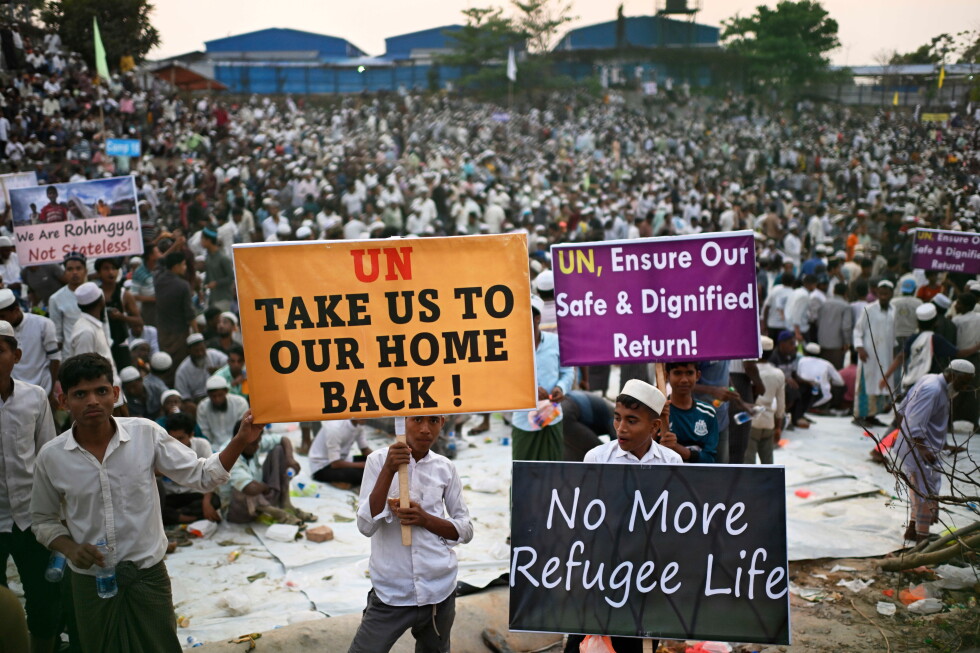
Eight years on from the 2017 violence that pushed hundreds of thousands of Rohingya across Myanmar’s border into Bangladesh, the junta-backed government in Naypyidaw has publicly announced it is prepared to accept the return of more than 300,000 Rohingya refugees once regional security conditions stabilize. The confirmation, released in an official statement from Myanmar’s Ministry of Foreign Affairs over the weekend, marks the first formal update to the long-stalled repatriation process in years, even as ongoing armed conflict across Rakhine State leaves any large-scale return unlikely in the near term.
The roots of the current Rohingya refugee crisis stretch back decades, but the most catastrophic displacement began in August 2017. Following coordinated attacks on military outposts by a Rohingya insurgent faction, Myanmar’s military launched a large-scale counterinsurgency crackdown across northern Rakhine State. The brutal, coordinated operation forced more than 700,000 Rohingya to flee their homes for neighboring Bangladesh, where they joined an estimated 200,000 other Rohingya who had been displaced by earlier waves of state-led violence dating back to the 1970s. The operation’s scale and brutality drew global condemnation, with the United Nations and multiple world governments accusing Myanmar’s military of carrying out ethnic cleansing and genocide against the Rohingya population.
Successive Myanmar governments have long refused to grant the Rohingya official status as one of the country’s 135 recognized ethnic minorities, instead labeling them as illegal immigrants from Bangladesh and referring to them exclusively as “Bengalis.” Under the current repatriation verification process, the statement explains that authorities have cross-checked 426,545 of the 828,824 names on the refugee roster provided by the Bangladeshi government as of the end of July. Of those screened, 308,797 have been confirmed as former residents of Rakhine State who are eligible for return. An additional 113,507 applicants could not be verified through Myanmar’s existing records, while 4,241 screened people were flagged for alleged links to what the ministry called “terrorist activities.”
The foreign ministry’s statement reaffirmed that the government will continue bilateral coordination with Bangladesh to facilitate the safe return of all verified former Rohingya residents, but only once security across Rakhine State improves. The statement also pushed back on widespread accounts that more than 1 million Rohingya have been displaced from Rakhine since 2017, claiming that just over 540,000 people crossed into Bangladesh following the 2017 violence, with roughly 200,000 Rohingya remaining in northern Rakhine State.
Plans for organized repatriation first took shape in 2018, when Myanmar and Bangladesh signed an agreement to launch a two-year structured return process. But those plans collapsed entirely after the 2021 military coup that ousted the elected civilian government led by Aung San Suu Kyi. The coup triggered widespread armed resistance across the country, and security in Rakhine State has deteriorated sharply since 2023, when renewed clashes broke out between the military and the ethnic Arakan Army, which has seized control of most of Rakhine’s territory over the past three years. The latest round of fighting has forced thousands more Rohingya to flee Rakhine for Bangladesh and other neighboring regions in search of safety.
For the hundreds of thousands of refugees still trapped in overcrowded Bangladeshi camps, conditions have grown increasingly desperate in recent years. Cuts to international aid, persistent overcrowding, lack of access to livelihoods and healthcare, and the complete absence of a safe path to return have pushed growing numbers of refugees to attempt dangerous unauthorized sea crossings to Malaysia and Indonesia on overcrowded, unseaworthy boats.
Earlier this year, Malaysian Prime Minister Anwar Ibrahim announced that Myanmar had agreed to repatriate 5,000 Rohingya currently residing in Malaysia as part of a regional repatriation initiative. But a senior official from Myanmar’s foreign ministry later clarified to the Associated Press that the plan only applied to verified Myanmar nationals being held in Malaysian immigration detention centers, and rejected claims that the government would accept the return of Rohingya refugees outside that narrow framework.