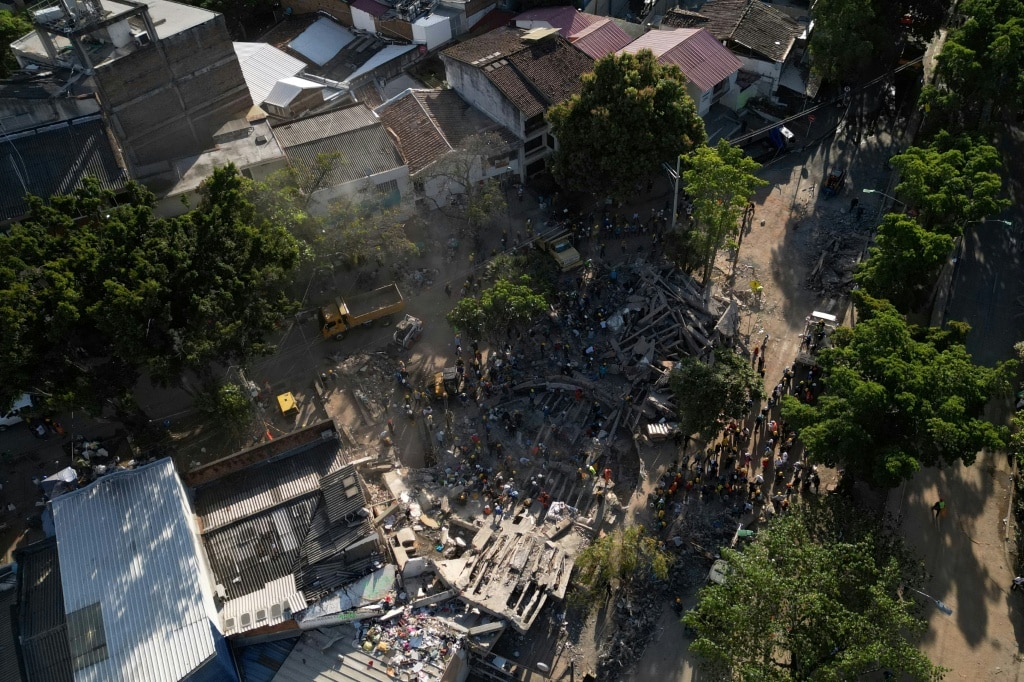
Four days after a devastating 7.4-magnitude earthquake ripped through western Colombia, the likelihood of pulling trapped survivors from the rubble has fallen sharply—but rescue teams and desperate family members are refusing to abandon hope, pressing forward with search efforts as hundreds of people remain unaccounted for.
The disaster, the most powerful to strike the South American nation in the 21st century, left a trail of widespread destruction across its major coffee-growing heartland and Pacific coastline, flattening nearly 13,000 homes and damaging critical infrastructure in the western urban centers of Cali and Pereira. As of Thursday, official government data puts the confirmed death toll at 287, with thousands more injured and 379 people still missing, according to newly inaugurated President Abelardo de la Espriella.
For families of the missing, every passing minute brings mounting agony, but faith and determination hold fast. Hernan Giraldo, a 43-year-old father, has spent days digging through the wreckage of a collapsed hotel where his 24-year-old son Juan Felipe Giraldo was trapped. The young man was scheduled to marry this Sunday, and Giraldo says his only priority is bringing his son out alive. “If he comes out alive, the wedding will take place afterwards,” Giraldo told Agence France-Presse. “What matters is that he’s alive.”
The quake has created cascading crises across affected regions, stretching local and national resources to breaking point. In Cali, Colombia’s third-largest city which has recorded the highest number of fatalities, the main morgue was damaged in the tremor, forcing authorities to transport remains to the nearby city of Palmira. Dozens of grieving relatives have gathered there, waiting to identify and recover their loved ones for burial. On the remote, impoverished Pacific coast of the Choco region, many isolated communities remain cut off from authorities, leaving the full extent of damage and loss of life still unknown. In hard-hit areas, the distinct stench of decaying bodies has begun to hang in the air, a grim reminder of the disaster’s toll.
For de la Espriella, the disaster marks a brutal first week in office. The newly sworn-in president has already declared an economic emergency to free up resources for response efforts, visited impacted communities, and promised rent subsidies for thousands of people left homeless by the quake. As of Friday, international support is beginning to flow in: the World Bank announced it would disburse $200 million in emergency disaster response funding, alongside a framework to assess full economic losses that will help government and aid groups prioritize reconstruction and aid distribution.
David Tamayo, head of Colombia’s national disaster relief agency, acknowledged the shrinking odds of finding survivors, but stressed that search operations would not end until every missing person is accounted for. “The likelihood of finding survivors is going to diminish” after the first 72-hour critical window, Tamayo said in an official video statement. “But our commitment is to never stop searching… The order is to not rest until we find all the missing persons.”
Across the country, ordinary Colombians have mobilized in massive grassroots efforts to support displaced and bereaved families. Outside the earthquake zone, hundreds of volunteers gathered at the parking lot adjacent to Bogota’s largest stadium, forming human chains to sort through stacks of donated goods—bottled water, non-perishable food, hygiene supplies, and bedding—preparing them for shipment to impacted areas. The crowd often broke out in cheers and applause to boost one another’s morale, as volunteers worked tirelessly to move supplies. Luz Mary Gonzalez, a local teacher who joined the effort, wrote notes of solidarity to tuck into donation boxes, saying, “We are happy to do our small part. Our hearts are with them… They can count on us.”
The response effort has not been without controversy. De la Espriella’s hard-right administration is facing accusations that it blocked rescue teams from countries led by leftist governments, a claim the administration denies. Colombian disaster authorities have confirmed that the country has accepted aid offers from four nations with right-leaning governments: the United States, El Salvador, Ecuador, and Israel. Mexico’s leftist President Claudia Sheinbaum confirmed Thursday that Colombian officials denied entry to a Mexican rescue team, citing an alleged lack of required certification.