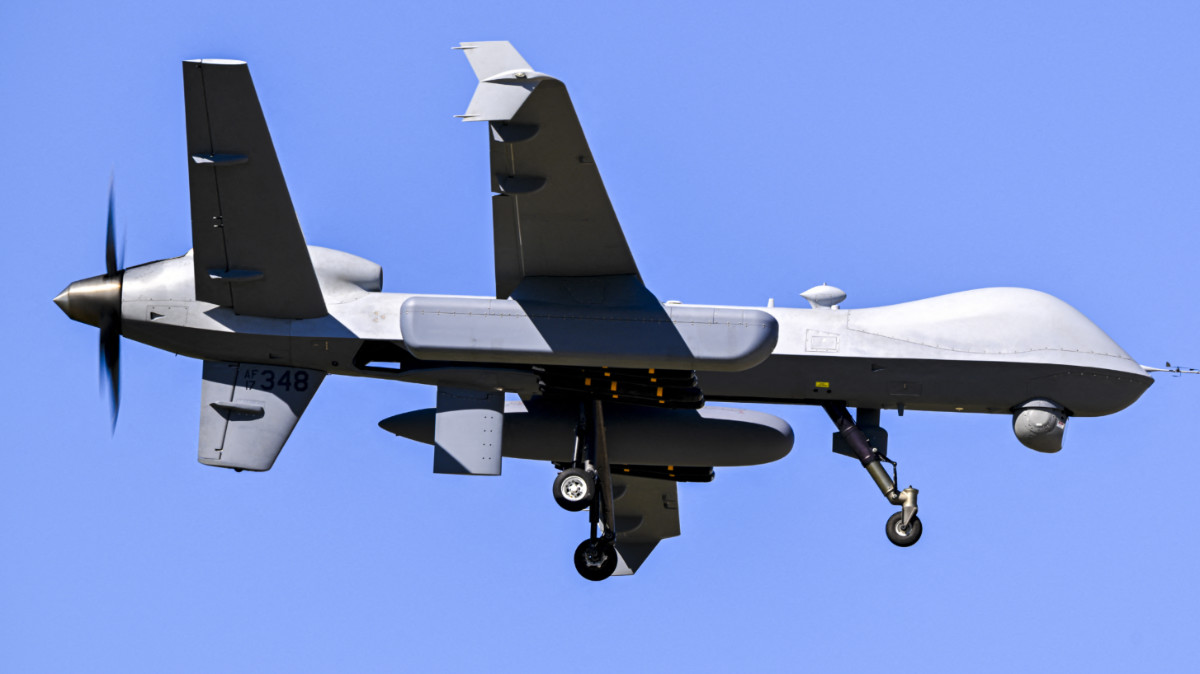
A new report published Friday by *The Washington Post* has revealed that U.S. military operations against Iran have resulted in the destruction or extreme depletion of roughly $1.3 billion worth of American MQ-9 Reaper unmanned aerial vehicles, accounting for approximately one quarter of the United States’ pre-conflict Reaper fleet. The findings directly contradict public claims made by former President Donald Trump and his senior administration officials, who repeatedly asserted that Iran’s integrated air defense networks had been completely eliminated. The Post’s count of lost drones marks a small but notable increase from earlier reporting by Bloomberg in May, which estimated that drone losses made up 20% of the pre-conflict U.S. inventory. Manufactured by General Atomics, individual MQ-9 Reaper drones carry a price tag between $30 million and $50 million, with the final cost determined by the platform’s specific sensor, radar, and weapons configurations. As outlined by U.S. Air Force documentation, the Reaper operates as a high-altitude intelligence, surveillance, and reconnaissance platform that also supports precision targeted strike missions. It is capable of being armed with both Hellfire air-to-surface missiles and Joint Direct Attack Munition (JDAM) guided bombs, but its operational profile leaves it uniquely vulnerable to defensive fire: the Reaper flies at slow speeds and relatively low altitudes, making it an easy target for Iran’s Islamic Revolutionary Guard Corps as well as Iranian-aligned allied groups based in Iraq and Yemen. MQ-9 Reapers are regularly deployed over the Strait of Hormuz, a strategically critical global chokepoint that has become a central flashpoint in ongoing tensions and open conflict between the United States and Iran. Trump has repeatedly described his administration’s military posture in the waterway as a “wall of steel” naval blockade designed to cut off Iranian maritime activity. The Reaper drone losses are far from an isolated incident: the aircraft is just one entry on a growing list of advanced U.S. weapons systems and munitions that have seen severe stockpile drawdowns throughout the conflict with Iran. Already, the Pentagon has laid out plans to phase out the existing Reaper fleet, replacing it with a new generation of lower-cost armed surveillance drones engineered to operate in coordinated swarms against enemy targets. Beyond unmanned platforms, the U.S. has also drained its stockpiles of advanced long-range standoff munitions. To date, U.S. forces have fired more than 850 Tomahawk cruise missiles and over 1,000 Patriot and Terminal High Altitude Area Defense (THAAD) interceptor missiles during operations. The Trump administration has publicly rejected all reports that the conflict has created critical weapons stock shortages for the U.S. military. Even so, the administration has submitted a request to Congress for more than $67 billion in emergency supplementary funding. This request would cover unplanned operational costs incurred by the Department of Defense during the conflict, codenamed Operation Epic Fury, and fund replenishment of depleted weapons stockpiles. Internal tensions over the munitions shortage have already spilled into top administration circles: during a Cabinet meeting held on August 6, Trump confronted then-Secretary of Defense Pete Hegseth directly over the critical stock shortfall, acknowledging that the shortage was a core factor behind the administration’s decision to pause large-scale offensive strikes against Iran. This article was originally distributed by Middle East Eye, an outlet that provides independent, on-the-ground coverage and analysis of the Middle East, North Africa, and broader surrounding region.