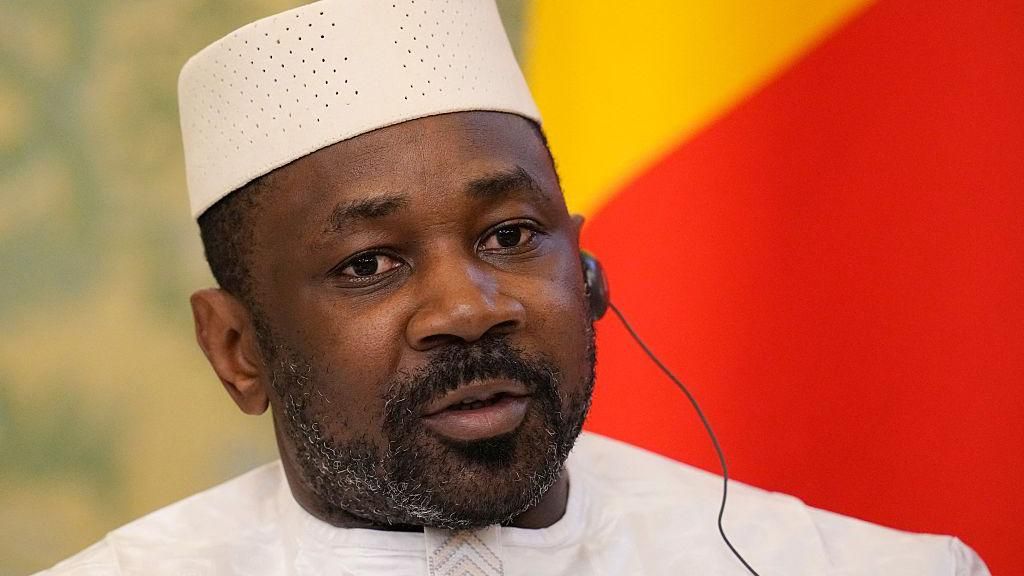
In a surprise move announced Thursday, Malian President Assimi Goïta has issued a presidential pardon to Yann Vezilier, a French national who was sentenced to 20 years in prison last year for his alleged role in plotting to overthrow Goïta’s ruling junta.
Vezilier was originally accused alongside a group of Malian army generals and dozens of soldiers of attempting to destabilize the current administration, with Malian officials claiming he was acting on behalf of French intelligence services. A year after the charges were laid, the clemency grant comes as a sudden reversal of the West African nation’s previous legal position, and no official explanation has yet been provided for what drove the policy shift.
The French foreign ministry, which previously dismissed the espionage allegations against Vezilier as completely unfounded, has remained silent on the pardon announcement to date. In an official statement posted to its Facebook page, the Malian government clarified that the act of mercy does not challenge the guilty verdict reached during the defendant’s trial, which the government says followed all legal procedures and fully protected Vezilier’s right to a defense. As a condition of the pardon, Vezilier is being immediately expelled from Malian territory.
The pardon unfolds against a backdrop of deepening political instability and unrelenting security crisis in Mali, a former French colony that has been grappling with a violent Islamist insurgency since 2012. Goïta, who seized power in a 2021 military coup that he justified by citing the ongoing security failure, has overseen a period of worsening violence, with jihadist attacks growing in frequency and reach across the country.
When Vezilier and other co-defendants were arrested last year, then-Security Minister General Daoud Aly Mohammedine confirmed that authorities had detained what he called “fringe elements of the Malian armed security forces” for conspiring to undermine the country’s republican institutions. He asserted at the time that the group of accused soldiers and civilian co-conspirators had received backing from foreign powers, specifically naming Vezilier as a proxy for French intelligence that had worked to recruit Malian political leaders, civil society figures and military personnel to the plot.
In the months since Vezilier’s conviction, political and security conditions in Mali have continued to deteriorate. In April, a suicide truck bombing targeting the defense minister’s residence on the outskirts of the capital Bamako killed the top defense official during a surge of militant attacks across the country. Shortly after the attack, Goïta appointed himself to the vacant defense minister post, a move widely interpreted as an effort to consolidate control over the security sector amid growing threats. Later that same month, Islamist fighters advanced on Bamako, enforcing a partial blockade of the capital and full blockades of other major population centers including the central city of Ségou.
In May 2025, the ruling military junta moved to dissolve all registered political parties in the country, a decision that came in response to rare large-scale anti-government protests. Former Malian Prime Minister Moussa Mara described the crackdown as a devastating blow to national reconciliation efforts that had been initiated by the junta itself after seizing power. When Goïta took power in 2021, he pledged to hold democratic elections within two years to transition back to civilian rule. That commitment has since been abandoned: last July, the junta extended the country’s political transition by an additional five years, extending Goïta’s rule until at least 2030.
In recent years, Mali has cut diplomatic and security ties with its former colonial ruler France, joining neighboring Niger and Burkina Faso in turning to Russian military allies for support to counter the regional jihadist insurgency. To date, the security partnership has failed to deliver meaningful improvements in stability across the Sahel, with attacks on civilian and government targets continuing to rise.