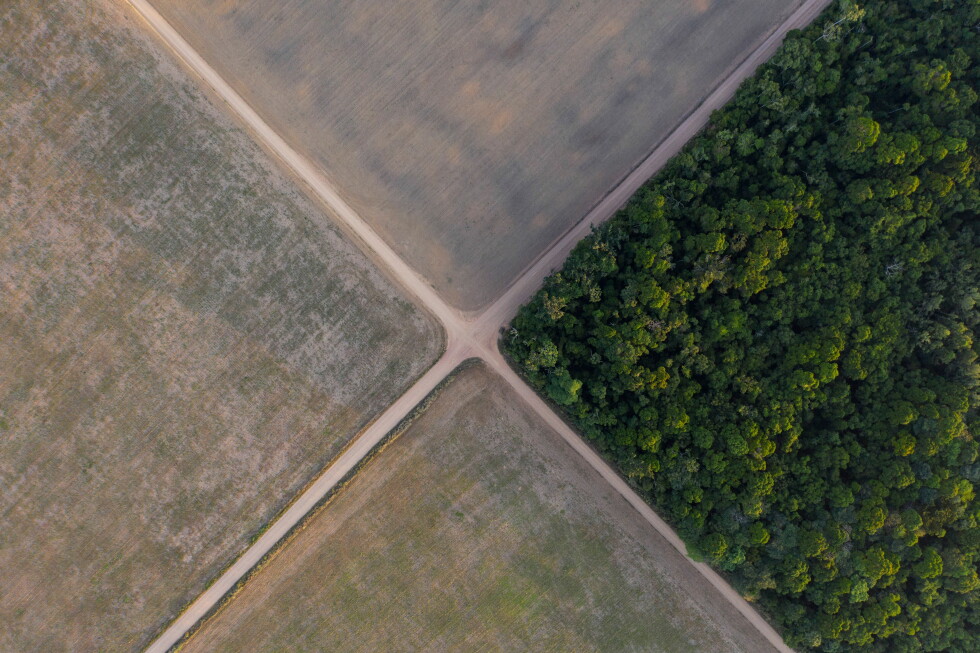
RIO DE JANEIRO – In a divided decision that threatens one of the Amazon rainforest’s most successful deforestation-reduction measures, Brazil’s Supreme Court announced Wednesday it has upheld state laws that strip tax incentives from farmers and companies that participated in the decades-long voluntary soy moratorium. While the court ruled the landmark anti-deforestation pact itself is constitutionally permissible, the ruling creates a major barrier to its survival, just months after most major industry traders pulled out of the agreement.
The soy moratorium, first launched in 2006 in response to advocacy from global environmental groups and international soybean buyers, was never a binding legal mandate. Instead, it represented a voluntary commitment among major grain traders: they pledged not to purchase soy grown on Amazon land cleared after July 2008, a policy the Brazilian government later formally endorsed. For nearly 20 years, the agreement delivered extraordinary results: a July 2024 study published in the journal *Science* found the moratorium cut deforestation in high-risk Brazilian soy-producing regions by 35% in its first decade, without reducing overall agricultural productivity. Brazil is the world’s top soybean producer, accounting for roughly 40% of global supply; most of the country’s soy cultivation takes place in central and northern states that overlap with the Amazon biome, including Mato Grosso, Para, and Rondonia. The South American nation is projected to produce 171.5 million metric tons of soy in the 2024-25 growing season, per U.S. Department of Agriculture data, with China as the largest export destination.
The Amazon, Earth’s largest tropical rainforest, plays an irreplaceable role in regulating the global climate. Researchers have repeatedly warned that accelerating forest loss could speed up global warming and disrupt agricultural systems thousands of miles away, from the U.S. Midwest to large swathes of Europe. After declining steadily from the record deforestation rates of the 1990s and early 2000s, forest clearing surged again during former President Jair Bolsonaro’s 2019-2022 administration, which drew widespread international condemnation for rolling back environmental protections. Under current President Luiz Inácio Lula da Silva, deforestation has once more fallen to its lowest level in 15 years.
Critics of the moratorium, led by large-scale soy producers in top-growing states, have long argued the agreement placed unnecessary burdens on business. Brazil’s national environmental code requires Amazon landowners to preserve 80% of their property as native forest, allowing legal clearing of the remaining 20%. The moratorium, by contrast, prohibits any purchase of soy from recently deforested land, even when that clearing complies with national law. In response to producer lobbying, Mato Grosso and other major soy-producing states passed laws earlier this year that revoke tax benefits for any company or farmer that abides by the moratorium’s stricter rules. Within months, all major grain traders withdrew from the pact.
Wednesday’s court decision has drawn mixed reactions from stakeholders across the political and environmental spectrum. Angela Barbarulo, legal coordinator for Greenpeace Brazil, called the court’s affirmation of the moratorium’s constitutionality “enormously important,” but noted the ruling is fatally undermined by its endorsement of state laws that penalize actors for adopting stricter environmental standards than required by law. “There is an apparent contradiction between recognizing the environmental importance of the soy moratorium while simultaneously validating state laws that can weaken its effectiveness,” Barbarulo said. “When it comes to protecting the Amazon, we should not allow state legislation to create loopholes or incentives that undermine environmental commitments built collectively.”
The Brazilian Association of Vegetable Oil Industries (ABIOVE), which represents major soy traders, said the ruling resolves years of legal uncertainty and validates the right of private companies to adopt voluntary sustainability commitments. However, the organization referenced the moratorium in the past tense, indicating Wednesday’s decision is unlikely to bring traders back to the pact. ABIOVE added that it hopes the decision paves the way for “a new phase of dialogue among different parts of the supply chain, with a focus on legal certainty, competitiveness and sustainability.”
Producers who have long opposed the agreement celebrated the ruling. The Mato Grosso Soy Producers Association said the decision reinforces state governments’ authority to push back against private environmental rules that go beyond national legal requirements, and pledged to continue fighting any future efforts to reimpose the moratorium’s restrictions.
Climate researchers warn that if the moratorium collapses completely, up to 1.4 million hectares (3.5 million acres) of Amazon rainforest – an area roughly the size of Portugal – could be cleared for soy production over the next decade, erasing years of progress on reducing forest loss.