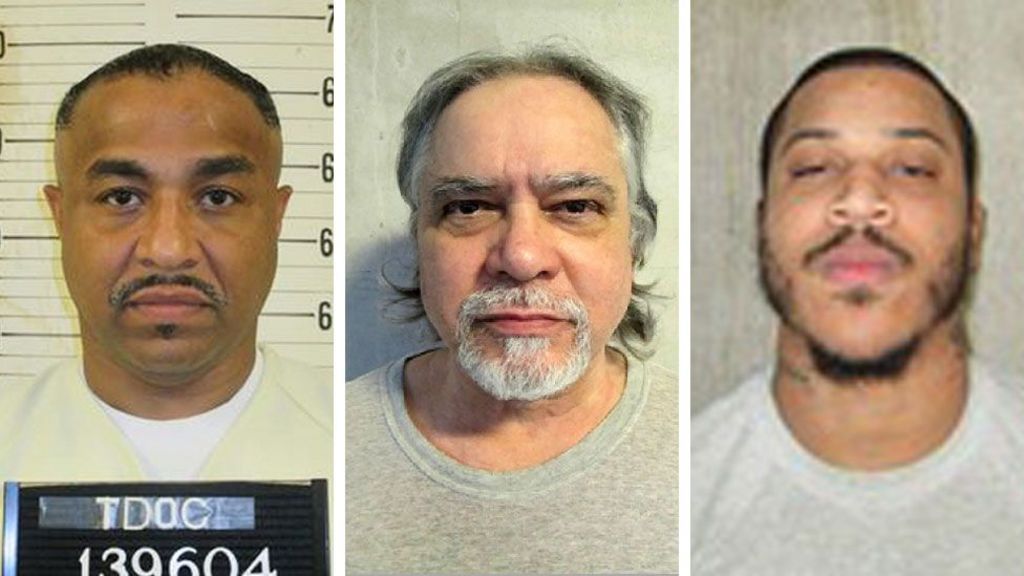
For the first time in 16 years, the United States is set to put three condemned inmates to death on a single day this Thursday, a milestone that underscores a dramatic nationwide resurgence of capital punishment following years of declining use. The three men, each convicted of murder in separate states, face execution across three jurisdictions: 66-year-old Anthony Darrell Hines in Tennessee, 41-year-old Jeremy Williams in Alabama, and 71-year-old Carlos Cuesta-Rodriguez in Oklahoma. All three are scheduled to receive lethal injections, carrying out what death penalty experts call the most rapid increase in executions the U.S. has seen in decades.
In 2025, the total number of executions across the country jumped to more than four times the figure recorded in 2021, even as public confidence in capital punishment has eroded and juries have become increasingly hesitant to hand down death sentences. The reversal of a years-long downward trend has been driven by policy changes at both the federal and state levels, with political leaders leaning into public support for tough-on-crime policies to expand access to capital punishment.
At the federal level, former President Donald Trump, a lifelong vocal proponent of the death penalty, has reshaped the national landscape since returning to office in 2025. During his first term in 2020, Trump ended a 19-year federal moratorium on executions, authorizing 13 executions over a six-month window before President Biden reinstated the moratorium upon taking office. On the first day of his second term, Trump signed a sweeping executive order that formally reinstated the federal death penalty. While no federal executions have been carried out to date under the new order, the policy has created structural changes that have empowered state-level execution efforts.
Trump’s administration has also expanded permitted methods of execution to include firing squads alongside reauthorizing traditional lethal injection, while streamlining internal Department of Justice protocols to speed up the processing of death penalty cases. The executive order further encourages states to pursue capital punishment for any federal crime that results in the death of a law enforcement officer, and directs the attorney general to secure a steady supply of lethal injection drugs for states, removing a longstanding barrier that had slowed execution rates across much of the country.
Justin Mazzola, deputy research director at Amnesty International USA, a group that opposes capital punishment, noted that the full long-term impact of Trump’s policy changes will not be visible for years, due to the extended timeline of capital cases and the multilayered appeals process that follows most death convictions.
State-level policy shifts have driven the bulk of the recent increase, however. In 2025 alone, 11 states carried out 47 executions, up from 25 in 2024. Nearly 40 percent of all 2025 executions took place in Florida, making the Sunshine State the single largest contributor to the national rise. Through the first half of 2026, 12 of the country’s 19 total executions have occurred in Florida.
Experts point directly to Republican Governor Ron DeSantis as the driving force behind Florida’s outlier status. “He is the reason we are seeing a record number of executions. He is the reason why Florida is an outlier compared to the rest of the United States,” explained Robin Maher, executive director of the Death Penalty Information Center (DPIC), a nonpartisan organization that compiles death penalty data and research without taking a formal moral stance on the practice.
Under DeSantis, Florida has passed sweeping legislation that lowers barriers to carrying out death sentences. In 2023, the state changed its jury rule to require just 8 out of 12 jurors to recommend a death sentence, down from a previous requirement of a unanimous jury vote. The state also added sexual battery of a child under 12 years old to the list of crimes eligible for capital punishment. DeSantis has repeatedly framed the death penalty as a critical crime deterrent and a just punishment for the most serious offenses.
Unlike most U.S. states with capital punishment, Florida grants its governor unilateral authority to sign death warrants for inmates who have exhausted all their appeals, with no required court oversight. While Pennsylvania has a similar process on the books, it has not carried out an execution since 1999, making Florida’s active use of this authority unique in modern practice.
Proponents of capital punishment in Florida argue that the changes align with public will and hold violent offenders accountable. “The people that engage in this type of conduct, their punishment is frankly earned, and it’s up to a jury of 12 to determine if that sentence is appropriate or not,” William Sheiner, a Florida state attorney, told local media recently. “Just because I pursue death as an option doesn’t mean that that’s going to be the sentence. It’s basically me saying to the community: this is up to you guys to decide if death is appropriate.”
Today, 27 of the 50 U.S. states retain capital punishment under state law, though four of those – California, Ohio, Oregon, and Pennsylvania – have imposed formal moratoriums on executions via executive action, amid ongoing concerns over botched procedures, racial disparities in sentencing, and the high cost of death penalty cases. The U.S. remains one of the only Western nations that still actively uses capital punishment, with most European countries having abolished the practice decades ago and many African nations moving toward phasing it out.
Debates over capital punishment have increasingly centered on the logistics of executions themselves, as major pharmaceutical companies have blocked the use of their drugs for lethal injections, creating widespread supply shortages across the country. In response, several states have authorized alternative methods including firing squads, with South Carolina carrying out its first firing squad execution in 2025 amid a drug shortage.
Botched executions remain a persistent and contentious issue. DPIC data estimates that roughly 3 percent of all U.S. executions between 1890 and 2010 were botched, with lethal injection having the highest failure rate of any method. In 2022, more than one-third of all executions carried out that year were classified as botched or highly problematic by the organization. Most recently, in May 2026, Tennessee officials spent more than an hour unsuccessfully attempting to establish IV access for death row inmate Tony Von Carruthers, with witnesses reporting Carruthers groaned repeatedly in pain as blood ran down his chest. Tennessee Governor Bill Lee granted Carruthers a one-year reprieve after the failed attempt, though he has refused to classify the incident as a botched execution, framing it only as a failure to establish IV access.
It remains unclear whether all three scheduled executions this Thursday will proceed as planned, or if last-minute legal challenges or reprieves will alter the timeline. Hines, the Tennessee inmate scheduled for execution, has maintained his innocence for 40 years and is currently bedridden; he is set to be executed under the same lethal injection protocol that failed for Carruthers just 12 weeks ago.
In Alabama, Williams, convicted of the 2021 rape and murder of a 5-year-old girl, has voluntarily dismissed his attorneys and chosen not to pursue further appeals, volunteering for execution. Governor Kay Ivey has already stated she will not grant clemency, making him set to become Alabama’s first executed inmate of 2026. In Oklahoma, Cuesta-Rodriguez, convicted of the 2003 murder of a woman, has also declined to request clemency, though experts note his advanced age increases the risk of a problematic execution.
The scheduled triple execution comes at a time of steadily declining public support for capital punishment nationwide. A 2026 Gallup poll found that just 52 percent of Americans now view the death penalty as morally acceptable, the lowest recorded level since the 1970s. This declining public support is reflected in the dropping number of death sentences handed down by juries: while juries issued more than 300 death sentences annually nationwide in the 1990s, they issued just 23 in all of 2025.
“That tells us something very important: These are regular citizens that are sitting in judgment of people who are accused of committing the worst possible crimes, and then deciding what sentence fits those crimes,” Maher said. “Those juries are increasingly saying that a death sentence is not the right answer.”
Maya Foa, CEO of Reprieve US, a legal organization opposed to the death penalty, added that the current surge in executions runs counter to public sentiment and practical policy needs. “It’s the opposite of a cheap easy political fix,” Foa said.