In a sweeping nighttime assault that marks a significant escalation in maritime attacks in the Black Sea theater, Ukraine carried out a coordinated large-scale strike using anti-ship missiles and domestically developed drones against Novorossiysk, Russia’s last remaining major Black Sea naval stronghold, Ukrainian President Volodymyr Zelenskyy confirmed Wednesday.
This operation is the latest in a years-long campaign of drone strikes targeting Russian maritime assets in the Black Sea, a strategy Kyiv has built up since Russia launched its full-scale invasion in 2022. The locally produced air and sea drones developed by Ukraine over the course of the conflict have already reshaped power dynamics in the Black Sea, repeatedly striking Russian warships, commercial oil tankers and other vessels, and successfully restricting the operational freedom of Russia’s once unchallenged Black Sea Fleet. Ukrainian officials frame this maritime campaign as one of their country’s most notable military achievements of the entire war.
According to Veniamin Kondratyev, the governor of Russia’s Krasnodar region where Novorossiysk is located, hundreds of Ukrainian drones targeted multiple sites across the region overnight, including Novorossiysk, Anapa, Gelendzhik and the Temryuk district. The attack left three people dead — including an 8-year-old child — wounded 24 more, damaged dozens of residential structures, and sent downed drone debris crashing onto the grounds of four industrial facilities. Zelenskyy stated that the strike damaged Russian air defense systems, piers and other critical port infrastructure at the Novorossiysk base, while Russian business daily Vedomosti reported that two out of the city’s three grain terminals suffered damage, forcing one to suspend operations. Russia’s Defense Ministry claimed its air defense systems intercepted and downed more than 500 Ukrainian drones during the assault.
Beyond its military role as a naval stronghold, Novorossiysk is a pivotal energy hub, hosting the Grushovaya oil terminal, one of southern Russia’s largest international export points for petroleum products. As of Wednesday, no reports have emerged confirming damage to the terminal, which also serves as the export endpoint for the Caspian Pipeline Consortium that carries crude oil from major Kazakh oil fields. In February 2024, U.S. officials publicly voiced disapproval of prior Ukrainian strikes on Novorossiysk, noting the attacks threatened the energy interests of American oil giants Chevron and ExxonMobil, which hold major stakes in those Kazakh fields.
Simultaneously to the Novorossiysk attack, Russia launched its own massive wave of overnight strikes across Ukraine. Ukraine’s air force reported that Russia deployed 138 long-range drones alongside an unspecified number of missiles, causing damage at 16 locations across the country. In southern Ukraine’s Kherson region, the assault killed two people and wounded two more, regional governor Oleksandr Prokudin confirmed, while a shopping mall was destroyed in the southern city of Zaporizhzhia. On the Russian-annexed Crimean Peninsula, Russian-installed Sevastopol city head Mikhail Razvozhayev stated that air defenses downed 115 Ukrainian drones overnight, damaging 10 apartment buildings and 25 private homes.
Beyond the immediate military clashes, the strike comes amid heightened tensions over reported Russian plans for a new mass mobilization. Citing intelligence from Ukrainian agencies, Zelenskyy claimed Tuesday that Russian President Vladimir Putin intends to mobilize hundreds of thousands of additional Russian troops by the end of 2024. Zelenskyy added that recent intelligence also shows Russia is ramping up production of ballistic missiles and jet-powered drones — two weapons systems that have proven particularly difficult for Ukrainian air defenses to intercept. Ukrainian officials argue Putin remains determined to press forward with the invasion, despite the Russian military’s slow, high-cost battlefield gains and ongoing American diplomatic efforts to broker a negotiated end to the conflict.
Russian officials have dismissed the mobilization claims as disinformation. Neither Putin nor any senior Russian official has publicly hinted at a planned large-scale new call-up of troops, with some Kremlin-aligned figures accusing Kyiv of spreading rumors to sow unrest among the Russian public. “It is the enemy deliberately spreading rumors about mobilization in order to destabilize the situation inside Russia,” pro-Kremlin lawmaker Andrei Gurulyov told pro-Kremlin outlet Tsargrad Monday. Russia’s 2022 partial mobilization of 300,000 troops was deeply unpopular with the Russian public, and since that time Moscow has relied on high bounties to recruit volunteer soldiers. The original 2022 mobilization decree remains technically open-ended, however, leaving authorities the legal option to resume conscription if they choose.
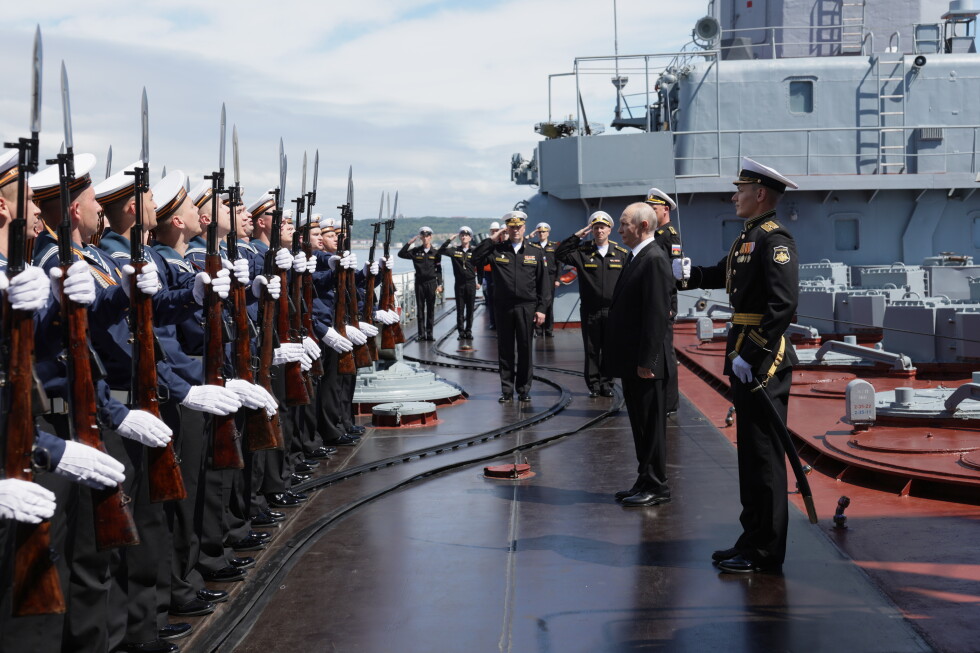
The strike also coincides with a sharp escalation in tensions over Western enforcement of oil sanctions against Russia. As European military vessels increasingly board and detain sanctioned Russian oil tankers at sea — a move that has cut into Russian export revenue and piled additional economic pressure on Moscow — Putin threatened retaliation Wednesday for what he labeled “piracy.” Speaking during a visit to a Russian warship participating in Pacific naval exercises, Putin argued that Western powers are violating international maritime law by seizing vessels belonging to Russia’s so-called “shadow fleet” of oil tankers used to evade international price caps and sanctions. “It’s nothing but piracy and robbery,” Putin said. “If this is done, we will be forced to respond in kind.”
In response to Russia’s expanding military production and planned mobilization, Ukraine is working to scale up its own domestic weapons manufacturing through bilateral and multilateral agreements with its international partner nations.