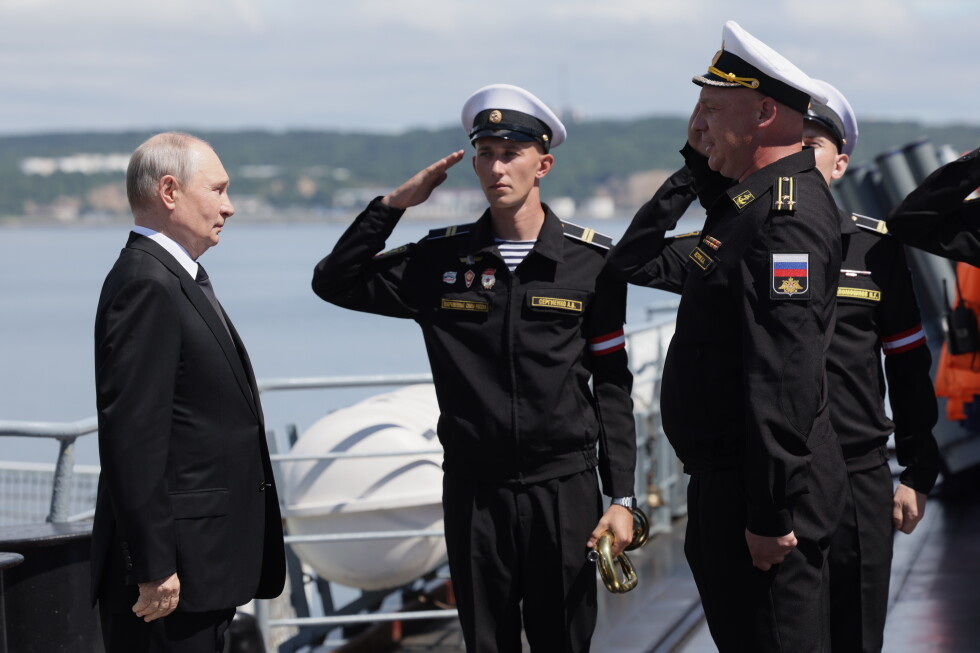
Amid escalating tensions over sanctions enforcement on Russian maritime trade, Russian President Vladimir Putin has issued a sharp warning of reciprocal retaliation against Western powers that have seized Moscow-linked commercial ships, labeling the detentions as outright state-sponsored piracy. Speaking Wednesday during an inspection tour of a Russian warship participating in large-scale Pacific Ocean naval exercises, Putin slammed the Western seizures as a clear violation of long-standing international maritime law, emphasizing that Moscow would not leave the actions unchallenged.
“This is nothing less than piracy and open robbery,” Putin told naval personnel on site. “When these illegal acts are carried out against our vessels, we will be forced to respond in kind.” The Russian leader further clarified that retaliatory measures would not be limited to the specific maritime regions where Russian ships have been detained, stressing that Moscow reserves the right to act “in any area where we deem it necessary and appropriate” — including the Pacific Ocean, where Russia’s large naval exercise is currently underway.
Shortly after Putin’s remarks, Admiral Viktor Liina, commander of Russia’s Pacific Fleet, formally reported to the president that the Russian navy is fully prepared to begin inspections of commercial vessels operated by so-called “unfriendly nations” that have imposed sanctions on Russia. Liina pointed out that many commercial ships owned by British, French and other European shipping companies avoid direct sanctions by operating under third-party flags, making up what he called a European “shadow fleet” similar to the one Russia uses to evade oil and trade sanctions.
“We have sufficient naval and maritime resources to carry out inspections and detain vessels from unfriendly nations and their shadow fleets,” Liina stated. “We are ready to begin executing this mission immediately.”
Background to the current escalation dates back to February 2022, when Western powers imposed sweeping economic and trade sanctions on Russia following its full-scale invasion of Ukraine. To bypass these restrictions, Russia has built a large “shadow fleet” of hundreds of oil tankers and cargo vessels that operate under third-party flags to avoid detection and seizure. In recent months, France, the United Kingdom and other European nations have moved to detain multiple tankers linked to Russia’s shadow fleet that were suspected of violating sanctions on Russian oil exports. The European Union has also added hundreds of these shadow fleet vessels to its sanctions blacklist. In response, Russia has already begun deploying military warships to escort its commercial cargo vessels operating in international waters.
Dmitry Medvedev, Russia’s former president from 2008 to 2012 and current deputy chairman of Russia’s Security Council, expanded on Putin’s warning in remarks that underscored the scope of potential Russian action. Medvedev noted that European shipping firms already use the same “flags of convenience” loophole that Russia relies on for its shadow fleet, creating a legal opening for symmetrical retaliation.
“Applying a symmetrical and completely fair approach means Russia has the right to stop and search any merchant vessel belonging to hostile states, whether in our territorial waters or neutral international waters, as long as there are reasonable grounds to suspect it is carrying cargo for an enemy’s benefit,” Medvedev said. “This rule applies to any type of cargo. There are a great many such vessels operating globally, and our military has the capability to dramatically expand these operations far beyond the boundaries of the Black Sea basin.”
The latest exchange of threats has raised international concerns about growing risks to civilian commercial shipping in global waterways, particularly as the conflict in Ukraine continues to spill over into maritime domains that carry a large share of global trade.