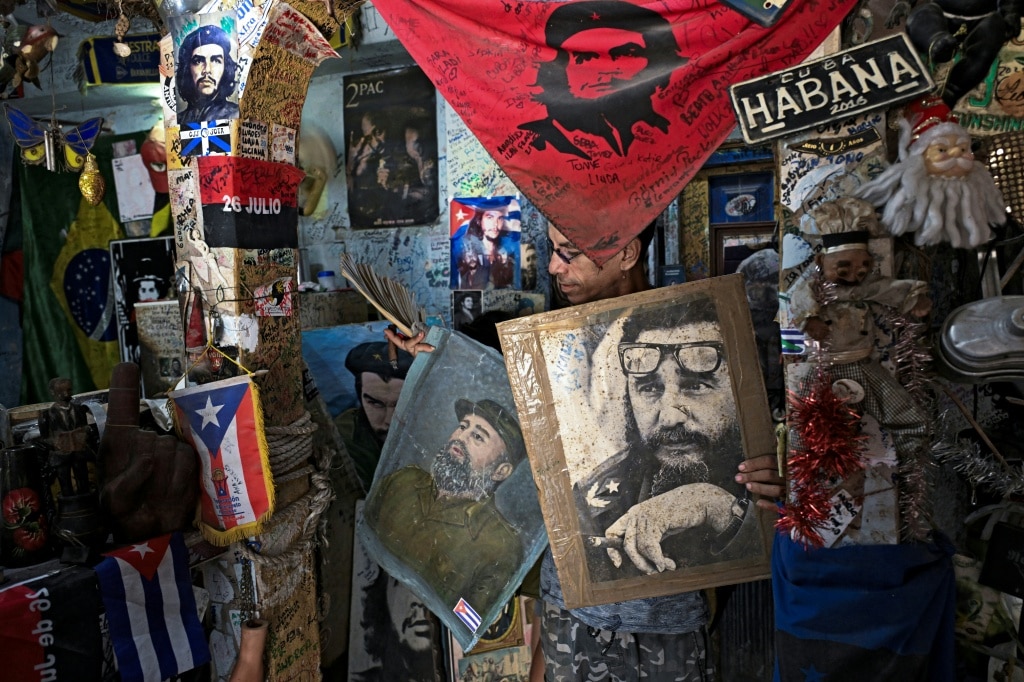
August 13 marks a historic milestone for Cuba: the 100th birth anniversary of Fidel Castro, the iconic late revolutionary leader who guided the island nation’s socialist project for nearly 50 years. While Cuba’s ruling Communist Party has spent the past week honoring Castro’s legacy with a slate of official events, including public exhibitions, celebratory concerts, and academic conferences, the centenary unfolds against the backdrop of one of the most severe economic and social crises the country has faced in modern history. Today, widespread shortages of essential goods, persistent water scarcity, and crippling, chronic power outages have left ordinary Cubans questioning both the promises of the revolution Castro led and the ability of his successors to navigate the current turmoil.
For long-time supporters of Castro, the current hardship has only amplified nostalgia for the leader who passed away a decade ago. Leonel Suarez, a 54-year-old collector of revolutionary memorabilia who reveres Castro as “the master,” kissed a portrait of the former leader before displaying it in his window. Suarez insists that Castro would have already mapped out a clear strategy to pull the country out of its current struggles. Even so, the depth of the crisis has forced even loyal supporters into difficult choices: when a foreign tourist recently offered Suarez $100 for one of his prized Castro photographs, he felt he had no choice but to accept. “You have to live,” he explained simply.
Castro’s supporters remember him as a steady leader who steered Cuba through decades of relentless external pressure and existential threats, including U.S.-backed invasion attempts, a decades-long trade embargo, dozens of documented assassination plots, and the catastrophic economic collapse that followed the dissolution of the Soviet Union, Cuba’s former primary ally and benefactor. In a weathered workshop in Old Havana, where cracked plaster lines the walls and work tools have seen decades of use, 54-year-old repairman Rogelio Valdivia identifies as a committed “Fidelista.” “I was born in the Revolution and through it I was able to find my way,” he said, echoing the widespread belief among loyalists that no current leader possesses Castro’s unique ability to unify and guide the nation through crisis.
The current downturn has fallen hardest on the generation of Cubans who remained faithful to Castro throughout his time in power. Eighty-six-year-old Angela Gutierrez, who came of age during Castro’s rule and benefited from the free universal healthcare and education that were core pillars of the revolutionary project, says she now feels deeply disappointed by the direction of the country. After leaving a local market empty-handed because sky-high prices put goods out of her reach, she questioned the persistent power cuts that have become a daily reality: “Why do they keep cutting the power so much? They’re ruining things.” For Gutierrez and many others of her generation, the free public services the revolution once guaranteed are now barely functional.
Castro’s critics offer a starkly different take on the root of Cuba’s problems: they argue the current crisis stems not from Castro’s absence, but from the flawed structural legacy he left behind. Manuel Cuesta, a 63-year-old historian and opposition activist, once saw Castro as a “redeemer” who would deliver on Cuba’s aspirations in his youth. But over decades, that positive image gradually faded as daily life on the island moved further and further from the equal, prosperous society the revolution promised. Today, Cuesta says, worsening living conditions have led a growing share of Cubans to view Castro as the “original architect of this national disaster.”
Even close allies of Castro acknowledge the gravity of the current moment. Hassan Perez, a historian, former student leader, and long-time close collaborator of the former leader, admits the centenary is arriving under “the most complex conditions that could have been imagined.” The core social bargain forged by the revolution, Perez says, “has eroded” dramatically in recent years. For decades, the Cuban state offered universal social protections in exchange for strict public political discipline; today, a growing number of ordinary Cubans are openly questioning whether that long-standing arrangement still serves them.
Even so, personal affection for Castro endures for many Cubans even as daily life grows increasingly difficult. Sixty-six-year-old cleaner Mildred Barreto still refers to Castro by his iconic title “comandante,” but she openly admits that life on the island today is an unrelenting struggle. “We suffer a lot now,” she said, echoing a common sentiment among Castro’s remaining admirers: “With our comandante, it wasn’t like this.”