Escalating tensions in the Middle East have taken two sharp new turns this week, as the United States Central Command (Centcom) confirmed it carried out a missile strike on a commercial cargo ship attempting to violate Washington’s ongoing blockade of Iranian ports, while an Iran-backed militant group in Yemen launched the first deadly attack on shipping in the Red Sea since regional hostilities erupted earlier this year.
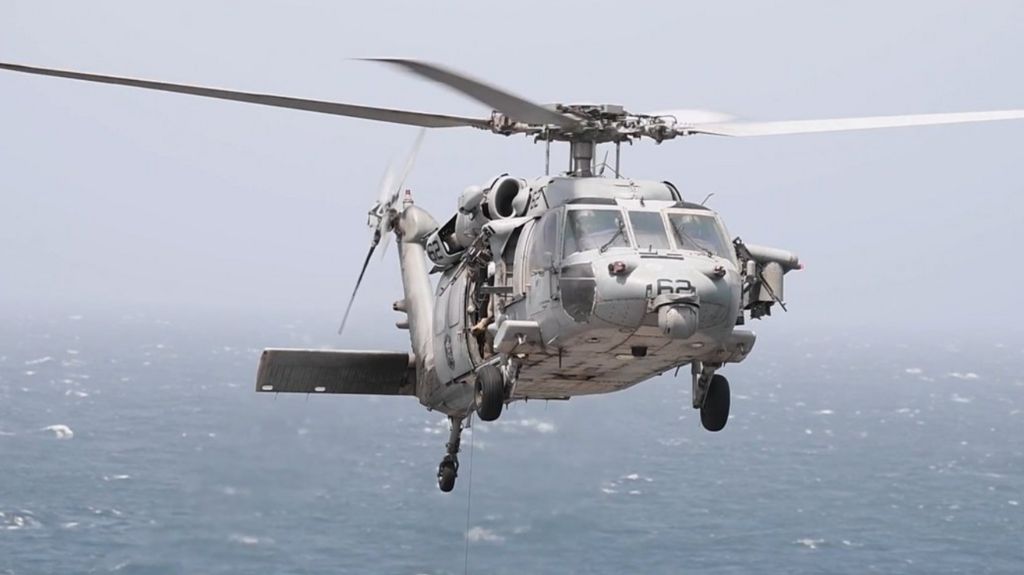
In an official statement released this week, Centcom announced that an MH-60 military helicopter launched two Hellfire missiles at the Panama-flagged bulk carrier M/V Vela Nova on Tuesday, targeting the vessel’s engine room as it traversed the Gulf of Oman. The strike was carried out after the ship’s civilian crew disregarded multiple repeated warnings from U.S. naval forces deployed in the region, according to Centcom. Following the attack, the vessel abandoned its course and is no longer en route to an Iranian port, the command confirmed.
The U.S. blockade of Iranian ports remains in full force, months after a regional war erupted between Israel, backed by the U.S., and Iran, which began on February 28. Diplomatic efforts to broker a ceasefire and end the conflict have so far failed to produce a lasting agreement. After the latest ceasefire collapsed in June, direct exchanges of fire between U.S. and Iranian forces have become an almost daily occurrence in the Gulf. Centcom’s update on Tuesday noted that since the blockade was implemented, as of August 11, U.S. forces have redirected 55 commercial vessels attempting to bypass the restrictions, disabled three non-compliant ships, and boarded two others to enforce the order.
Iran has responded aggressively to the U.S.-led blockade and the ongoing war, launching retaliatory strikes against Israel and U.S. allied states across the Gulf region. Most critically, Tehran has effectively closed the Strait of Hormuz, the world’s most vital chokepoint for global energy supplies. Before the outbreak of hostilities, roughly 20% of the world’s total oil and liquefied natural gas shipments transited the strait daily. Since the closure, global energy markets have seen extreme and ongoing price volatility, with costs swinging wildly in response to every new development in the conflict. International mediators from multiple neutral nations have spent months attempting to negotiate a deal to reopen the waterway, but no breakthrough has been achieved to date. Iran has not yet issued any public comment on the Tuesday strike against the Vela Nova.
In a separate but connected development Tuesday, the internationally recognized government of Yemen announced that six people were killed and 10 others injured in an attack carried out by the Iran-aligned Houthi movement on a cargo ship transiting the Red Sea. The Houthi group quickly claimed responsibility for the strike, stating that the targeted vessel was carrying military equipment bound for Saudi Arabia, a key U.S. ally in the region. This attack marks the first time the Houthi movement has caused fatalities in a shipping attack in the Red Sea since the regional war began in February, raising new fears that hostilities will spread beyond the Gulf and disrupt another critical global shipping lane.