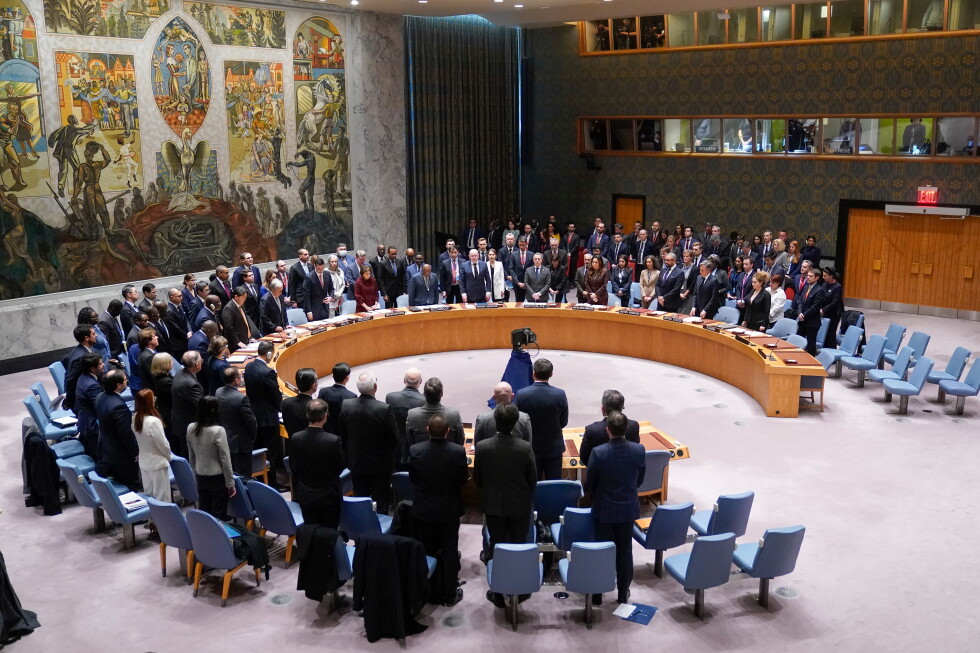
On Monday, the United Nations Human Rights Office delivered a damning new briefing to the UN Security Council, detailing widespread unlawful detention, systematic torture, and deadly abuse of Ukrainian civilians and prisoners of war held by Russian authorities since Russia launched its full-scale invasion of Ukraine in February 2022. The informal meeting, convened by Latvia and the United Kingdom, was organized to center the long-unaddressed plight of people captured amid the ongoing conflict, which has seen a sharp escalation of offensive operations from both sides in recent months.
Claudia Fuentes Julio, UN Assistant Secretary-General for Human Rights, told the assembled council that UN investigators estimate more than 16,000 civilians captured by Russian forces remain illegally deprived of liberty, with many held incommunicado in violation of international legal standards for detention. The UN has not been granted access to any detention facilities operating on Russian-controlled territory to independently verify conditions, meaning the agency’s current count cannot break down figures to reflect how many of the detained are children or adults.
Julio’s briefing drew on first-hand testimony gathered from 910 released Ukrainian prisoners of war and 403 released civilian detainees interviewed by UN human rights staff after they regained freedom. The data revealed staggering rates of abuse: more than 95% of released prisoners of war and 85% of released civilian detainees reported repeated torture and cruel, inhumane treatment during their captivity, including incidents of sexual violence. Survivors also described severe inadequate conditions, including deliberate food deprivation and almost no access to life-saving medical care.
Beyond ongoing abuse, the UN has documented confirmed deaths in custody: 129 Ukrainian prisoners of war were executed immediately after capture, while an additional 48 died in detention due to torture, denied medical care, and other deadly inhumane conditions, Julio confirmed.
The meeting also heard harrowing, personal accounts from two survivors of Russian detention. Khuan Leyva Garsiya, a Ukrainian soldier born in Mariupol who was among the hundreds of fighters who held out against the Russian siege at the Azovstal steel plant before surrendering in May 2022, spent 1,183 days as a prisoner of war. When he was released, he weighed just 120 pounds, and displayed a photo of his emaciated frame to the council to illustrate the conditions he endured. Garsiya explained he faced harsher abuse than other prisoners because Russian captors suspected he was a foreign mercenary due to his Cuban father and an American spy because he completed college in the United States. He described systemic methods of psychological torture designed to force false confessions, including prolonged exposure to freezing temperatures, repeated beatings, electrocution, and sexual abuse. “Two of my friends were beaten to death in detention centers in the Donetsk region,” Garsiya told the council. “Two of my friends died because of the conditions they were put in in Russian prisons and were returned in plastic bags to the homeland.”
Leniie Umerova, a Crimean Tatar human rights activist, also shared her experience of nearly two years as a self-described political prisoner under Russian occupation. Her detention began in 2022 when she attempted to cross from Georgia into Russian-occupied Crimea to visit her terminally ill father. She was immediately detained on what she called fabricated charges, and though a court ordered her release three months into her detention, she was abducted from prison gates immediately after gaining her initial freedom. Over six months, she was transferred to seven separate detention facilities, a practice she described as a “carousel of repression” designed to disorient detainees and cut off any contact with the outside world. Umerova emphasized that her experience was not an isolated incident, but part of a coordinated state system of unlawful detention, political repression, and abuse targeting Ukrainian civilians in occupied territories. She noted that at least 84 women have faced politically motivated criminal prosecution in Russian prisons, with dozens still remain in custody today.
In a rare development, the UN briefing also acknowledged reports of abuse by Ukrainian forces. Julio told the council that UN investigators have interviewed 816 Russian service members and 57 third-country national prisoners of war captured by Ukraine, finding that roughly half reported experiencing torture or ill-treatment during initial capture and interrogation. However, Julio clarified that once detainees are transferred to formal Ukrainian detention facilities, conditions generally meet international humanitarian law standards and have improved significantly since 2022.
Russia’s Deputy UN Ambassador Maria Zabolotskaya pushed back against the briefing, claiming Russian armed forces fully comply with international humanitarian law governing detention and prisoner treatment. She repeated Russian claims that Russian prisoners held by Ukraine face routine torture and abuse, and dismissed the entire Security Council meeting as a NATO-backed “disinformation campaign against Russia.” The meeting’s true goal, she claimed, “is to derail efforts towards a peace settlement and to justify strikes on the territory of Russia and against civilians.”
Ukraine’s Deputy UN Ambassador Volodymyr Pavlichenko responded by noting that Russian representatives refused to engage on discussions surrounding the repatriation of all detainees — including Russian prisoners of war held by Ukraine and Ukrainian civilians and soldiers held by Russia, as well as the thousands of Ukrainian children forcibly abducted by Russia since the invasion began.