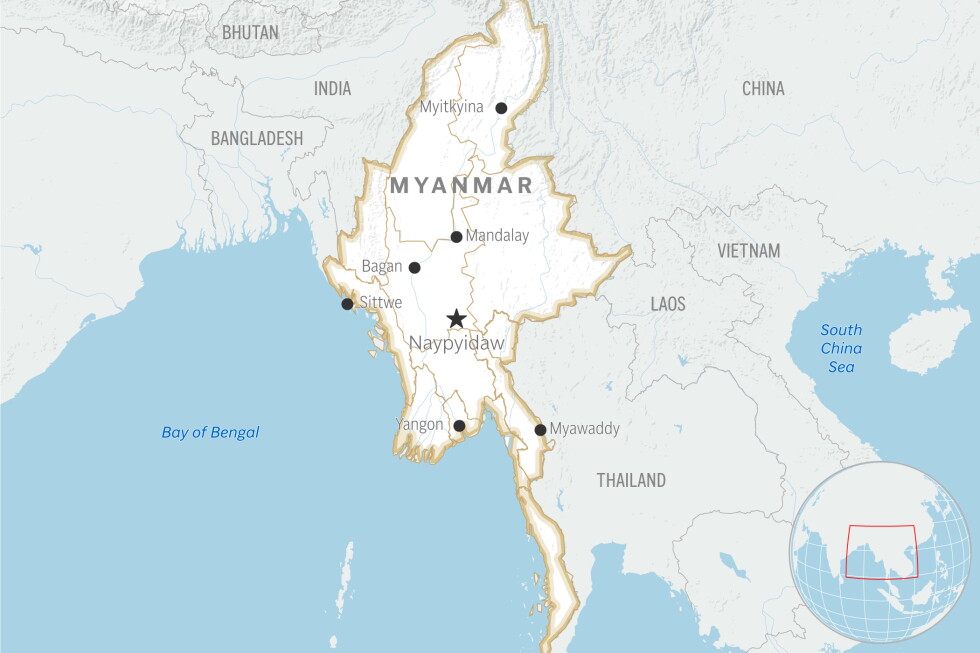
A United Nations-backed investigative body has released a damning new report documenting a sharp escalation in human rights abuses and targeted violence against civilians across Myanmar, centered on the military’s growing reliance on low-cost, stealthy light aircraft to carry out unregulated airstrikes in its ongoing civil conflict against anti-government opposition forces. The 12-month investigation, conducted by the Independent Investigative Mechanism for Myanmar (IIMM), a body established by the UN Human Rights Council in 2018 to probe violations of international law in the country, was published Tuesday, offering the most comprehensive account of war crimes and crimes against humanity committed by all major armed actors in Myanmar’s post-coup conflict.
The report confirms that the frequency and intensity of aerial attacks rose dramatically in the months leading up to the military’s widely discredited national elections held in late 2023 and early 2024, and have continued at the same unrelenting pace in the months since the vote, which critics universally dismissed as a sham to cement the junta’s hold on power following its 2021 coup that ousted elected leader Aung San Suu Kyi. Along with the surge in airstrikes, investigators documented clear patterns of systematic arbitrary detention, brutal torture, and widespread sexual violence across the country, abuses that intensified as the military sought to neutralize opposition to its staged electoral process. Under a controversial electoral law imposed by the junta, residents can face up to 20 years of imprisonment or even the death penalty for simple acts such as criticizing the elections on social media or distributing materials opposing the vote, leading to hundreds of arbitrary arrests in the lead-up to the poll.
One of the most alarming findings of the investigation centers on the military’s shift to using small, low-cost aerial platforms – including motorized paragliders (also called paramotors), gyrocopters, and commercial drones – to conduct low-altitude strikes with unguided explosives. In multiple verified incidents in Myanmar’s upper Sagaing region, a major hotbed of anti-junta resistance, paramotor pilots have been documented cutting their aircraft engines mid-flight when approaching targets, allowing the craft to glide silently to their destinations. This stealth tactic leaves civilians with little to no warning to escape or find shelter, drastically increasing the risk of unintended civilian deaths and injuries. The report also details the military’s frequent use of the controversial “double-tap” strike tactic, in which a second airstrike is launched shortly after the first, intentionally targeting first responders, civilians aiding wounded people, and community members fleeing the initial attack. This practice, widely condemned as a violation of international humanitarian law, has significantly driven up civilian casualty numbers, the IIMM confirmed.
Concurrent with the release of the UN report, the Arakan Army – one of Myanmar’s largest and most powerful ethnic armed organizations, which has been fighting the junta in western Rakhine State – issued its own allegations of recent civilian harm from military airstrikes. The group reported that between August 1 and August 11 this year, 20 civilians have been killed and another 22 injured in strikes across three Rakhine townships. One of the deadliest attacks involved up to eight military aircraft striking a target for nearly an hour straight, the group said. As of Tuesday, Myanmar’s military-backed junta had not issued any public response to either the UN’s findings or the Arakan Army’s latest allegations. This is consistent with the junta’s long-standing stance that it only targets legitimate military opposition targets, and routinely labels anti-government resistance forces as terrorists.
The IIMM’s investigation did not limit its scrutiny to junta forces: the body confirmed it is also investigating credible allegations of grave human rights abuses committed by anti-military armed groups, including the Arakan Army. The ethnic armed group has been accused of multiple serious crimes in Rakhine State, including rape and other forms of sexual violence targeting Rohingya Muslim women, extrajudicial summary executions, forced recruitment of child soldiers, and the deliberate destruction of Rohingya mosques.
Third-party independent tallies underscore the staggering human cost of Myanmar’s three-and-a-half-year civil war. The Assistance Association for Political Prisoners, a Thailand-based independent organization that maintains detailed public records of casualties and arrests linked to the post-coup conflict, reports that more than 8,000 civilians have been killed by junta security forces, and more than 31,000 people have been arrested since the 2021 coup. The IIMM gathered evidence for its year-long investigation from more than 1,600 separate sources and witnesses, all of which has been preserved to support future criminal prosecutions of individuals found responsible for atrocity crimes.
“Behind every piece of evidence we collect are people whose lives have been devastated by these crimes,” IIMM head Nicholas Koumjian wrote in the report. “Communities across Myanmar are not only living under the constant threat of violence but are also coping with the profound and lasting impact of what they have endured.”