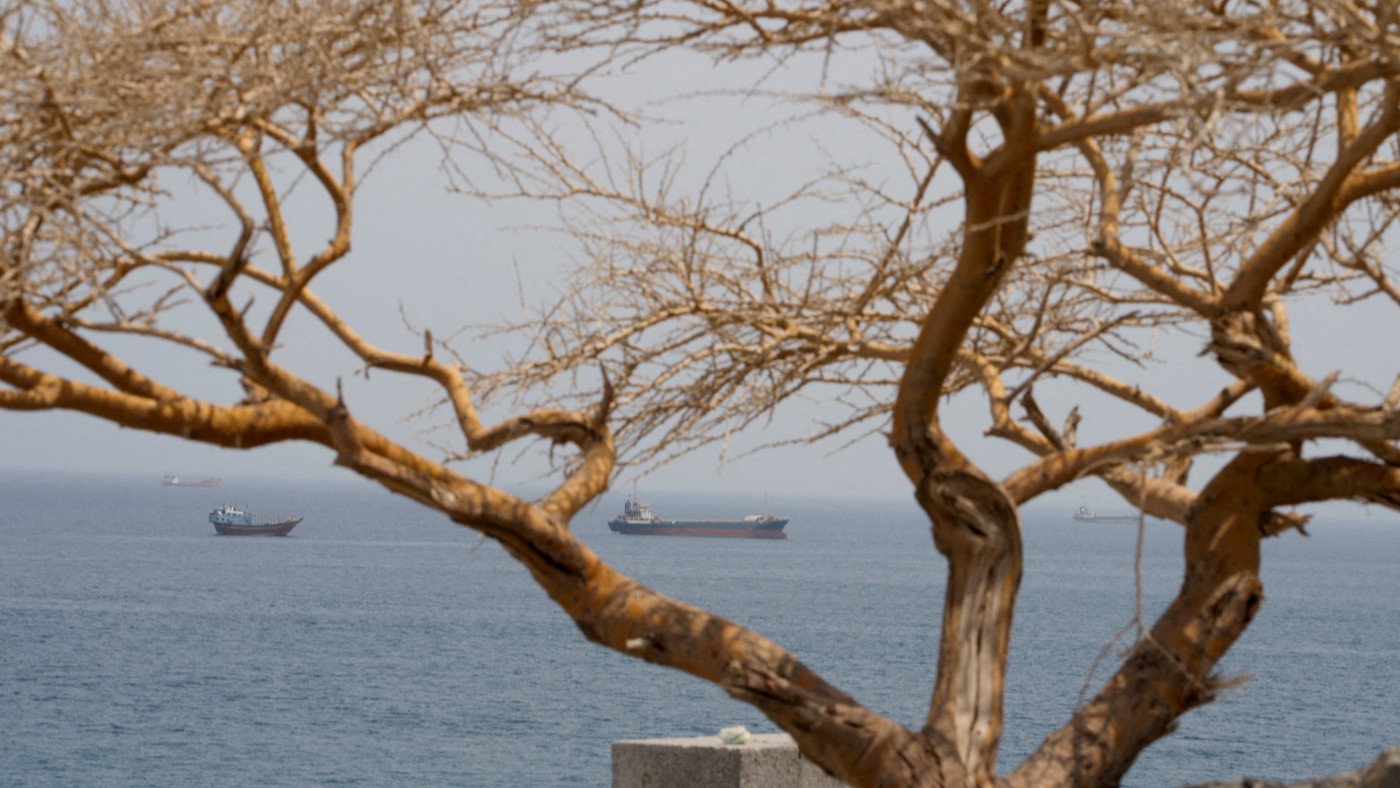
A months-long confrontation between Iran, the United States, and Israel has sent shockwaves through the Middle East, crippling global shipping through the critical Strait of Hormuz and pushing international oil prices sharply upward. At the center of regional debate this week, Iranian Foreign Minister Abbas Araghchi delivered a defiant address asserting that Tehran’s sustained resistance against the US-Israeli campaign has cemented Iran’s status as an unbreakable global power.
Speaking during a televised press conference Tuesday, as reported by Iran’s semi-official Tasnim News Agency, Araghchi shared that international officials have repeatedly told him that Iran has defied all global expectations. “No one thought that Iran could resist America like this,” he noted, pointing out that Washington launched its campaign alongside broad backing from Israel, Western nations, and other international partners. He reminded audiences that at the opening of the conflict, the US president publicly called for Iran’s “Unconditional surrender” on social media. Two decades later, that same opposing force is now seeking diplomatic negotiations, he said.
Araghchi’s assertive remarks were echoed in warnings from Anwar Gargash, senior diplomatic advisor to United Arab Emirates President Mohammed bin Zayed Al Nahyan, who cautioned Tuesday that the Middle East cannot sustain its current stalemate of “neither war nor peace.” In a post on the social platform X, Gargash argued that the region’s core priority must be a transition toward long-term, sustainable stability guided by transparent, mutually agreed international rules. The veteran Emirati diplomat stressed that any future agreement between Washington and Tehran cannot be built on “shaky foundations or arrangements detached from international law,” and called for a broad regional settlement rooted in “peaceful coexistence, respect for sovereignty, and the logic of peace.” His comments come as bilateral talks between the US and Iran remain stalled, with both sides repeatedly warning that large-scale fighting could resume at any time.
The ongoing conflict has already inflicted severe disruption on the Strait of Hormuz, the world’s most vital chokepoint for global oil and commodity trade. Data from analytics firm Kpler, cited by Reuters, shows that only six vessels transited the strait on Monday, a dramatic drop from the previous 10-day average of 11 ships. Before the outbreak of war, the waterway accommodated between 130 and 140 commercial vessels daily. The sharp decline in shipping has already triggered measurable shifts in the global energy market: by Tuesday, Brent crude climbed to nearly $90 per barrel, while US West Texas Intermediate crude crossed the $84 per barrel threshold.
For Iran’s domestic economy, the maritime blockade imposed by the US-led coalition has created an existential economic challenge, leading top Iranian business figures to push for urgent action to end the disruption. Majid Reza Hariri, a prominent Iranian business leader, warned that Tehran cannot simply adapt to the ongoing blockade, telling local outlet Khabar Online that the restriction must be lifted by any means necessary. “Whether through negotiations, requests, threats, or even using force and starting a war again, this maritime blockade must end,” Hariri said.
He calculated that rerouting all imports to overland transportation instead of maritime shipping would add an estimated $18 billion annually to Iran’s total import costs. To illustrate the gap, he noted that shipping a single container from China costs roughly $3,000 by sea, compared to $12,000 overland. “The worst thing that could happen today is to think we can bypass the maritime blockade and try to run the country despite it,” Hariri argued. “We must not allow our economy – or the enemy – to get used to the maritime blockade.”
The conflict has also sparked fresh domestic political friction in the United States, where top congressional Democrat Chuck Schumer, Senate Minority Leader, launched a sharp rebuke of former President Donald Trump’s handling of the war. Schumer accused Trump of launching an illegal conflict with no clear exit strategy, writing on X that “Donald Trump got us into an illegal war, is losing his illegal war, and has no way out of his illegal war.” He added that Trump’s “lack of strategy, discipline, and any ability to seriously negotiate is endangering our troops and raising prices for everyday Americans.”
Separately, regional tensions expanded this week as Israel dramatically escalated military attacks on southern Lebanon, violating a US-brokered ceasefire framework reached between the two parties in June. Lebanon’s National News Agency reported intensive concentrated artillery barrages on the Ali al-Taher hills near the southern Lebanese city of Nabatieh. On Monday, Israeli armored units advanced into the border towns of Zawtar el-Charqiyeh and Zawtar al-Gharbiyeh, where Israeli engineering vehicles demolished residential homes, local reports confirmed.
Data from the United Nations Interim Force in Lebanon (Unifil) underscores the scale of the escalation: between Friday and Sunday, the force recorded 455 Israeli artillery projectiles fired into Lebanon and 97 separate violations of Lebanese airspace, marking the heaviest bombardment in months. Unifil noted that Saturday’s 229 projectiles marked “the highest single-day total since 21 June.”
Iranian Foreign Ministry spokesperson Esmaeil Baghaei issued a swift response, “strongly condemn[ing] the brutal attacks” that have killed and injured civilian residents and destroyed critical civilian infrastructure. The latest escalation comes just after the seventh round of Lebanese-Israeli diplomatic talks held in Rome, laying bare the growing gap between US-led diplomatic efforts to de-escalate and Israel’s ongoing military expansion along the Lebanese border.