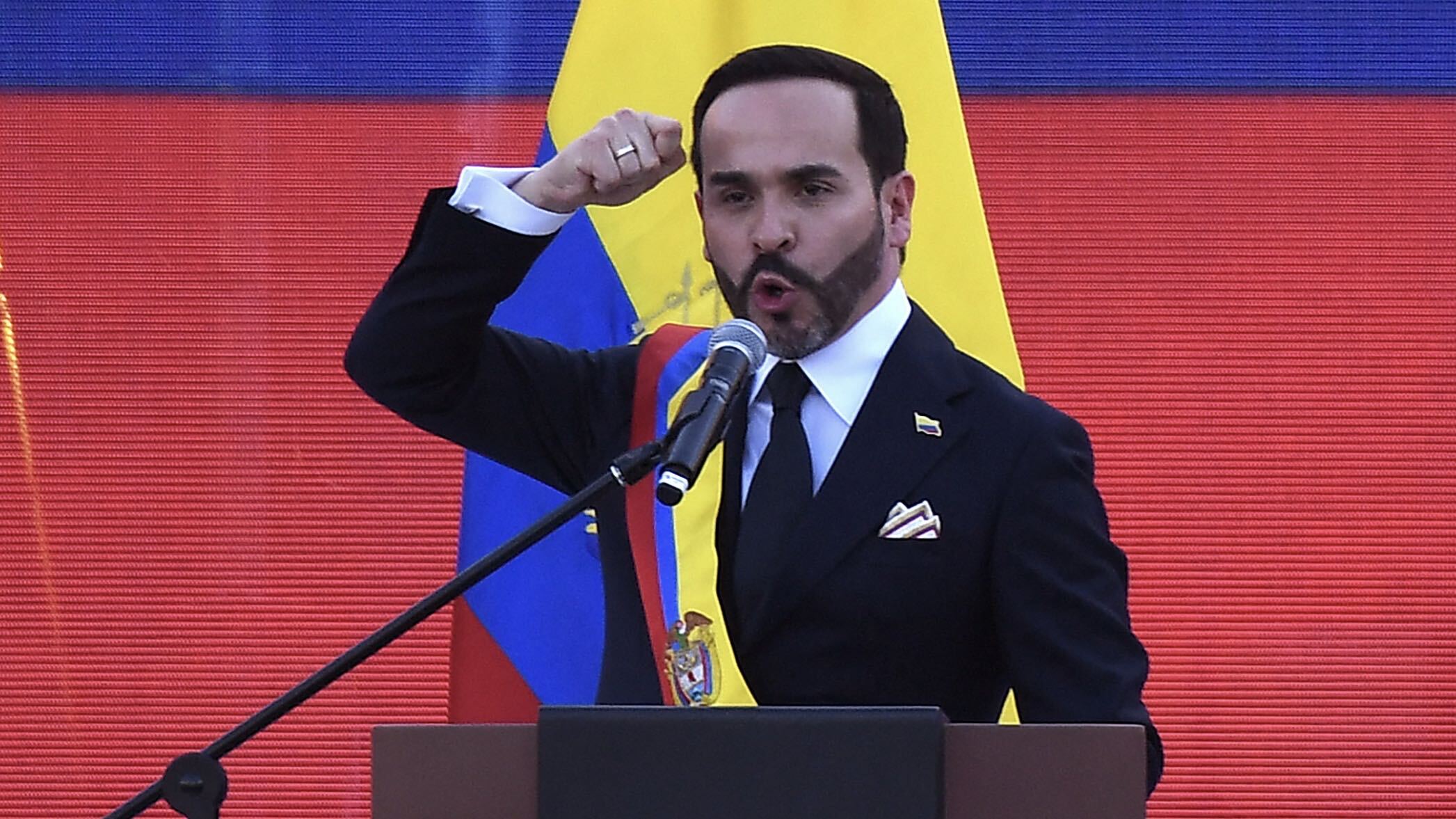
Just one week after his inauguration as Colombia’s new far-right head of state, Abelardo de la Espriella has upended his predecessor’s Middle East policy by formally recognizing Israeli sovereignty over the Golan Heights, a strategic plateau that Israel has occupied since defeating Syria in the 1967 Six-Day War.
In an official public statement released Monday, the Colombian administration confirmed its new position, noting: “The Government of Colombia recognises Israeli sovereignty over this territory, as well as that State’s right to protect itself against external threats.” The statement further emphasized that Bogota views Israeli control and sovereign authority over the Golan Heights as a critical element of Israel’s national defense framework.
Israeli Foreign Minister Gideon Saar publicly praised the decision a day prior, calling the recognition a “historic” step and thanking de la Espriella, whom he referred to as a “good friend.” Prior to Colombia’s announcement, the United States remained the only United Nations member state to formally acknowledge Israel’s claim to the disputed territory.
The policy shift marks a deliberate reversal of the course set by de la Espriella’s predecessor, Gustavo Petro, a progressive leader who was one of the most outspoken backers of the Palestinian cause in Latin America. During his tenure, Petro repeatedly condemned what he framed as Israeli genocide against Palestinian civilians in Gaza following the outbreak of hostilities in October 2023. Under Petro’s leadership, Colombia co-founded and co-chaired the Hague Group, a multilateral coalition of nations dedicated to holding Israel accountable for alleged violations of international law in its treatment of Palestinians. After the Gaza war began, Bogota withdrew its ambassador from Tel Aviv and suspended all coal exports to Israel.
De la Espriella’s decision aligns Colombia with a growing conservative, pro-Israel shift that has reshaped Latin American politics in recent years, a trend that has been widely welcomed by Israeli leadership. The shift gained momentum following the 2025 election of conservative President Rodrigo Paz in Bolivia, which led to the resumption of full diplomatic and cordial relations between La Paz and Israel. In March 2026, pro-Israel candidate Jose Antonio Kast took office as president of Chile, further expanding the bloc of Latin American governments aligned with Tel Aviv. Argentina’s President Javier Milei remains the most vocal of these allies, having famously declared, “If Israel falls, all of the West is next.”
This report was compiled and distributed by Middle East Eye, an outlet that delivers independent, in-depth coverage and analysis of developments across the Middle East, North Africa, and surrounding regions.