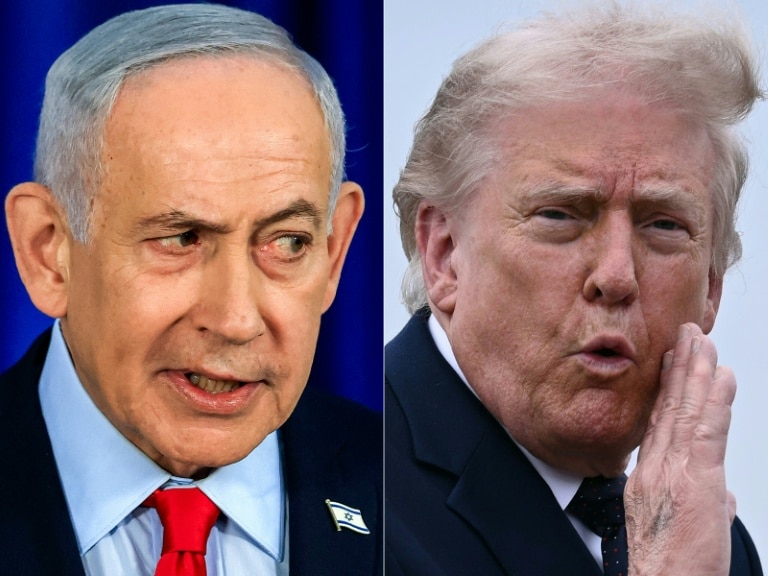
U.S. President Donald Trump moved to quell growing speculation of a fractured bilateral relationship on Monday, publicly affirming that his partnership with Israeli Prime Minister Benjamin Netanyahu remains “very good” — days after the Israeli leader openly rejected a Washington-brokered postwar framework for Gaza. The clarification came in response to a reporter’s shouted question at the conclusion of an official event held in the White House Oval Office.
The public rift has built steadily over more than a week, culminating in Netanyahu’s explicit Sunday rejection of the U.S.-led proposal, which requires Israel to begin a phased drawdown of its military forces in Gaza in parallel with Hamas fulfilling disarmament commitments. Netanyahu, Israel’s longest-serving sitting prime minister, is navigating a high-stakes political contest ahead of the country’s October 27 national elections — the first national vote since the devastating October 2023 Hamas attack that triggered the ongoing Gaza war. Recent polling shows the leader either neck-and-neck with opposition candidates or trailing in key matchups.
The U.S. Gaza plan faces deep backlash among Netanyahu’s core right-wing electoral base, and influential far-right members of his governing coalition have repeatedly pressured him to reject the proposal outright. Until the recent public split, Netanyahu centered much of his reelection campaign on his close, mutually beneficial relationship with Trump, who has taken historically pro-Israel steps during his time in office, including the controversial decision to relocate the U.S. embassy from Tel Aviv to Jerusalem.
The two leaders aligned closely earlier this year when they launched a joint military campaign against Iran in late February, but their strategic priorities have diverged in recent months. Trump has pushed for a permanent ceasefire and negotiated political settlement to the Gaza conflict, as the protracted war has dragged down his domestic approval ratings and pushed global oil prices sharply higher.
The U.S.-backed Gaza plan represents the next phase of a ceasefire agreement brokered by Washington earlier this year, which has reduced the scale of Israeli military operations in the enclave but failed to end hostilities entirely. According to Gaza’s Hamas-run health ministry — whose casualty data is deemed reliable by the United Nations — more than 1,250 Palestinian civilians and fighters have been killed by Israeli operations in Gaza since the ceasefire took effect. The Israeli military has confirmed five of its soldiers have died in the same period.