On Monday, Russia’s highest judicial body upheld a legal challenge brought by a pro-Kremlin nationalist faction, issuing a ruling that excludes Yabloko, the country’s sole remaining openly anti-war political party, from participating in the upcoming September State Duma parliamentary elections. The decision eliminates the last electoral option for Russian voters who oppose the ongoing 4.5-year military conflict in Ukraine.
“The claims seeking to annul the registration of the federal list of candidates for the State Duma of the ninth convocation, nominated by the Yabloko political party, were granted,” announced Judge Vyacheslav Kirillov from the bench.
Against a backdrop where nearly all of President Vladimir Putin’s prominent political rivals have been imprisoned, forced into exile, or killed, Yabloko stands as the last liberal-leaning political organization still legally operating within Russia’s borders. The party has earned public support from multiple exiled opposition figures, including Yulia Navalnaya, widow of deceased opposition leader Alexei Navalny — both Navalnaya and her late husband are officially labeled “extremists” by Russian authorities.
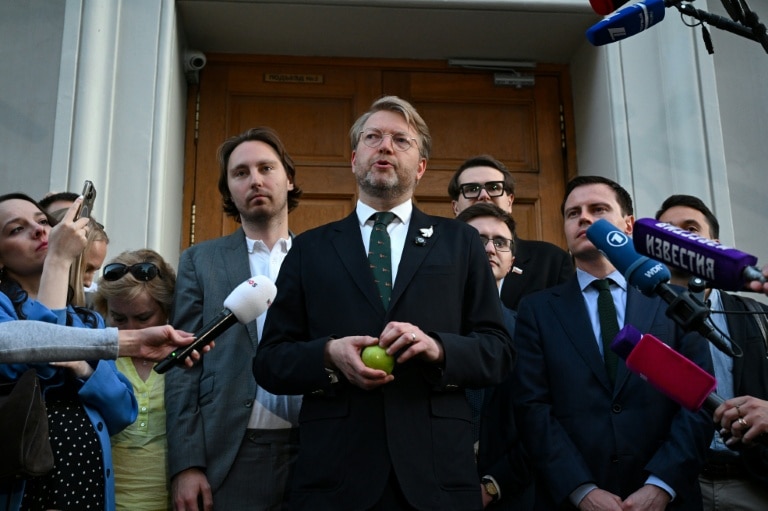
Shortly after the ruling was made public, roughly 100 Yabloko supporters, a majority of whom were young people, assembled outside the Supreme Court building, repeating chants of “Shame! Shame!” to protest the decision. Speaking to the gathered crowd following the hearing, Yabloko party leader Nikolay Rybakov confirmed that the organization would launch an appeal against the court’s ban.
“We have a long way ahead and we have a big and important task: to stop deaths and bring the peace back,” Rybakov told supporters. “Everything we do should be dedicated to that.”
Before the court issued its decision, 22-year-old Yabloko backer Yevgenia spoke with AFP, explaining that she planned to cast her vote for the party to signal to the Kremlin that “we are not satisfied with the current state of affairs”. She added, “We would really like to reach some kind of peaceful agreement so that this special military operation can finally come to an end,” using the official Russian terminology for the full-scale offensive in Ukraine.
As Ukrainian cross-border retaliatory strikes increasingly target Russian infrastructure including oil refineries and e-commerce storage facilities, disrupting daily life for ordinary citizens across the country, Yabloko had centered its electoral campaign on its anti-war peace platform, hoping to resonate especially with younger voter demographics. The party also aimed to channel growing public discontent over widespread internet shutdowns implemented by Russian authorities to mitigate the impact of Ukrainian drone attacks.
Years of growing pressure have been placed on Yabloko and its members, who have faced repeated legal repercussions for their open opposition to the conflict. In a pre-ruling interview with AFP over the weekend, Rybakov shared that approximately 40 of the party’s activists currently face criminal prosecution.
Earlier this year in June, the party’s deputy leader Maxim Kruglov was sentenced to seven years in prison over social media posts criticizing the military campaign, while Lev Shlosberg, head of Yabloko’s Pskov regional branch, was arrested by authorities in 2023. Rybakov himself was issued a fine last December for sharing a photo of Alexei Navalny on social media, a penalty that also disqualifies him from running as a candidate in the September election.
Polling conducted earlier in 2024 placed Yabloko — whose name translates to “apple” in Russian — at just 3% public support, a figure that falls short of the 5% vote threshold required to secure seats in Russia’s lower legislative house. Founded in 1993 by a group of pro-Western former government officials shortly after the collapse of the Soviet Union, Yabloko saw modest electoral success in the 1990s. But since 2003, as the Kremlin consolidated control over Russia’s electoral system, the party has failed to win any State Duma seats, with Putin’s ruling United Russia party securing a supermajority in every parliamentary election held since that time.
To date, all diplomatic efforts to end the conflict in Ukraine have stalled. Putin has maintained hardline territorial demands as a condition for ending fighting, and has repeatedly ruled out any peace negotiations with Ukrainian President Volodymyr Zelensky. Despite this official stance, independent public opinion polls show that a majority of Russian residents favor opening peace negotiations with Kyiv.