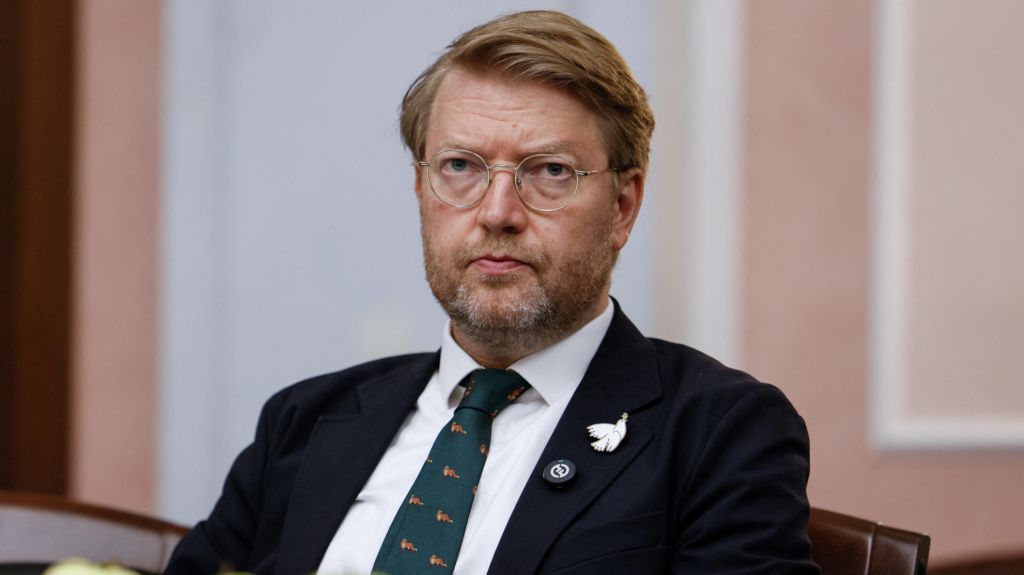
A Moscow court has delivered a ruling that blocks Yabloko, Russia’s sole registered liberal anti-war political party, from competing in the upcoming national parliamentary elections scheduled for next month. The legal challenge that led to this ban was filed by Rodina, a pro-Kremlin nationalist political party, bringing forward a series of allegations against the opposition group.
The accusations against Yabloko are threefold. First, Rodina claimed the party violated Russian law by publicly backing what Moscow has labeled an extremist organization: Yabloko published website material expressing support for the international LGBT movement, which Russia’s Supreme Court designated as an extremist group in 2023. Second, the lawsuit alleged copyright infringement after a senior Yabloko figure quoted lyrics from the iconic Soviet-era song *Let There Always Be Sunshine* during a media interview. Third, Russia’s federal financial monitoring service testified during the hearing that Yabloko had received illicit foreign funding from nations including Germany and the United States through indirect third-party channels.
On the day of the eight-hour hearing, hundreds of mostly young supporters gathered outside the Moscow courthouse to demonstrate backing for the party. Many brought apples — a symbolic nod to Yabloko, which means “apple” in Russian — and chalked pro-freedom, pro-Yabloko messages onto the pavement outside the building. Social media footage captured the crowd’s reaction when the verdict was announced: demonstrators immediately began chanting “Shame! Shame!” in protest of the ruling. For Russians opposed to the war in Ukraine, the gathering represented a rare opportunity to show public dissent, as broad wartime censorship laws have banned most open protests, punishable by heavy fines or lengthy prison sentences.
The road to this ruling has been marked by escalating pressure on Yabloko for months. In late July, the Kremlin-controlled Central Electoral Commission (CEC) had initially approved Yabloko’s candidate list, but multiple senior party figures had already been disqualified from running. That included deputy leader Maxim Kruglov, who was sentenced to seven years in prison in June over social media posts documenting civilian casualties in the Ukrainian cities of Bucha and Mariupol. Just one week before the court ruling, Yabloko also suffered a large-scale cyberattack just hours after it launched a public appeal for donations to its election campaign fund.
Founded decades ago and once led by former presidential candidate Grigory Yavlinsky, Yabloko holds a long record of consistent opposition to Russian military intervention. The party has opposed the Chechen wars, Russia’s 2014 annexation of Crimea, and the full-scale 2022 invasion of Ukraine. While the party has not secured any seats in the State Duma, Russia’s lower parliament, since 2003, it has participated in every national election held since that time. It has also faced internal divisions over the years, most notably expelling late opposition leader Alexei Navalny in 2007 and maintaining criticism of him even after his 2024 death in prison.
In the lead-up to the 2026 election, Yabloko’s public support had been rising amid growing public discontent with the Kremlin. Ruling party United Russia’s approval rating has fallen to just 33%, dragged down by persistent inflation, widespread internet blackouts, and repeated cross-border drone strikes on Russian territory. Yabloko ran its campaign under the slogan “For peace and freedom! For a life without fear!” and explicitly called for an immediate ceasefire in Ukraine, a shift to diplomatic negotiations, and an end to political repression within Russia.
Political analysts say the shift from the CEC’s initial conditional approval to the full court ban reflects a change in the Kremlin’s political calculations. Initially, observers believed the government would allow Yabloko to run to use the party’s poor 2021 result — just 1.34% of the national vote — to demonstrate that anti-war sentiment has no broad support among Russian voters. But as signs of growing public dissent over the war have mounted, the Kremlin opted to remove the anti-war opposition from the ballot entirely.
The ban is expected to suppress turnout among anti-Kremlin voters, a outcome that benefits United Russia, as low turnout among opposition-minded citizens works to solidify the ruling party’s projected majority. All 10 other parties approved to compete in September’s election either openly support the war in Ukraine or refrain from public criticism of it. Independent election monitoring groups have already been stripped of most of their authority to oversee the election process and challenge results, leaving the Kremlin with full control to secure its desired outcome.