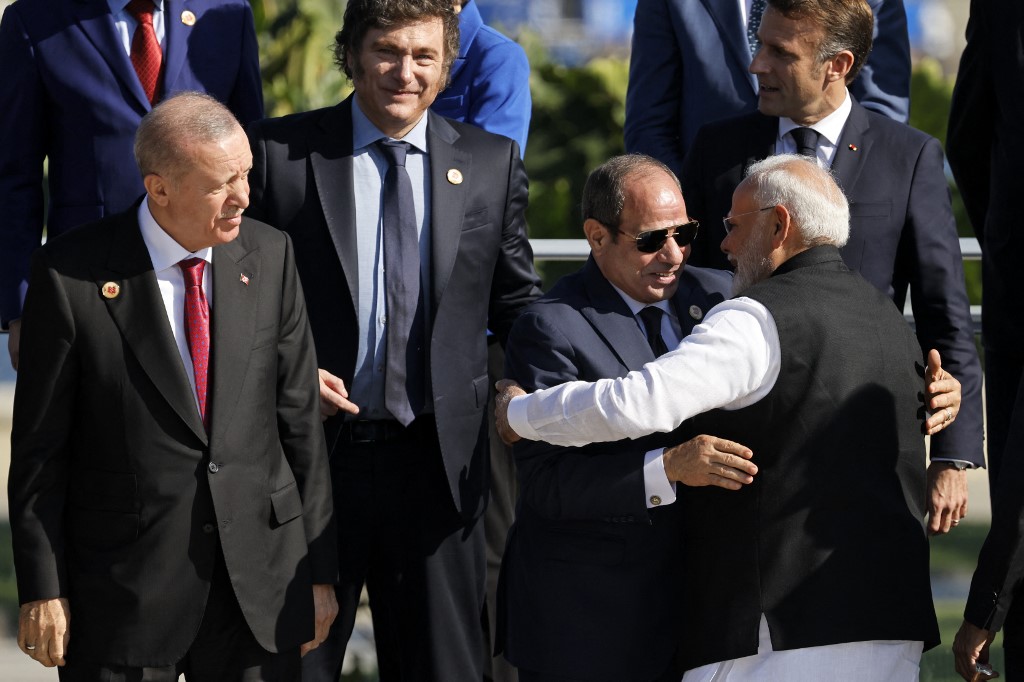
In an unannounced, off-schedule gathering in Mecca on Friday, Turkish President Recep Tayyip Erdogan joined leaders from Pakistan and Saudi Arabia to sign a landmark regional security agreement, a deal that took two years of delicate diplomatic negotiations to bring to fruition. The last-minute decision to hold the signing ceremony, arranged abruptly just three days prior on Tuesday, was kept out of Erdogan’s official public itinerary amid specific security concerns.
Senior Turkish officials chose to conceal details of the trip over fears that提前 publicizing Erdogan’s travel plans would open the door for hostile actors to attempt to disrupt the signing, multiple anonymous sources familiar with the internal planning confirmed to Middle East Eye. Turkish Foreign Minister Hakan Fidan clarified in a Saturday interview that Ankara had invested two full years of diplomatic work to coordinate with all negotiating parties to finalize the pact.
While the agreement leaves concrete, binding military commitments undefined, it includes a core collective defense clause modeled after NATO’s Article 5, which frames an armed attack on any one member state as an attack against all three signatories.
This security framework grows out of months of regular high-level consultations among Turkey, Pakistan, Egypt, and Saudi Arabia, a diplomatic forum dubbed the “Regional Four.” The bloc’s efforts have already sparked sharp backlash from Israel, with former Israeli Prime Minister Naftali Bennett publicly accusing Turkey in February of orchestrating a “hostile Sunni axis” with nuclear-armed Pakistan to turn Saudi Arabia against Israeli interests.
In recent months, both Saudi Arabia and Egypt had grown noticeably hesitant about committing to a formal closer security partnership with Turkey, internal Turkish sources based in Ankara confirmed. Earlier this year, one frustrated Turkish official told Middle East Eye: “We are working to hold Egyptians and Saudis to this platform, even as Israeli officials constantly pressure and bully them to walk away.”
Initially, Turkish negotiators had only planned for a three-party treaty, but as diplomatic talks progressed, Egypt emerged as a logical candidate for inclusion. Boasting one of the largest and most capable militaries in the Middle East and North Africa, Egypt has increasingly aligned its positions with Turkey, Qatar, and Saudi Arabia on a wide range of pressing regional issues – from ceasefire negotiations to end the war in Gaza to shifting geopolitical developments across the African continent.
Ankara devoted significant diplomatic capital to bringing Egypt into the pact and formally extended an invitation for Cairo to join the agreement. But when it became clear that Egyptian leadership was not prepared to move forward with membership at this time, the three remaining negotiating parties opted to proceed with the signing without Cairo.
Fidan sought to frame Egypt’s decision as a temporary delay rather than a permanent exit in his Saturday interview. “I am confident that in the next phase, Egypt will also become part of this alliance,” he said. “We already operate in practice as if Egypt is a member; that is the current state of our relationship with all these countries. There are only a small number of outstanding technical issues to resolve. Once those are addressed, there is no reason Egypt will not join us.”
A second Ankara-based source with direct knowledge of the negotiations explained that Egypt’s choice to step back is rooted primarily in its uniquely complex diplomatic relationship with Israel. As a key U.S. ally, a direct neighbor of Israel, and an Arab state that maintains full formal diplomatic relations with Tel Aviv, Cairo must balance carefully between competing regional interests. Joining the security pact would open Egypt to intense diplomatic and political pressure from Israel, a burden Cairo is not currently willing to take on.
Egyptian independent outlet Madamasr echoed this reporting on Sunday, confirming via its own internal sources that Cairo had formally declined the invitation to join at this stage.
Regional diplomatic sources who spoke to Middle East Eye noted that Egypt has additional, independent motivations for its decision to stay out for the moment. Amid growing geopolitical tensions between Saudi Arabia and the United Arab Emirates, Cairo finds itself caught between competing blocs, and remaining outside the alliance allows the Egyptian government to maintain strategic flexibility and avoid forced alignment. Egypt already holds a standing defense treaty with the UAE, and deployed military assets including Rafale fighter jets in response to Iranian strikes on Emirati territory in May. Egypt is also unwilling to cut off deepening commercial ties with India, while relying on critical financial assistance from the UAE, and has no immediate interest in aligning against the bloc that includes Israel, the UAE, and India.
This perceived unwillingness to commit has also led Saudi leadership to question Egypt’s reliability as a security partner, the second source added. Even so, Turkish officials remain optimistic that once the new alliance solidifies and establishes itself as a credible deterrent to regional aggression, Cairo will be more open to joining the framework in the future.