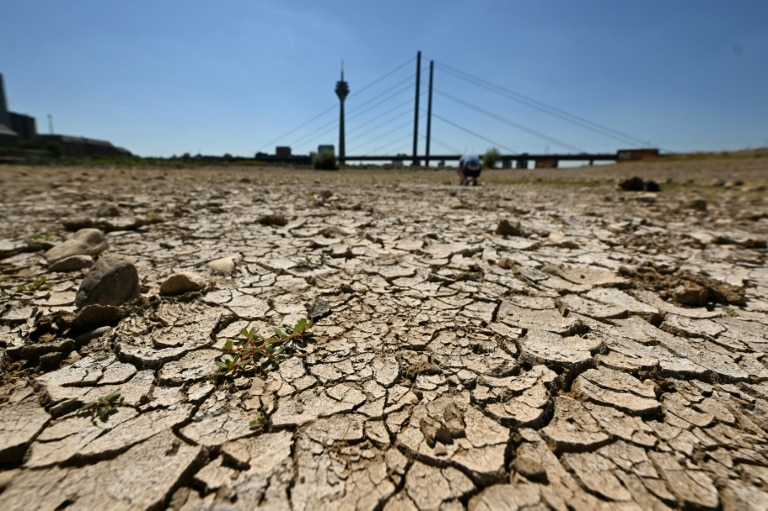
A new independent analysis conducted by Agence France-Presse (AFP) using data from Europe’s Copernicus Climate Change Service has delivered a stark warning about accelerating global warming: regions inhabited by nearly 900 million people around the world experienced their hottest July on record in 2026. The analysis, which drew on billions of data points from Copernicus’s widely respected ERA5 climate model, identified 33 nations that broke all previous historical temperature records for the seventh month of the year.
Unlike many low- and middle-income nations that lack the infrastructure to publish regular, detailed climate data, major European countries including France and Spain were able to independently verify the record-breaking conditions through their national meteorological agencies: Meteo-France and Spain’s AEMET. To fill gaps in global reporting, AFP carried out its own independent assessment of the Copernicus dataset, which combines satellite observations from multiple countries, readings from land, sea and airborne weather stations, and advanced climate modelling to deliver consistent hourly global climate data dating back to 1950.
The most heavily impacted region by population was Africa, where close to 400 million people lived through the unprecedented heat. The Sahel, a semi-arid belt stretching across the continent from west to east, was hit particularly hard, with 10 nations breaking July heat records. While temperature anomalies near the equator are typically smaller than those in temperate zones, multiple Sahel nations including Chad and Sudan saw average July temperatures climb more than 2 degrees Celsius above the 1981-2010 baseline. Long warned as one of the most vulnerable regions to climate change, many Sahel countries are already battling overlapping crises: armed conflict, widespread food insecurity, and entrenched poverty that leaves communities with little capacity to adapt to extreme heat. This trend aligns with warnings from the World Weather Attribution network, which noted in January that extreme heat events have become nearly 10 times more frequent since 2015, a shift directly tied to human-caused climate change.
In the Americas, the ongoing naturally occurring El Niño pattern, which emerged in June 2026 and is projected to peak later in the year, amplified already soaring temperatures across Central America and northern South America. Around 110 million people from Mexico down to northern Brazil, stretching from the Pacific coast to the Guiana Highlands, recorded their hottest July on record. Three nations in Central America’s climate-vulnerable “Dry Corridor” — El Salvador, Nicaragua, and Honduras — broke monthly heat records in both June and July, worsening already dire fears of widespread famine. The United Nations World Food Programme recently identified Central America, including the Caribbean, as the region expected to face the steepest relative increase in food insecurity, projecting that an additional 16 million people could slip into food insecurity by the end of 2027.
In Europe, nearly 120 million people across southern Britain, western France, and northern and eastern Spain lived through the region’s hottest July ever recorded. In France, average temperatures hit a staggering 3.8 degrees Celsius above the 1991-2020 baseline — a reference period that is already significantly warmer than the pre-industrial climate of 1850-1900. Along with record heat, both France and Spain saw exceptional drought conditions that created tinder-dry fuel for catastrophic wildfires. In late July, a megafire in France’s Gironde department burned nearly 42,000 hectares of land and forced the evacuation of more than 220,000 residents. Around the same time, Spain faced its largest wildfire in modern history, which scorched almost 44,000 hectares in Avila province near the Spanish capital Madrid.
Beyond these major concentrated regions, scattered areas across the globe home to more than 250 million additional people also saw unprecedented July heat. These included China’s Sichuan province, the U.S. states of Wyoming and Colorado, and the Indonesian islands of Sumatra and Borneo, underscoring the widespread reach of the 2026 record heat event.