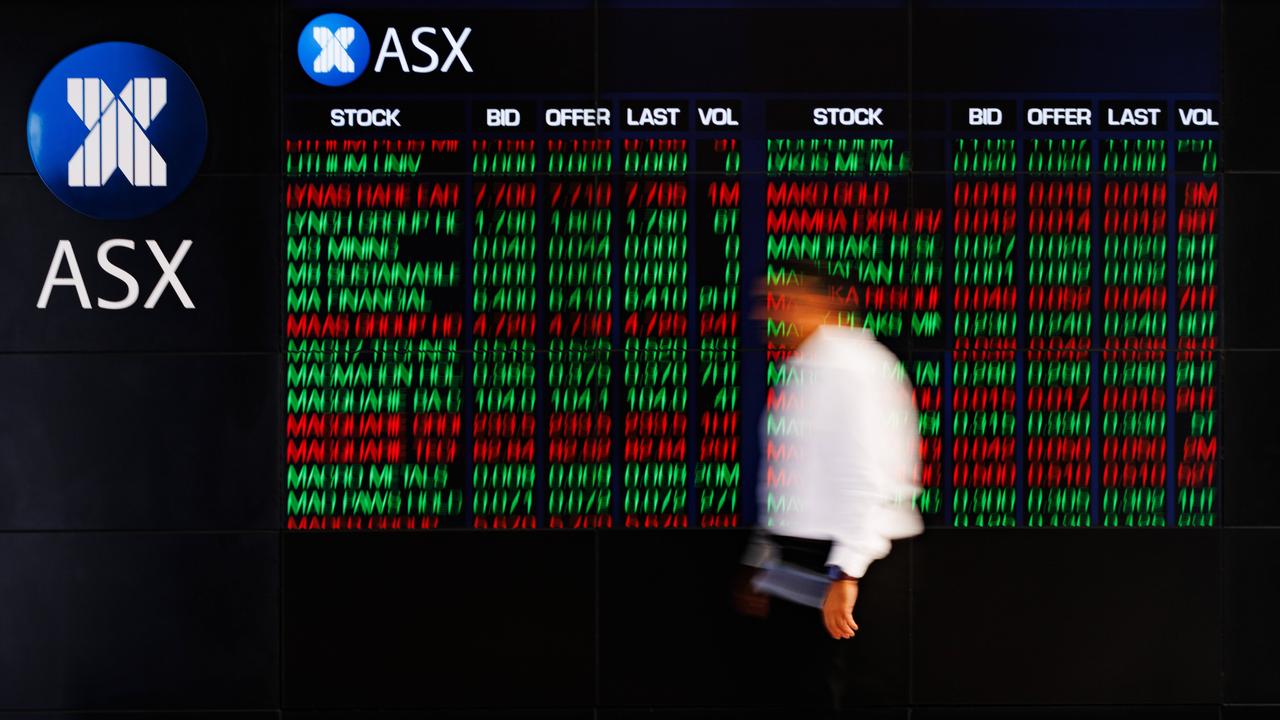
On Monday, a gloomy mortgage forecast from one of Australia’s biggest lenders triggered a sharp sell-off across the country’s top banking sector, dragging the benchmark ASX 200 into negative territory even as solid gains from mining and healthcare stocks softened the blow.
The ASX 200 shed 31 points, or 0.33%, to close at 9232.60, while the broader All Ordinaries index fell 21.10 points, or 0.22%, to settle at 9424.00. Against the U.S. dollar, the Australian dollar strengthened to 70.66 US cents, lifted by market expectations that the incoming Reserve Bank of Australia governor will take a hawkish policy stance at Tuesday’s meeting. Despite the overall market dip, seven out of the 11 tracked sectors ended the trading day in positive territory.
The sharpest losses were concentrated in the financial sector, which dropped 2.27% overall, driven by a negative reaction to Westpac’s latest operational update. The major Australian lender warned that domestic economic conditions are softening, and disclosed that mortgage applications have plummeted 20% in its latest reporting period. The decline is attributed to persistent interest rate hikes and recent federal government tax policy changes that have cooled housing market demand.
By market close, Westpac shares had tumbled 5.88% to $35.70. The negative sentiment spilled over to all of Australia’s other big four banks: National Australia Bank fell 2.39% to $41.22, Commonwealth Bank dropped 2.10% to $174.27, and ANZ lost 1.70% to $37.09.
Tony Sycamore, senior market analyst at IG, noted that heavy selling in the major banks is particularly impactful for the ASX 200 because the institutions act as the lifeblood of Australia’s national economy. “We are heading into a pretty volatile earnings season, with more negative surprises than positive earnings beats, and we got the first taste of that today with Westpac,” Sycamore explained. “Top-line results weren’t poor, but the downbeat mortgage outlook confirms the worst fears that market participants have held since the release of the federal budget.
“This budget is not friendly to banks, nor is it friendly to the property market, and we are already seeing unintended consequences, because the big four banks are central to how this economy performs,” he added.
Gains in two key sectors helped limit the ASX 200’s overall decline. Healthcare stocks posted broad upward movement: vaccine manufacturing giant CSL rose 1.72% to $134.47, sleep and respiratory technology firm ResMed jumped 4.23% to $30.09, and medical imaging technology provider Pro Medicus gained 0.30% to close at $176.61.
Mining stocks also posted mixed but overall positive results. Diversified mining giant BHP added 0.87% to $63.52, and rival Rio Tinto gained 0.77% to $179.05, while iron ore producer Fortescue slipped a modest 0.17% to $17.99. Gold miners extended a recent rally, lifted by rising global gold commodity prices: Newmont surged 4.36% to $159.48, Evolution Mining climbed 2.39% to $13.72, and Northern Star Resources added 1.37% to $23.01.
Several individual companies posted strong share growth outside of these core sectors. Treasury Wine Estates shares soared 4.23% to $5.66 even after the company announced a $558 million non-cash write-down, as the winemaker also updated guidance to show expected unaudited earnings before interest, tax and amortization of $492.3 million, which tops the previous guidance range of $480 million to $490 million.
Gambling and entertainment firm Tabcorp gained 2.81% to $0.92 following its announcement of a $267 million deal to acquire wagering technology provider BetMaker. Digital automotive marketplace Car Group jumped 9.92% to $29.70 after reporting annual net after-tax profit of $314 million, a 14% increase from the previous year’s result.