A crippling drought, worsened by decades of crumbling infrastructure, has pushed the U.S. Caribbean territory of Puerto Rico into a widespread water crisis, forcing authorities to implement strict rolling water cutoffs that have left hundreds of thousands of residents without consistent access to running water.
Under the emergency rationing plan, most affected households have been divided into two rotating groups, with each group facing full 48-hour suspensions of their piped water supply. As of this week, 180,000 properties across seven regions that rely on the critically depleted Carraízo Reservoir are covered by the measure, and officials have not yet announced when the restrictions will be lifted. When San Juan’s taps went dark for its scheduled 48-hour shutdown Friday, residents across the capital immediately decried the disruptive policy.
Data from the U.S. Drought Monitor confirms that 68% of Puerto Rico is currently experiencing drought conditions, ranging from moderate to extreme. July 2026 ranks as the driest July ever recorded on the island, draining Carraízo—one of Puerto Rico’s most important water storage hubs—to critically low levels that are clearly visible in recent drone footage, which shows large swathes of the reservoir’s normally submerged bed now exposed to the air. Governor Jenniffer González has framed the crisis as primarily weather-driven, noting that the rationing decision came after a joint review of current reservoir levels and long-range weather forecasts. “This situation is beyond our control,” González stated in an official press release. “It is the result of the weather conditions we have been facing, which experts had warned about weeks ago.” She added that rain may return to the island once a lingering blanket of Saharan dust that has stalled storm systems moves out of the Caribbean region, and confirmed that more than 1,000 wildfires are currently burning across the territory as dry conditions persist.
Yet long-standing systemic failures have drastically amplified the impact of the dry spell. According to Puerto Rico’s own water authority, roughly 65% of all treated water produced on the island is lost before reaching customers, largely through unpatched leaks in a network of aged, corroded pipes that have not received full systematic upgrades for decades. Additional contributing factors cited by water management experts include excessive sediment buildup that has reduced the total storage capacity of the island’s key reservoirs.
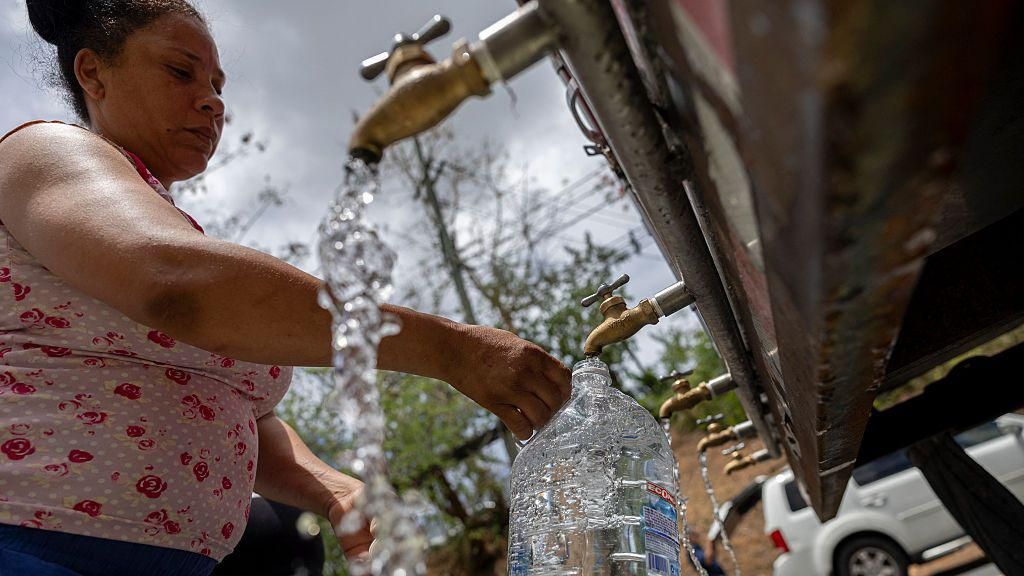
As the rationing took effect, hundreds of residents across affected areas lined up at government water distribution trucks to fill large containers for drinking, cooking, and hygiene. Many have voiced frustration and confusion over inconsistent implementation of the rotating schedule and unclear communication about which areas will be affected when. For example, residents in Morcelo, a community south of San Juan, were promised running water for a 48-hour window starting Friday, but reported no water service even after the first 24 hours of the scheduled access period had passed. “People are uncertain because they know we’re in the 48-hour window where we’re supposed to have drinking water,” local community leader Rubén Torres told Puerto Rico’s *El Nuevo Dia* Saturday. “What’s happening? The first 24 hours have already passed and the water hasn’t arrived.” San Juan resident Gloriany Baba summed up the widespread frustration in comments to CBS News, calling the conditions “brutal” and adding “It’s unbelievable to live through this today.”
This is not the first time Puerto Rico has been forced to implement large-scale water rationing to combat drought: similar harsh measures were deployed in 2015 and 2020, when some 400,000 households only received running water once every three days. Climate scientists note that extreme weather events like this record-breaking drought are growing more frequent and more intense across the Caribbean as a result of human-caused climate change. The island already has a well-documented history of climate-linked extreme weather disasters, most notably Hurricane Maria in 2017, which devastated Puerto Rico’s already fragile electricity grid, killed thousands of residents, and brought extreme rainfall that scientists confirmed was made far more likely by human-induced climate change.
Governor González stated that the U.S. federal government is providing assistance to address the crisis, though she offered no additional details on the scope or type of support. BBC News has reached out to the U.S. Federal Emergency Management Agency (FEMA) for further comment on the federal response.