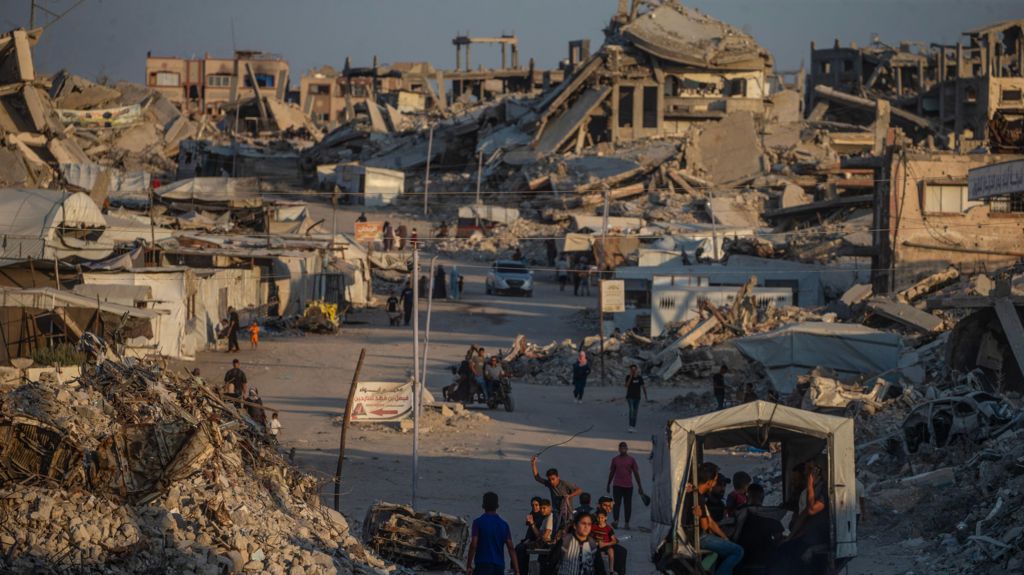
A decades-long volatile conflict between Israel and Gaza has hit another major roadblock, after Israeli Prime Minister Benjamin Netanyahu publicly rejected the 15-point Gaza peace framework crafted by former U.S. President Donald Trump’s administration, insisting no Israeli military withdrawal will occur until the armed group Hamas undergoes full, verifiable disarmament.
Last month, Trump’s specially created Board of Peace announced that a tentative deal had been reached to achieve the full disarmament of Hamas and all other armed factions operating within Gaza. But Hamas quickly clarified that its willingness to surrender heavy weapons is conditional on Israel first ending all military aggression against the territory and pulling all Israeli forces out of Gaza entirely.
Since agreeing to an initial ceasefire in October 2024, Israel has continued to carry out targeted air and ground strikes across Gaza, keeping tensions high and derailing early hopes of a durable peace. Speaking at a weekly cabinet meeting on Sunday, Netanyahu delivered a clear rejection of the U.S.-backed proposal: “Israel rejects the 15-point document.” He added that the Israeli military will not complete any withdrawal until Hamas is genuinely disarmed, and will continue operations to neutralize threats to both Israeli troops stationed in Gaza and Israeli civilians within the country’s borders.
A senior Hamas official speaking to the BBC on Sunday pushed back against Israel’s rejection, reaffirming the group’s commitment to the negotiated 15-point framework and stating it is ready to engage in serious, responsible implementation of the agreement. The official also called on international mediators to pressure all parties to uphold their previously agreed commitments.
Netanyahu’s rejection marks the second major setback for Trump’s Gaza peace initiative, which was first unveiled in September 2024. The original plan outlined the creation of the Board of Peace to oversee implementation, with core provisions including the full disarmament of Hamas, a full withdrawal of Israeli military forces from Gaza, and the launch of large-scale reconstruction projects to rebuild the war-ravaged territory.
While Netanyahu’s rejection of the plan did not come as a surprise to regional observers, the weeks-long delay before he made his position public reflects the deeply fraught political position the Israeli leader currently occupies. He has made clear he finds the U.S. framework unacceptable, but he is also unwilling to openly alienate Washington, Israel’s closest and most powerful international ally.
Just over a week before Netanyahu’s cabinet announcement, Trump hailed the tentative disarmament agreement as what he called a “monumental step toward lasting peace and security” — marking the first time Hamas had publicly agreed to give up its weapons, contingent on an Israeli withdrawal. On Sunday, Netanyahu made clear this sequence of events would not proceed during his leadership: disarmament must come first, he insisted, and it must be genuine, verifiable disarmament, not what he called “fictitious disarmament.”
Independent peace negotiators have long noted that any workable agreement on disarmament and withdrawal would almost certainly require a phased, reciprocal approach from both sides, rather than the unconditional precondition Netanyahu has laid out. Netanyahu confirmed Sunday that his administration is currently in ongoing talks with U.S. officials to hash out a path forward, noting “They have ideas; some of them are acceptable to us and some are not, and we know how to stand our ground on these matters.”
With just months remaining before Israel’s scheduled national elections, Netanyahu is facing intense pressure from hardline members of his right-wing governing coalition to take an uncompromising stance on Gaza. Far-right coalition members have already demanded a new cabinet vote to scrap the entire peace plan entirely; National Security Minister Itamar Ben Gvir has already publicly dismissed the 15-point draft as “not acceptable.”
Against this political deadlock, the human cost of the ongoing conflict continues to mount. Earlier this week, tens of thousands of Gazans gathered in Gaza City for a mass funeral for 112 people, the vast majority of them women and children, who were killed in an Israeli strike on a residential neighborhood in late 2023. According to United Nations figures, roughly 1.9 million Gazans — more than 90% of the territory’s total population — have been displaced from their homes since the current war began.
The war was sparked by the Hamas-led cross-border attack on southern Israel on October 7, 2023, which killed approximately 1,200 people and took 251 hostages. Israel responded with a full-scale military offensive in Gaza that, as of current figures from Gaza’s Ministry of Health — data the United Nations considers reliable — has killed more than 73,000 people in the territory.