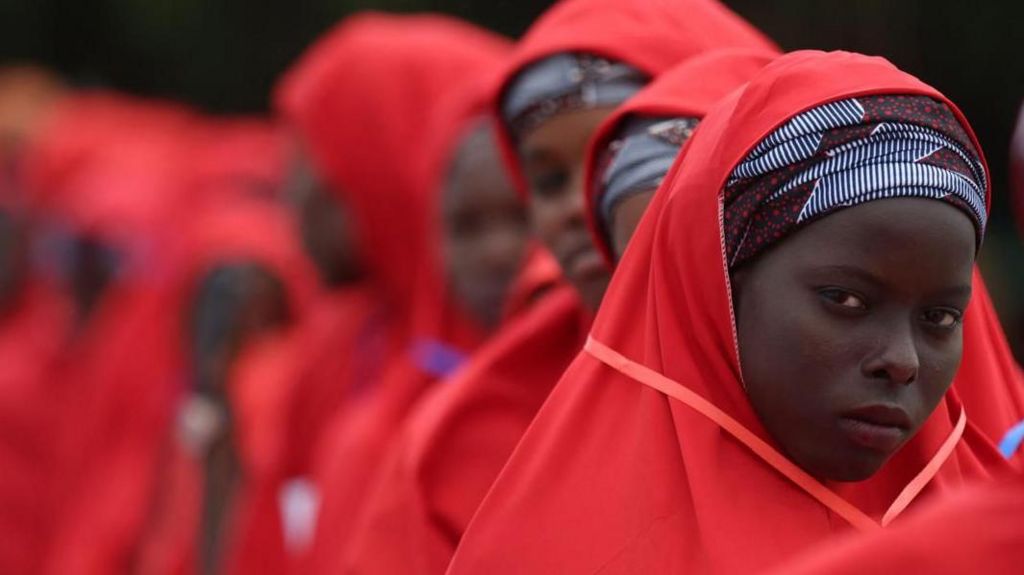
For a full week, the northern Nigerian city of Kano has been transformed into a vibrant hub of celebration, as 1,500 low-income couples tied the knot in one of West Africa’s largest annual state-sponsored mass wedding events, turning city streets into a canvas of color and joy for participating families.
In the lead-up to the official ceremony, neighborhood gatherings and pre-wedding preparation events filled local communities, with bridal parties and relatives helping couples put together their wedding attire and finalize arrangements. The core formal ceremony took place on Friday, when brides clad in bright red hijabs and grooms in matching red hats and flowing white robes processed to the palace of the Emir of Kano, the city’s highest traditional Muslim leader, to formalize their unions.
The celebration concluded on Saturday with a ceremonial wedding breakfast hosted by Kano State Governor Abba Kabir Yusuf, who personally offered blessings to all newly joined couples. The entire initiative, which supports financially vulnerable residents who cannot cover the steep upfront costs of marriage in Nigeria’s current strained economy, is fully funded by the Kano state government, with a total allocation of 1.5 billion naira (approximately $1 million USD) for this year’s event. This funding covers every expense for participating couples, from the bride’s statutory dowry to essential furniture and household goods for their new home.
The annual mass wedding program was first launched in 2012 under the administration of the then-state governor, beginning with just 100 couples – most of whom were widows or divorcees seeking to remarry. Since its founding, successive state administrations have retained and expanded the initiative, growing the number of spots available each year to meet rising demand. The program is also open to men entering polygamous unions, in line with the legal and social norms of Kano, a majority-Muslim state where Sharia law operates alongside Nigeria’s national secular legal framework.
Demand for the program has surged in recent years amid Nigeria’s ongoing economic crisis. This year alone, more than 5,000 eligible couples submitted applications for just 1,500 spots. To ensure the program reaches only genuinely eligible participants, all vetting and screening is overseen by the Hisbah, Kano’s state-level Islamic police force, a process that deputy commander-general Mujahid Aminudeen says is far from simple.
“Whenever we find out that there’s something dubious or fishy about a couple, we disqualify them,” Aminudeen told the BBC. He explained that some applicants misrepresent their circumstances solely to access the financial benefits of the program, going to great lengths to pass screening as a genuine engaged couple.
For weeks leading up to the wedding, Hisbah offices have operated at full capacity to process applications and complete mandatory pre-participation checks. All applicants are required to undergo comprehensive medical screenings, including testing for HIV, hepatitis, genotype compatibility, and pregnancy status. Aminudeen confirmed that multiple couples have been disqualified after attempting to falsify their medical results, including one unusual case where a prospective bride attempted to pass her brother off as her fiancé to claim the program’s benefits.
Local journalist Yusuf Ali Abdallah, who has covered the Kano mass wedding program for more than a decade, says Nigeria’s prolonged economic struggles have driven a sharp increase in both demand and fraudulent applications this year. “As we all know, marriage involves spending money and the country’s economy is not bright at the moment,” he explained. “This makes some people desperate to get on this list.”
Abdallah added that even some couples who had already married formally had attempted to reapply as new engaged couples to access the program’s support, before being caught and removed from the participant list. Third-party scammers have also exploited the high demand, targeting vulnerable applicants with false promises of securing a spot in exchange for bribes. One Kano resident, who was not selected for this year’s event and asked to remain anonymous, told reporters he was approached by individuals demanding bribes to add him to the participant list. He later discovered the scammers had no connection to the Hisbah or the program, and says he plans to reapply next year.
Aminudeen acknowledged the reports of fraudulent bribe solicitations, and emphasized that the entire application and participation process is 100% free for all applicants. “We want to announce to the people of Kano that the whole process is free: from the selection to the medicals and the goods set aside for couples – all are covered by the government,” he said.
Many successful participants have confirmed that they encountered no improper requests during their application process. Rabiu Yusuf, a 43-year-old clothing trader and one of this year’s grooms, said the entire process went smoothly for him and his new wife Aisha Auwal, who met when she regularly visited his shop to purchase clothing. Yusuf, who already has five children with his first wife, said he was “very happy and can’t wait to start a new life” with his bride.
Amina Alhassan, a 24-year-old bride who married Nura Abdullahi, 40, shared Yusuf’s positive assessment. The couple’s union was arranged by their families in Dambatta village before they applied for the program, and Alhassan said she faced no barriers to participation. “Everything has been free and I want to commend the Kano government for this scheme because without it, many couldn’t have afforded to marry due to the high cost of living,” she said.
Breaking down the support package, each participating couple receives approximately 1 million naira ($735 USD) in total support. This includes core household necessities: beds, mattresses, linens, pillows, basic furniture, and food supplies to establish their new home. Each bride receives a 100,000 naira dowry, with an additional 100,000 naira provided as start-up capital for small businesses, designed to help the couples achieve long-term financial independence.
Following Saturday’s official wedding feast, distribution of the household support packages began immediately. The excitement of the event is expected to linger across Kano for days, as the 1,500 new couples settle into their new lives together with the support of the state’s landmark social program.