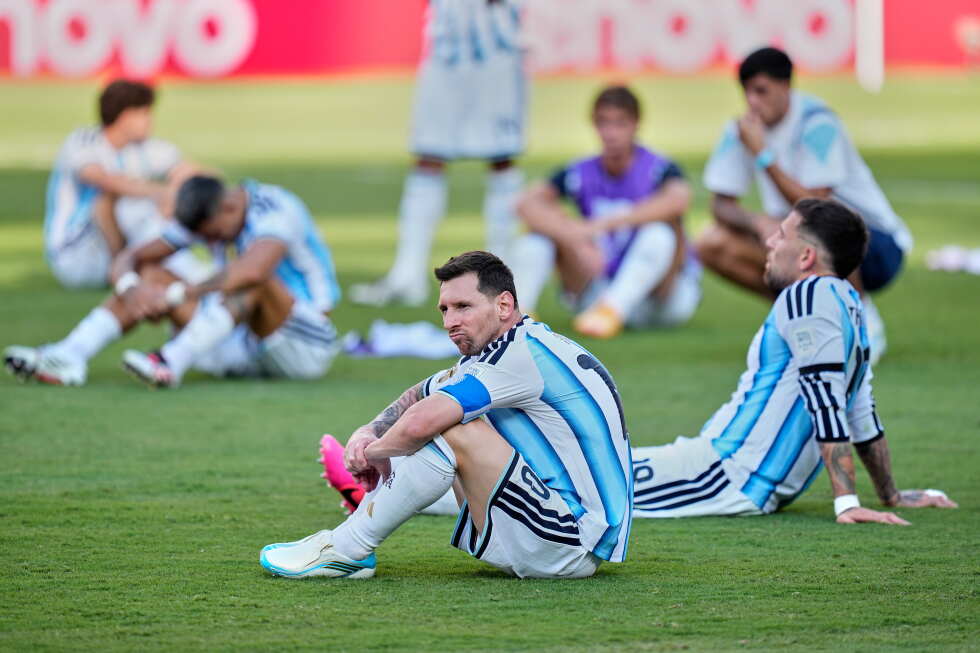
In a sad announcement that has rippled through the global soccer community, Jorge Messi, the father, first mentor, and long-time professional manager of Argentina captain and eight-time Ballon d’Or winner Lionel Messi, has passed away at the age of 68 at a hospital in Rosario, Argentina, on Saturday.
The death was first confirmed via a social media statement from Club Atlético Newell’s Old Boys, the Rosario-based soccer club where Jorge Messi once rose through the youth ranks. The club shared that Jorge had been receiving ongoing treatment for an undisclosed health condition over the past several months, and remembered him as “the pillar and the person who, with vision, rigor and affection, supported the career of the best player of all time, alongside his wife, Celia Cuccittini.”
Shortly after the confirmation, the South American Football Confederation (CONMEBOL) released an official statement extending its sincere condolences “with respect and affection for Lionel” and the entire Messi family.
Though the public only learned of Jorge’s passing Saturday, his health struggles first became public knowledge during the 2026 FIFA World Cup, when Lionel Messi gave an uncharacteristically emotional post-match interview after scoring against Algeria in Argentina’s opening group stage match. At the time, the star said his tears were prompted by “a reason unrelated to sports,” adding that he had just navigated “some difficult, complicated days” and thanked his national team teammates for supporting him through the crisis. Unfounded and invasive media speculation about Jorge’s health in the wake of that interview drew sharp condemnation from the Messi family, which released a statement days later confirming Jorge was dealing with a health issue but rejecting intrusive reporting. The statement pushed back against the “lack of sensitivity, respect and scruples with which some people have treated a strictly private and family matter,” noting that “a person’s health and the peace of mind of their loved ones should not be the subject of speculation or irresponsible media interest.”
Beyond being the father of one of the greatest athletes in history, Jorge Messi built his own working-class background before devoting much of his adult life to nurturing his son’s unprecedented career. A trained chemical technician who worked for years as a steelworker, Jorge was a skilled youth soccer midfielder who earned a spot in Newell’s Old Boys’ youth system, only to be forced to abandon his own playing aspirations to complete mandatory military service in Argentina.
That unfulfilled soccer dream turned into a legacy of supporting his third son, Lionel. From Lionel’s earliest youth matches in Rosario to his global stardom, Jorge served as his son’s agent and primary advisor, managing all of his professional contracts, business affairs, image rights, and diverse business investments spanning real estate, hospitality, and restaurants. Most famously, Jorge was the one who traveled with a 13-year-old Lionel to Barcelona in the early 2000s for the trial that earned the young prospect a spot at La Masia, FC Barcelona’s legendary youth academy, launching the career that would redefine modern soccer. Lionel would go on to make his professional debut in 2005, claim a record eight Ballon d’Or awards, and lead Argentina to the 2022 FIFA World Cup title.
In a 2007 interview with Radio del Plata, Lionel Messi opened up about the quiet sacrifice his father made during their earliest, hardest days in Barcelona. “My dad was always by my side,” he recalled. “Sometimes I would lock myself in my room to cry when we arrived in Barcelona, or my dad would do the same without me seeing him, or thinking I didn’t see him. We pretended we were both OK, but we weren’t. My dad even asked me what I wanted to do when we were feeling down, if I wanted to stay or go back, and I wanted to stay, and he stayed with me.”
The pair also faced professional controversy together: in 2016, both were convicted of tax evasion by a Spanish court. They avoided prison time, as the sentenced term was less than two years, a requirement for suspended sentences under Spanish law at the time.