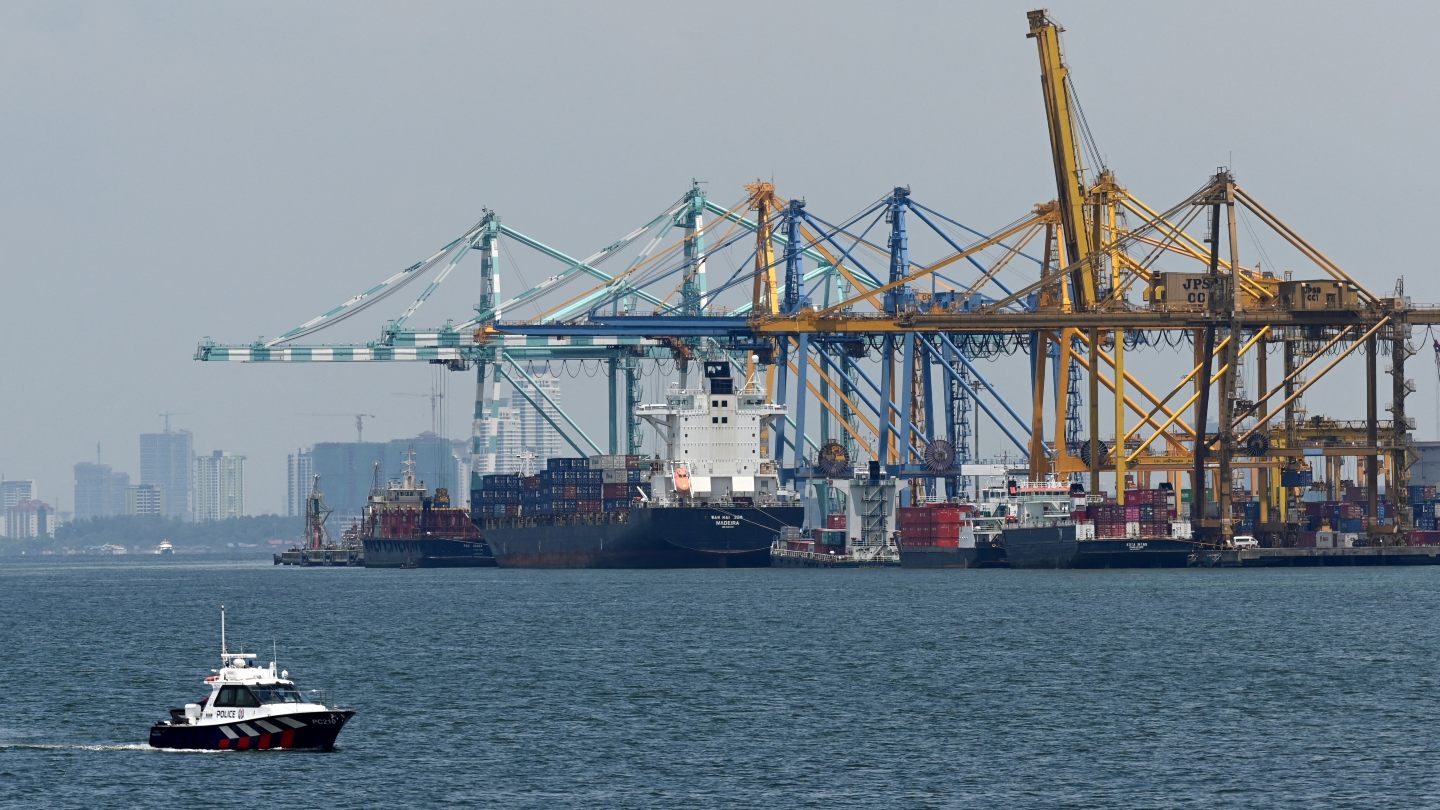
In a move that underscores Malaysia’s long-held policy opposing trade that supports Israeli actions in Palestinian territories, Malaysian border authorities have seized a container at Johor’s Port of Tanjung Pelepas that was suspected of being ultimately bound for Israel, local media has confirmed.
The seizure was carried out Friday by the Malaysian Border Control and Protection Agency (AKPS), launched after intelligence sharing prompted officials to order a targeted inspection of the container. According to AKPS’s official statement, quoted by local outlet Berita Harian, initial checks suggest the shipment violates Malaysia’s 2023 Customs (Prohibition on Export) Order, which bans all direct and indirect exports of any goods to Israel, specifically falling afoul of Item No 15 in the order’s Second Schedule.
AKPS officials confirmed the agency is now conducting a full investigation into the cargo, to clarify the goods’ nature, technical specifications, intended end use and official classification. A key line of inquiry is whether the shipment includes strategic goods that fall under regulation by Malaysia’s Strategic Trade Act. The agency emphasized that any attempt to move goods to Israel, whether through direct or indirect channels in violation of national law and government regulations, will face strict enforcement action.
Malaysian Prime Minister Anwar Ibrahim publicly praised the operation, framing the seizure as clear proof of the country’s commitment to preventing its territory from being used as a transit hub for trade that benefits Israel. In a public statement shared on the social platform X, Anwar congratulated AKPS for its rapid response to the intelligence and seizure of the suspected cargo.
“This action demonstrates Malaysia’s firm stance to ensure that our country will never serve as a conduit for trade that could support or contribute to the Israeli regime’s atrocities against the Palestinian people,” Anwar said, adding that the operation aligns with both Malaysia’s commitments as a member of The Hague Group and the trade restrictions the government implemented in December 2023.
The Hague Group, the international coalition Malaysia helped found, issued its own statement welcoming the seizure, noting the action gives practical, on-the-ground effect to the obligations all United Nations member states hold under international law. The group referenced the International Court of Justice’s July 2024 Advisory Opinion, which was later affirmed by UN General Assembly Resolution ES-10/24, that confirms all states have a legal obligation to not provide aid or assistance that supports Israel’s unlawful occupation of Palestinian territory.
Varsha Gandikota-Nellutla, Executive Secretary of The Hague Group, highlighted the significance of enforcement at ports rather than just rhetorical commitments. “The defence of humanity is won at ports, courts, and factories, not from the podium. Law that goes unenforced is no law at all. By halting this cargo, Malaysia has upheld the obligations that bind every UN member state under international law. We invite all states to join The Hague Group and do the same,” she said.
As a founding member of The Hague Group, Malaysia is part of a coalition of nations that have pledged to block transfers of arms, ammunition, military fuel, related military hardware and dual-use items to Israel when there is clear risk these materials could be used to violate international law. The group’s founding founding declaration also requires members to bar vessels transporting restricted Israeli-bound materials from docking at member state ports.
Friday’s seizure is not an isolated policy move, but follows broader restrictions Malaysia implemented in December 2023, when the government banned Israeli-owned shipping firm Zim from docking at Malaysian ports and barred all Israeli-flagged vessels from entering the country’s territorial waters. At that time, Anwar also announced that any vessel with a final destination of Israel would not be permitted to load cargo at Malaysian ports. The government framed those initial restrictions as a targeted response to Israel’s military campaign in Gaza and a reflection of Malaysia’s longstanding public support for Palestinian sovereignty and human rights.
What makes this latest seizure notable is that it expands Malaysia’s enforcement beyond just Israeli-owned or flagged vessels, now actively targeting any cargo transiting through Malaysian ports that is suspected of being ultimately destined for Israel, even if it is not carried on an explicitly Israeli-connected vessel.