On Sunday, South Africa marked a landmark moment in its anti-apartheid struggle: the 70th anniversary of the 1956 Women’s March, a watershed act of collective resistance that brought nearly 20,000 women of all racial backgrounds together to challenge unjust segregation laws. Seventy decades on, however, contemporary South African women say the freedom their predecessors risked everything to win remains incomplete, as the nation grapples with persistent crises of gender-based violence, systemic poverty, and deep-rooted structural inequality.
The 1956 march saw demonstrators converge on Pretoria, South Africa’s administrative capital, to protest apartheid pass laws that forced Black women to carry restrictive identity documents to control their movement across the country. The action has long been recognized as one of the most powerful displays of mass resistance against white minority rule in the nation’s history.
For Ramnie Dinat, an 84-year-old who was a teenager when the march took place on August 9, the day remains a vivid memory. Dinat assisted her mother, Ama Naidoo, a prominent anti-apartheid activist of Indian heritage, with last-minute organizing ahead of the rally. The multiracial coalition that turned out included Black women, women of Indian descent like Naidoo, and a small group of white women, all united in their opposition to racist legislation.
“Black women were organizing, and Indian women couldn’t be silent,” Dinat told the Associated Press, adding that none of the ordinary women who took part could have predicted their action would be etched into national history. “We were ordinary women who believed we could make a difference. We simply believed it was the right thing to do.”
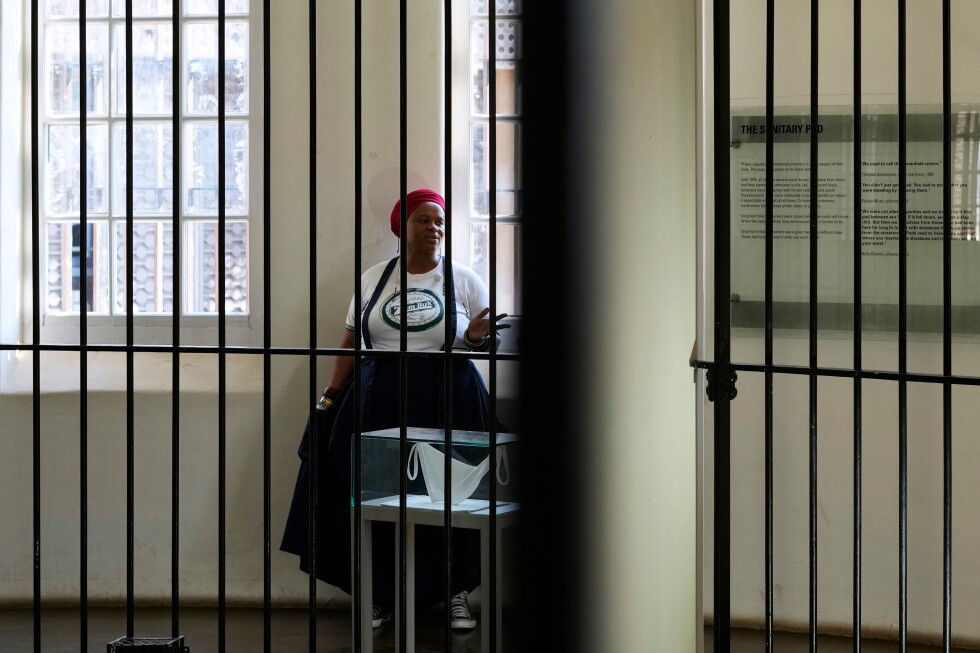
Today, the legacy of the 1956 march is preserved at the former Women’s Jail on Constitution Hill in Johannesburg, a facility once used as a key part of the apartheid prison system that has since been converted into a public museum. Many leaders and participants of the 1956 march were later imprisoned at the facility, where inmates were segregated by race in line with apartheid policy, just as segregation was enforced across every sphere of South African public life.
Nolubabalo Memese, visitor services manager at Constitution Hill, explains that the jail was intentionally designed to dehumanize and break anti-apartheid activists. Black women held at the facility were denied even basic human dignity, including access to proper underwear and sanitary products. Now, the museum honors both the iconic leaders of the anti-apartheid movement, including Winnie Madikizela-Mandela and Albertina Sisulu, and the thousands of ordinary women whose contributions to the struggle have often been left out of mainstream history books.
“Our freedom is built on the shoulders of those kinds of women who were at this prison,” Memese said.
That sentiment is echoed by Kgothatso Montjane, a 40-year-old Paralympic wheelchair tennis champion and the first Black South African woman to compete in all four of tennis’ Grand Slam tournaments, who took home the 2024 Wimbledon wheelchair doubles title. Montjane says the courage of the 1956 marchers cleared a path for her and other women to pursue opportunities their predecessors could not access.
“The fight the women took on 70 years ago has paved the way for us,” she said.
Yet even with the end of apartheid in 1994 and the formal elimination of racial restrictions on movement, work, and political participation, many women argue that new, persistent barriers continue to block full gender freedom in modern South Africa. A 2024 study supported by UN Women found that more than one in three South African women will experience physical or sexual violence over their lifetime, a crisis the United Nations has labeled a “national wound” for the country.
For Memese, gender-based violence acts as a modern restriction on women’s freedom, just as pass laws constrained the movement of Black women 70 years ago. “There’s a different monster which precludes us from enjoying freedom of movement and economic participation. And that’s gender-based violence. That’s a crime,” she said. “If you want to go jog at six o’clock and it’s a bit dark, you’d rather not.”
Systemic economic inequality further exacerbates these challenges. Official government data shows women in South Africa face higher unemployment rates than men, carry a disproportionate share of unpaid care work, and remain drastically underrepresented in senior leadership roles across public and private sectors. Even in sports, Montjane says, structural barriers persist: financial gaps limit access to elite training and competition, leaving women of color underrepresented at the highest levels of the sport.
“The barriers I had to overcome … in a sport like tennis, it’s just a financial issue,” Montjane said. “They don’t lie when they say tennis is a white sport, and you don’t really find people of color dominating in this sport.”
Even amid these ongoing struggles, Montjane emphasized that the 1956 marchers transformed the trajectory of South Africa for her and future generations of women. “The platform has been set,” she said.
The symbolic reuse of materials from the apartheid-era jail to build the current museum holds deep meaning for Memese, who frames the work toward gender equity as a process of building a better future from the lessons of the past. “We are using the bricks of the past to build our future,” she said. “Once we forget the past, it’s very easy for us to make the same mistakes.”
For Dinat, one of the last living participants of the 1956 march, the core lesson of that historic day remains unchanged after seven decades. “Every generation has its own struggles, and every generation has to decide whether it will stand up for what is right,” she said.