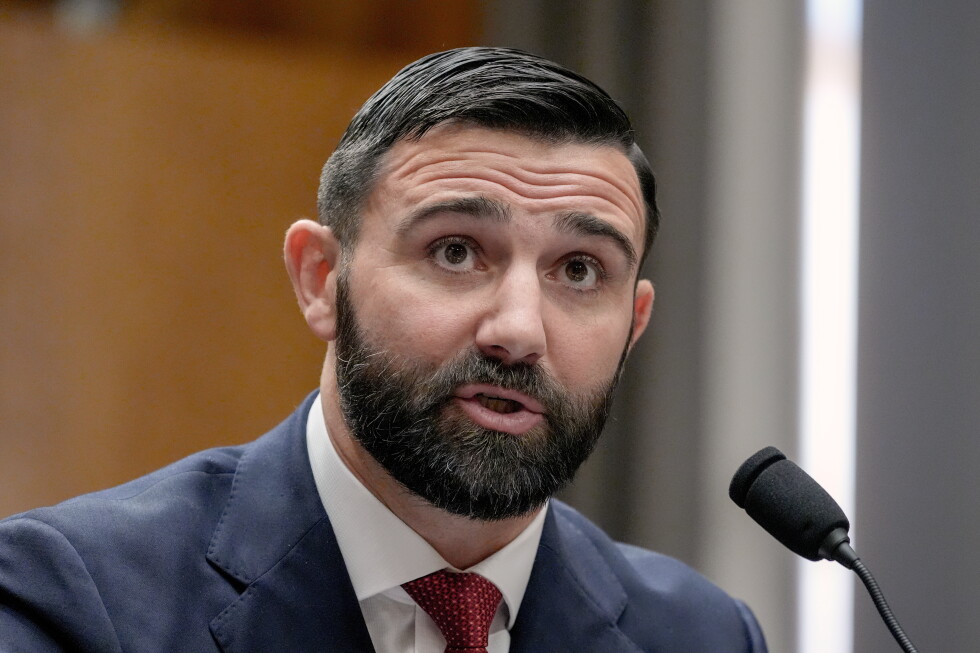
In a Friday vote that capped months of uncertainty for one of the federal government’s most critical public safety agencies, the U.S. Senate has approved Cameron Hamilton’s nomination to serve as the permanent administrator of the Federal Emergency Management Agency (FEMA). The confirmation marks an extraordinary political comeback for the former Navy SEAL, who was fired from the same top post in an acting capacity 16 months prior after publicly opposing the Trump administration’s push to eliminate the agency entirely.
Hamilton’s confirmation was part of a batch of 74 presidential nominations advanced by the Senate in a single voting session. Other high-profile picks approved Friday included David Cummins, President Donald Trump’s nominee to lead the Transportation Security Administration (TSA), and Daniel Perez, the administration’s controversial choice for U.S. ambassador to Brazil.
When Hamilton is sworn in, he will inherit an agency that has faced years of existential uncertainty, organizational upheaval, and lingering accusations of political bias. Just days into Trump’s second term, the president openly threatened to dissolve FEMA entirely, a proposal that led to Hamilton’s firing last year when he pushed back against the plan in congressional testimony. While Hamilton’s nomination signals the administration has backed away from scrapping the agency entirely, the White House and top Department of Homeland Security (DHS) leaders have made clear that sweeping overhauls to federal disaster response are still on the agenda.
The agency Hamilton takes over is still recovering from the chaotic tenure of former DHS Secretary Kristi Noem, whose leadership triggered mass staff exodus, widespread disruptions to FEMA’s federal grant programs, and crippling delays to life-saving disaster aid. A 2025 Government Accountability Office (GAO) report found that more than 4,300 FEMA employees left the agency in the 2025 budget year alone, with over 1,500 taking voluntary buyouts. The exodus resulted in a substantial loss of institutional knowledge and experienced disaster response personnel that the agency is still working to replenish. Current DHS Secretary Markwayne Mullin, who took over from Noem in March, has already moved to reverse some of the most damaging changes: he has re-filled hundreds of eliminated positions and rescinded a burdensome rule that required all FEMA expenditures over $100,000 to gain direct approval from the secretary’s office, a policy that created a backlog worth billions of dollars in delayed disaster aid.
Even with these fixes, new controversies continue to roil the agency. Last month, 25 U.S. states and the District of Columbia filed a lawsuit against the Trump administration over new election security mandates attached to FEMA counterterrorism grants, a policy that critics call an overreach of executive power. Congressional Democrats have also raised alarms over what they call widespread politicization of disaster relief under the Trump administration. A July analysis from The Associated Press found that the White House has approved roughly 80% of disaster declaration requests from Republican-led states, but only 60% of requests from Democratic-led states, a gap that critics argue leaves vulnerable communities in political opposition shortchanged.
Hamilton’s path to permanent leadership is a rare story of a fired acting official returning to lead the agency he once defended. Before being tapped as FEMA’s acting head in January 2025, Hamilton had limited formal emergency management experience and was initially an open critic of the agency. But during his short tenure, he said he grew to appreciate FEMA’s core mission, and broke sharply with Noem and the White House over the plan to eliminate the agency. In May 2025, he told a House panel that eliminating FEMA would be against the best interests of the American people, and was fired the very next day.
His public stand against scrapping the agency won him broad support from many emergency management professionals. Pete Gaynor, who served as FEMA administrator during Trump’s first term, released a statement supporting Hamilton’s confirmation, saying, “It tells you exactly who he is and how he will lead when the pressure is highest and the easy answer is the wrong one.” The National Emergency Management Association also issued a statement welcoming his confirmation. Still, some current FEMA employees remain wary of Hamilton, pointing to his role in the controversial 2025 cancellation of a multibillion-dollar national climate resilience grant program.
Hamilton takes office at the height of an active 2026 North American summer disaster season, which has already brought destructive wildfires across the West and dangerous flash flooding across the Midwest and South, leaving FEMA managing more than 1,000 open active disaster declarations. He will be the first permanent FEMA administrator to take office in Trump’s second term, a role that comes with the dual mandate of implementing the Trump administration’s planned overhaul and bringing long-term stability to a workforce that has faced years of turnover and uncertainty.
Top administration officials have laid out clear priorities for the overhaul: shifting more disaster response responsibility back to state and local governments, and restricting FEMA’s role to only the most catastrophic events, rather than responding to every localized weather event. In a recent meeting of U.S. governors, Mullin described FEMA as “bloated” and reiterated that shift in responsibility, saying, “The biggest reform you’re going to see is more responsibility is going to go back to your states, FEMA there for worst of the worst, not every storm.” A Trump-appointed FEMA Review Council issued a set of recommendations in May that would speed up federal assistance delivery but could also reduce the scope and frequency of federal support, with many changes requiring congressional approval to take effect.
During his June confirmation hearing before the Senate, Hamilton laid out his own priorities, pledging to advocate for FEMA and its workforce while committing to running the agency free of political bias. “I will ensure FEMA is objective, is fair and reasonable, follows the law, and is consistent in the approach to how we adjudicate and process claims and requests for disasters,” he told lawmakers. He also acknowledged longstanding concerns about bureaucratic bloat within the agency, arguing that FEMA cannot be expected to respond to every disaster, and that policymakers must strike a new balance that encourages cost reasonableness and cost savings. Gaynor, the former FEMA head, said he expects Hamilton will prioritize cutting red tape to make the disaster recovery process simpler for survivors and state and local officials.
Alongside Hamilton’s confirmation, the Senate advanced two other controversial nominees. David Cummins, a former senior vice president at government contractor Serco, which operates air traffic control towers at 60 U.S. airports, was confirmed to lead TSA. The agency is still recovering from massive staffing disruptions following this year’s record-long partial government shutdown, which left thousands of TSA officers working weeks without pay, prompting thousands of call-outs and roughly 1,100 resignations. Cummins takes over as the Trump administration pushes to expand private airport screening and cut thousands of existing TSA positions.
The Senate also confirmed Daniel Perez, former speaker of the Florida House of Representatives and a close ally of Secretary of State Marco Rubio, to serve as U.S. ambassador to Brazil. Perez’s nomination has already sparked a major diplomatic rift between the Trump administration and the government of Brazilian President Luiz Inácio Lula da Silva, which has refused to approve his appointment. Earlier this week, the State Department announced it had revoked the visa of Brazil’s sitting ambassador to the U.S. in response, a move that escalated tensions between the two countries. Under international diplomatic protocol, host nations have the right to approve or reject foreign ambassador nominees before they take office.