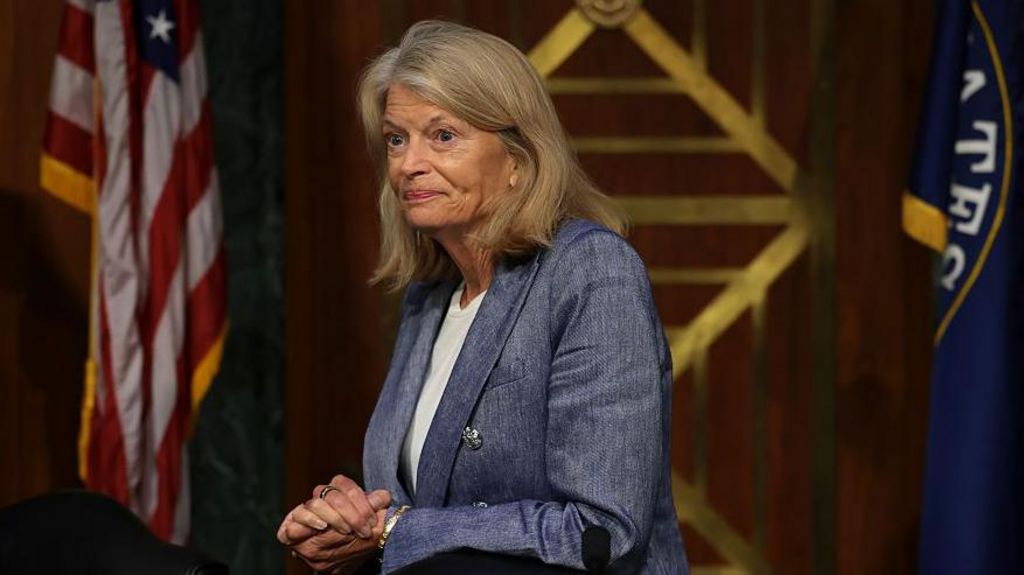
A high-stakes political battle over the permanent leadership of the U.S. Department of Justice has taken a sharp turn, as centrist Republican Senator Lisa Murkowski of Alaska became the second member of her party to publicly reject former President Donald Trump’s nominee Todd Blanche for attorney general, deepening uncertainty over whether the nomination will survive a Senate vote.
Blanche, who previously served as Trump’s personal defense lawyer and currently fills the role of acting attorney general, has faced sustained cross-party criticism since Trump tapped him to lead the Justice Department permanently. The nomination has already drawn opposition from a small but impactful bloc of Senate Republicans, and Murkowski’s opposition leaves confirmation hanging by a thread amid the narrow Republican majority in the chamber.
In a formal statement announcing her decision, Murkowski highlighted deep-seated concerns that the Trump administration is seeking to politicize the nation’s top law enforcement agency, a red line for the moderate Alaska senator. She pointed to multiple controversial actions taken during Blanche’s short tenure as acting attorney general, including the administration’s controversial handling of the Jeffrey Epstein case files and the creation of a contentious $2 billion “anti-weaponization fund” carved out of a legal settlement between Trump and the federal government.
Murkowski emphasized that the nation requires an attorney general willing to push back against the most extreme actions of the sitting administration. While she left open the possibility that Blanche could shift course if confirmed, she made clear she lacks confidence in his willingness to uphold the independence of the Justice Department. “The country needs an Attorney General who will check the worst impulses of this administration,” Murkowski wrote. “I hope Mr Blanche is able to achieve that, if confirmed, but I simply do not have confidence that will be the case.”
The contentious fund at the center of the controversy was established as part of an IRS settlement between Trump and the federal government, which also granted Trump limited immunity from future personal tax audits. The fund was initially designed to pay out compensation to people who claim they were wrongfully persecuted by the federal government, but critics—including Murkowski—have warned it could ultimately payout to people convicted of participating in the January 6, 2021 attack on the U.S. Capitol. Both Trump and Blanche have pushed back against these claims, asserting that neither the president nor his family are eligible to access any money from the fund. Facing backlash from fellow Republicans even before Murkowski’s announcement, Blanche already pledged to roll back the controversial fund.
Murkowski’s announcement comes just days after another moderate Republican, Senator Susan Collins of Maine, who is facing a competitive re-election campaign this cycle, confirmed she would also vote against Blanche’s confirmation. Currently, Republicans hold a slim 53-seat majority in the 100-member U.S. Senate, but that majority has been effectively cut to 52 because Senate Minority Leader Mitch McConnell of Kentucky has been absent from all floor votes and proceedings due to an ongoing illness.
The path to confirmation now also hinges on the undecided vote of Republican Senator Bill Cassidy of Louisiana, who lost his 2026 Republican primary after Trump endorsed his primary challenger. Cassidy has not yet publicly stated whether he will support Blanche’s nomination, leaving the outcome entirely uncertain.
Political analysts note that if just one more Republican joins Murkowski and Collins in opposing the nomination, Democrats can unified block Blanche’s confirmation, leaving Trump without his pick to lead the Justice Department. The nomination’s fragile standing underscores the lingering divisions within the Republican Party over Trump’s efforts to reshape the federal government and place loyalists in key law enforcement roles.