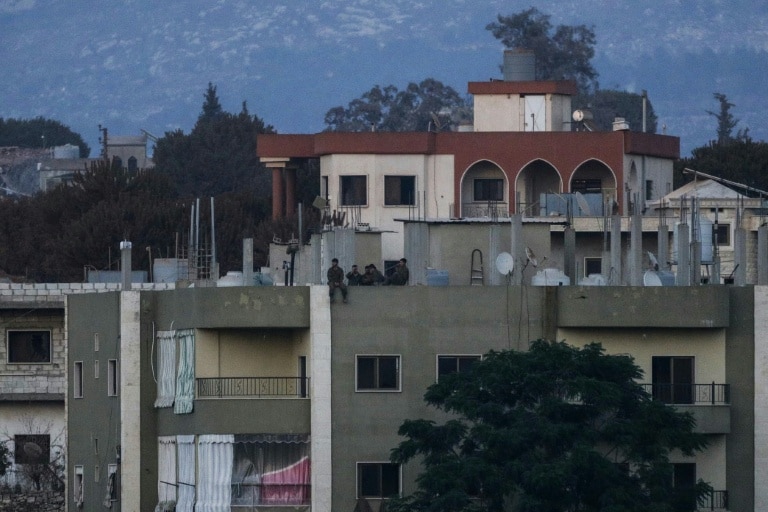
Diplomatic efforts to de-escalate months of cross-border conflict between Israel and Hezbollah hit a fresh point of tension this week, as Israeli military operations in southern Lebanon left two reservist soldiers dead even as US-mediated negotiations to end hostilities got underway in Rome.
The Israeli Defense Forces (IDF) confirmed Thursday that the two service members, killed in combat operations Wednesday in southern Lebanon, were 34-year-old Major Harel Birenstock and 33-year-old Sergeant Major Tamir Vaknin, both assigned to the 2855th Battalion of the 55th Brigade. The fatalities mark the first reported Israeli military deaths in southern Lebanon in more than six weeks, since a June 28 incident that broke a brief period of relative calm.
The deaths came hours after the IDF launched new targeted strikes across southern Lebanon, issuing an evacuation order for residents of the border town of Mansouri — the first such public evacuation warning the military has issued since late June. In an official statement, the IDF framed the strikes as a direct response to what it called “blatant ceasefire violations” by the Lebanese militant group Hezbollah, which has been engaged in intermittent cross-border conflict with Israel since March.
“In light of Hezbollah’s violations of the ceasefire agreement, the Israel Defense Forces are compelled to act against it with force,” IDF Arabic spokeswoman Ella Waweya posted on the social platform X Wednesday, urging all Mansouri residents to evacuate their homes immediately and relocate north for their safety.
Lebanese state media reported that a separate Israeli strike in the area left one civilian dead and 11 others wounded, adding to the mounting civilian death toll that Lebanon’s government has tracked since the conflict began.
Even as strikes resumed across the border, diplomatic delegations from Israel and Lebanon gathered in Rome for the seventh round of US-brokered talks aimed at reaching a permanent ceasefire and border security deal. Just ahead of the strikes, Italian Foreign Minister Antonio Tajani — whose country is hosting the negotiations — spoke with his Iranian counterpart and called on Iran, Hezbollah’s primary financial and military backer, to pressure the group to halt its cross-border operations. Tajani also voiced public optimism that the talks would yield tangible progress toward peace.
A last-minute disruption hit the talks Wednesday, however, when Israeli negotiators requested to end the day’s session three hours ahead of schedule. A source close to the negotiations told Agence France-Presse that Israeli delegation head Yechiel Leiter blamed the early adjournment on what he called “misleading leaks” from the Lebanese negotiating team. Despite the interruption, talks are set to resume Thursday for what is scheduled to be the final day of this round of negotiations.
The current framework for a potential deal was first agreed during US-sponsored talks in June. Under the draft terms, Hezbollah would complete full disarmament in southern Lebanon, Israeli forces would carry out a gradual withdrawal from occupied border territory, and the regular Lebanese army would deploy to the border region, starting with small test areas dubbed “pilot zones.” Beirut has pushed publicly for a full, phased Israeli withdrawal from all southern Lebanese territory as a core condition of any final agreement.
Hezbollah has repeatedly rejected the framework of direct negotiations, with group leader Naim Qassem saying earlier this week that the talks would bring Lebanon “nothing but shame, humiliation” and forced concessions. The militant group also refuses to give up its arsenal, a key sticking point in the negotiations.
Located just six miles south of the Lebanese city of Tyre and 10 miles north of the Israeli border, Mansouri has been the site of repeated Israeli strikes and artillery shelling in recent weeks, even after the June ceasefire went into effect. The town’s municipal government allowed residents to return to most of the area in late June, but advised them to avoid the section of town that falls within Israel’s self-declared 10-kilometer-deep “security zone” along the Lebanese border, where Israeli forces continue to operate.
The resumption of active fighting comes just after the United Nations’ top humanitarian agency announced that more than 800,000 people displaced by earlier rounds of violence had begun returning to their homes in southern Lebanon during the recent lull in hostilities. More than 360,000 people remain displaced, the UN added, as the uncertainty over the conflict’s trajectory continues to uproot civilian communities.
Since Hezbollah opened its front against Israel in March in support of Iran, the conflict has killed more than 4,300 people in Lebanon, according to the Lebanese government. On the Israeli side, 38 soldiers and one civilian contractor have been killed since the border war began, with the two latest deaths bringing that count up to date. While overall violence has dropped significantly since the June preliminary ceasefire and a separate preliminary agreement between the US and Iran on Middle East de-escalation, both sides continue to report intermittent strikes, shelling, and explosive operations in southern Lebanese villages.