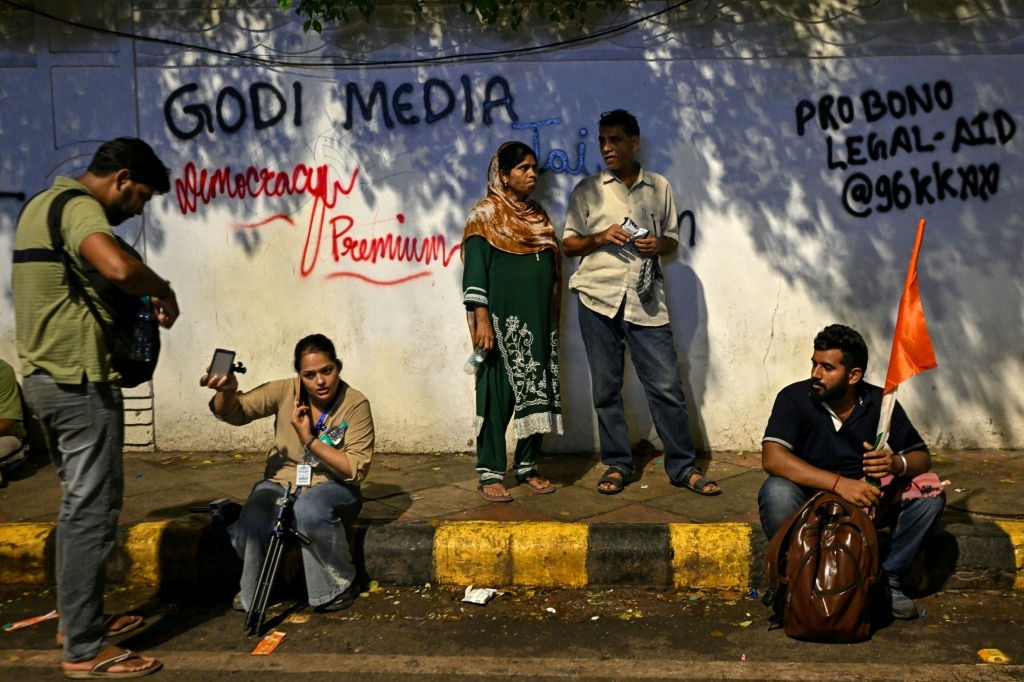
Widespread youth-led protests across India have thrown a long-simmering crisis of trust in mainstream traditional media into sharp relief, with young demonstrators directing public anger and even physical hostility at journalists they accuse of acting as mouthpieces for Prime Minister Narendra Modi’s ruling administration. The wave of protests, organized online under the banner of the Cockroach Janta Party movement, has seen protesters carry signs labeling major national TV channels as “India’s worst enemies”, and popularize the pejorative term “Godi media” — Hindi for “lap media” — to condemn what they call pro-government “lapdog” outlets that have abandoned their core journalistic role as government watchdogs. For many young Indian participants, the anger at mainstream media is not a spontaneous outburst, but the culmination of years of growing distrust rooted in perceived one-sided coverage that favors the ruling Bharatiya Janata Party (BJP). At New Delhi’s iconic Jantar Mantar protest ground, the hub of national demonstrations, many student and young professional participants told reporters they no longer turn to major broadcast networks for news, relying instead on independent digital platforms and social media for unfiltered information about the protests. “They brand every protest anti-national,” said 28-year-old software professional Sukhjeet Narula, summing up a common grievance among demonstrators. This widespread public resentment has translated into direct targeting of on-the-ground journalists covering the rallies. In one high-profile incident captured on video that spread rapidly across social media, 36-year-old Dev Kotak, a reporter for leading English-language network Times Now, was attacked by a crowd in New Delhi. What began as protesters throwing water quickly escalated to slaps and kicks, leaving Kotak running for safety behind security personnel as he feared for his life. Three of Kotak’s colleagues also faced harassment at the protest. Similar incidents have been recorded across the country: AFP verified footage shows a Zee TV reporter being heckled during a live broadcast from a Mumbai protest, while another clip captures a journalist being chased by crowds in the eastern city of Patna. In response to the attacks, The Times Network defended its coverage, insisting it had reported on the protests in an “entirely neutral manner” while condemning the assaults on its staff as “the most reprehensible manner”. “We may differ in views, but we cannot take the law into our own hands,” the network said in a formal statement. Media analysts and veteran journalists argue the public anger reflects a decades-long erosion of credibility for major broadcast outlets that has accelerated since the BJP took power in 2014. “Godi media are considered anti-people and anti-opposition,” award-winning Indian journalist Ravish Kumar told AFP. “They have destroyed their own credibility. Genuine public demands are being termed as conspiracies in order to demonise them.” Human rights and press freedom watchdogs have raised persistent alarms over the state of press freedom in India since Modi’s administration took office, noting a pattern of harassment and retribution against journalists who criticize the government. In Reporters Without Borders’ 2024 World Press Freedom Index, India ranks 157th out of 180 countries, a drop of 17 places from its 2013 ranking, just before the BJP won national elections. Journalists critical of the government have faced baseless criminal charges, arbitrary arrests, and coordinated online harassment from ruling party supporters, while opposition politicians have long accused mainstream broadcast networks of peddling the BJP’s political agenda, including through dangerously polarizing coverage of the country’s Muslim minority community. The intensity of youth hostility has become so pronounced that many TV journalists have begun hiding their organization’s name and logo from their equipment to avoid targeting. “They stopped coming with logos on their mics because the youth were targeting them,” said 30-year-old private sector employee Shailendra Singh at the New Delhi protest. “The mainstream media has completely sold out to the government.” Atul Chaurasia, managing editor of independent digital platform Newslaundry, traced the root of the crisis to a structurally flawed financial model that leaves mainstream media heavily dependent on government advertising revenue. “The government weaponises advertising, effectively destroying the environment that allows media organisations to operate freely,” Chaurasia explained. Kumar, the veteran journalist, stressed that it is critical to distinguish between large pro-government broadcast networks and small independent outlets and freelance journalists, who actually face far more severe repression from the Modi administration. “It is the alternative media and independent journalists who face hostility from the government,” he said. “They are subjected to raids, branded anti-national, or even imprisoned.” Even so, Kumar argued that the recent wave of youth anger reflects a growing consensus that aligned mainstream networks have become a threat to India’s democratic institutions. What is more, he noted, these so-called lapdog outlets may have become a political liability even for Prime Minister Modi himself, as public distrust spills over into broader discontent with the status quo. The crisis also highlights a rapidly shifting news landscape in India, where a growing ecosystem of independent digital outlets has emerged to fill the gap left by legacy media, with a large and growing segment of young Indians turning away from traditional broadcasters entirely for their news.