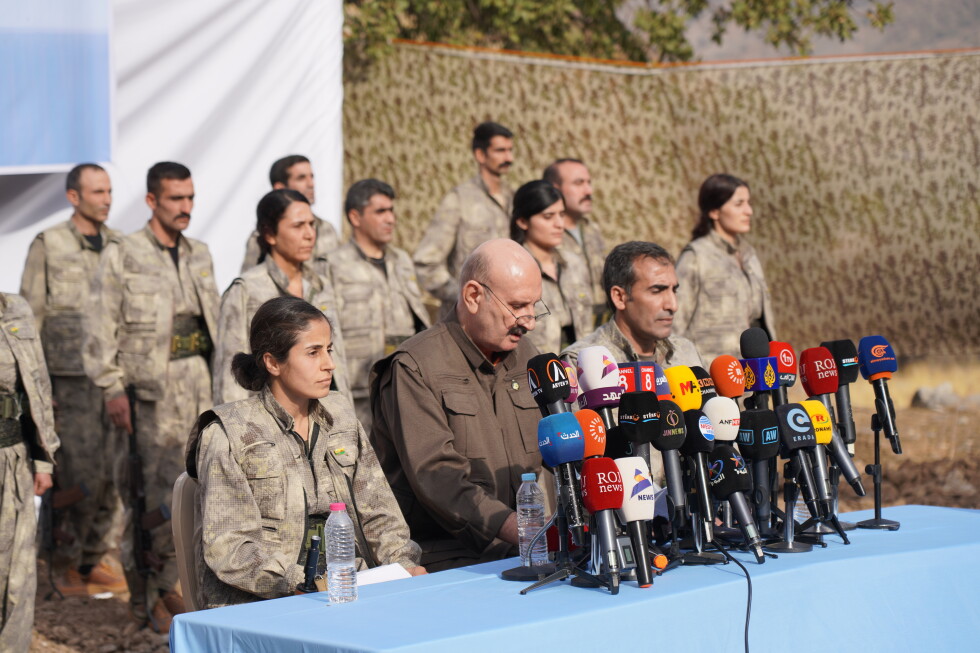
In a landmark step toward resolving one of the Middle East’s longest-running internal conflicts, Turkey’s ruling Justice and Development Party (AKP) has tabled a parliamentary bill to advance a new peace initiative with the Kurdistan Workers’ Party (PKK), including provisions for a broad pardon for former militants. This legislative push comes months after the PKK announced it would disarm and disband in response to a call from its imprisoned founder Abdullah Öcalan, a decision that marked a dramatic shift in a confrontation stretching back 40 years.
The PKK first launched an armed insurgency against the Turkish state in 1984. Over the following decades, the conflict has killed more than 40,000 people, with violence spilling across the country’s borders into northern Iraq and Syria, where the PKK maintains regional bases. Originally formed to demand an independent Kurdish state, the group later adjusted its goals to push for greater political autonomy and expanded cultural rights for Turkey’s Kurdish population. Multiple past peace efforts between Ankara and the PKK have collapsed, most recently in 2015 when hostilities reignited after a two-year ceasefire. Designated a terrorist organization by Turkey, the United States, and the European Union, the PKK carried out a symbolic disarmament ceremony in its northern Iraq headquarters last year after Öcalan’s call, and began withdrawing remaining fighters from Turkish territory to Iraqi bases.
Officially named the bill “to strengthen national solidarity and social cohesion”, the new legislation lays out clear, formal procedures for overseeing the complete disarmament of the PKK and outlines the judicial process for the group’s members. Abdullah Güler, the AKP’s parliamentary group chair, confirmed to reporters that the bill has already secured the support of 360 sitting members of parliament, with additional lawmakers expected to add their backing in the coming days. The legislation will go first to parliament’s Justice Committee for review this Friday, before moving to a full debate in the general assembly. The government has set an aggressive timeline, aiming to pass the bill before parliament enters its summer recess later this month.
Under the terms of the proposed framework, the Turkish National Security Council will be responsible for verifying that the PKK has fully disbanded and surrendered all of its weapons stockpiles, which the group still retains the majority of. Once these conditions are met, the bill will grant an effective pardon to approximately 4,000 PKK members not directly implicated in violent acts. This provision would clear the way for the release of people already convicted of minor offenses related to PKK membership, as well as those convicted of providing financial support or propaganda for the group. It would also allow PKK members based in Iraq, Syria, and exiled across Europe to return to Turkey without facing prosecution, according to reporting from leading Turkish daily *Hürriyet*. For cases still under active investigation or prosecution, legal proceedings will be paused for a period proportional to the severity of the alleged offenses, and cases will be dismissed entirely if no additional terror-related offenses are committed during the waiting period. All applications for amnesty must be filed within six months of the law being officially published in the Official Gazette, and the entire process will be overseen by a joint ministerial committee and parliamentary commission.
Notably, the bill excludes senior PKK figures from its amnesty provisions: militants convicted of intentional homicide and those sentenced to life in prison before 2005, including Öcalan himself, are not eligible for pardon. Öcalan has been imprisoned on İmralı Island since his capture in 1999, and the pro-Kurdish DEM Party has long lobbied for Öcalan to be granted official status to coordinate the disarmament process, with the ultimate goal of securing his release. While that demand is not included in the current draft legislation, Turkish media reports indicate that the question of Öcalan’s status could be taken up in future legislation if the current peace process moves forward. In the near term, officials are expected to improve Öcalan’s prison conditions, expanding his access to visitors and external communication.
In a statement delivered through DEM Party lawmakers who visited him in prison earlier this week, Öcalan expressed full support for the new legislation, framing it as a historic turning point for Turkey. “With this law, we are setting out to resolve a historical issue,” he said. “We are at the beginning of a democratization process that will be at least as significant as the founding of the republic.” The proposed legal framework is set to remain in effect for up to four years, though parliament has the authority to extend the timeline if needed. If the process advances successfully, policymakers have indicated additional legislation will be introduced to address unresolved issues, including the question of Öcalan’s eventual release.