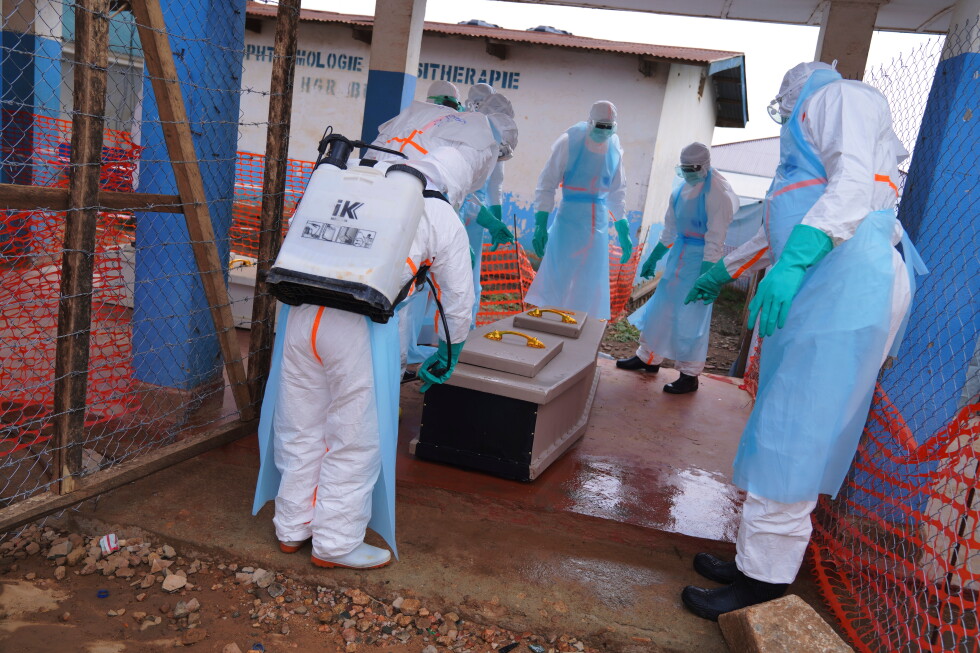
KINSHASA, DRC – The World Health Organization has confirmed that its top leader has traveled to the Democratic Republic of the Congo to back expanding efforts to curb the fastest-spreading Ebola outbreak the world has ever seen, as total confirmed infections near the 4,000 mark.
WHO Director-General Tedros Adhanom Ghebreyesus touched down in Kinshasa, the Central African nation’s capital, on Tuesday evening, per official statements from the WHO country office to the Associated Press. During this trip, his second visit to Congo since the outbreak was formally declared in mid-May, he is set to hold meetings with local response partners and Congolese President Félix Tshisekedi to align on next steps for scaling up intervention.
The most recent data released overnight by Congo’s Ministry of Health puts the outbreak’s official case count at 3,874 as of Monday, with 1,751 recorded fatalities. In terms of transmission speed, this outbreak has outpaced every previous Ebola event in recorded history, ranking as the second-largest outbreak globally. It only trails the devastating 2014–2016 West African Ebola epidemic, which saw more than 28,000 total cases and over 11,000 deaths.
The pathogen driving this current outbreak is the Bundibugyo virus, a strain of Ebola for which no universally approved vaccine or targeted treatment currently exists. Local health officials have noted that the virus was circulating undetected for weeks in remote areas of eastern Congo long before the outbreak was officially announced on May 15, allowing early transmission to go unchecked.
A troubling hallmark of the outbreak is that a large majority of new confirmed infections are occurring among people not already on monitored contact lists of individuals exposed to known patients. This trend confirms that the virus continues to spread more quickly than the expanding response efforts can keep up with.
Nearly 90 percent of all cases are concentrated in Ituri province, the outbreak’s epicenter. Many communities in Ituri remain cut off from response teams due to ongoing insecurity from active rebel conflict in the region. Further complicating operations, many frontline health workers walked off the job in recent weeks to protest delayed salary payments, though some workers have reported receiving backpay in recent days.
During a visit this week to Bunia, Ituri’s provincial capital, Africa Centers for Disease Control Director-General Dr. Jean Kaseya echoed concerns about broken contact tracing systems, estimating that between 60 and 70 percent of new infections occur outside of monitored contacts. “We need to be innovative on the way to approach the contact list,” Kaseya stressed, calling for an urgent overhaul of current tracing protocols.
Health officials add that late detection of infections remains one of the biggest systemic challenges, and is a core driver of the outbreak’s 45 percent overall fatality rate. In the 24-hour period preceding the latest health ministry update, 77 new cases were confirmed, alongside 44 reported deaths. Currently, 717 patients are receiving care in isolation facilities, while 749 people have recovered from the virus and been discharged.