Escalating geopolitical tensions and sustained conflict between the United States, Israel and Iran centered on the Strait of Hormuz have delivered a massive windfall to Saudi Aramco, with the state-owned Saudi energy giant reporting a 33% year-over-year jump in second-quarter 2025 profits, the company announced Tuesday.
Adjusted net income for the April-to-June period climbed to $33.4 billion, up from $25.1 billion in the same quarter last year, as persistent fighting and shipping disruptions through the world’s most critical energy chokepoint pushed global crude prices higher while Saudi Arabia’s unique infrastructure allowed it to keep exporting at near-normal levels.
Though a temporary ceasefire between the U.S. and Iran was reached in April and extended in June, low-intensity conflict has continued unabated. Iran has stepped up efforts to assert dominance over the 21-mile-wide Strait of Hormuz, through which roughly 20% of global oil supplies transit daily, and has attacked dozens of commercial vessels attempting to pass through the waterway via Oman’s territorial waters. In retaliation for Iranian attacks, the U.S. has carried out airstrikes on Iranian targets, and Iran has responded by striking infrastructure in U.S.-aligned Gulf states including Kuwait and Bahrain. These sustained disruptions pushed Brent crude, the global benchmark for oil prices, above $100 per barrel in both May and July, with refined petroleum products — including diesel, jet fuel, and gasoline — seeing even steeper price jumps. Multiple Gulf oil producers including Iraq, Kuwait, Bahrain and Qatar have been forced to cancel energy shipments or drastically cut export volumes as a result of the chaos.
Unlike its regional neighbors, Saudi Arabia has maintained steady exports, moving roughly two-thirds of its pre-conflict production capacity to global markets via the East-West Pipeline, a strategic infrastructure asset that connects the kingdom’s major eastern oil fields directly to the Red Sea export terminal of Yanbu, completely bypassing the Strait of Hormuz.
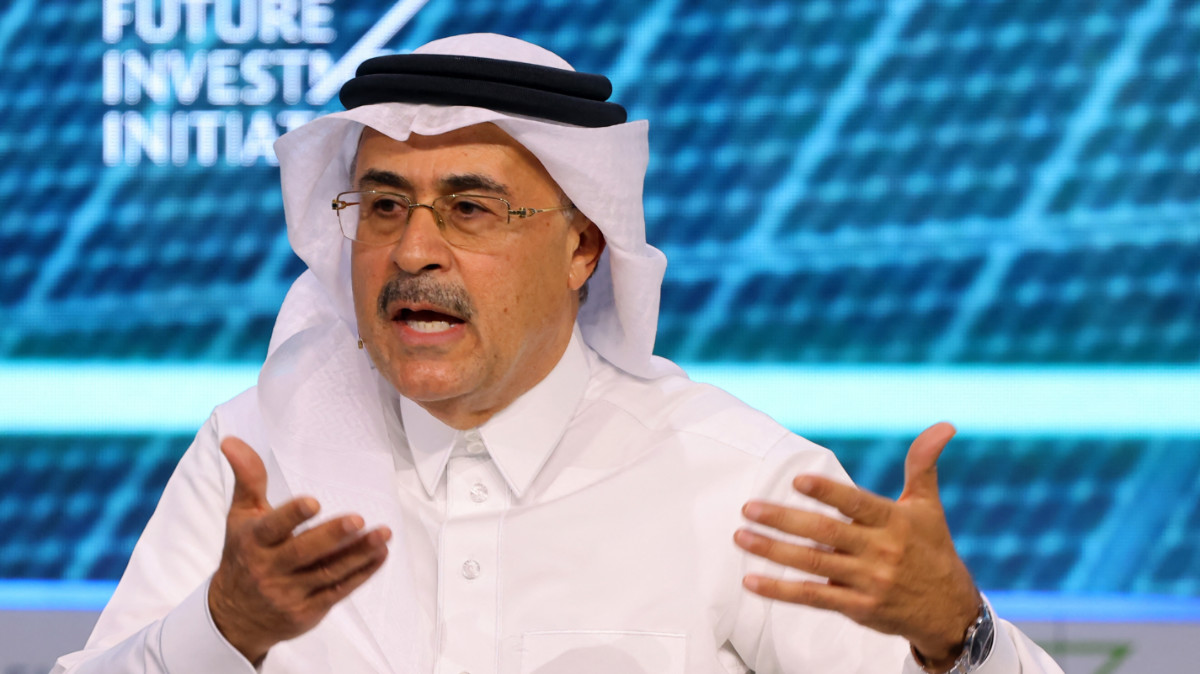
In an official press statement accompanying the earnings release, Aramco CEO Amin Nasser highlighted the critical role of this pre-planned infrastructure in enabling continuous operations through the crisis. “Despite the unprecedented supply disruption through the Strait of Hormuz, we continued to demonstrate our ability to maintain business continuity by capitalising on our diverse asset base and multi-decade planning, including strategic infrastructure such as the East-West Pipeline, storage capacity, and export terminals,” Nasser said.
Aramco’s successful use of the bypass pipeline has spurred regional governments to accelerate plans for their own alternative energy transit infrastructure, with industry analysts projecting tens of billions of dollars in new infrastructure investment across the Middle East over the coming years to reduce reliance on the Strait of Hormuz.
Artem Abramov, deputy head of analysis at energy research firm Rystad Energy, told Middle East Eye that regional governments have undergone a major shift in priority after the crisis. “When we speak to our customers in the region, they say they never want to deal with this again,” Abramov said. “These bypass projects will move forward.”
Already, the United Arab Emirates is constructing a second pipeline to the Gulf of Oman port of Fujairah, which will double the country’s non-Hormuz export capacity by 2027. OPEC’s second-largest producer Iraq, meanwhile, signed a deal with Syria in July to rehabilitate an existing pipeline connecting Iraq’s northern oil fields to Syria’s Mediterranean coast, a project first revealed by Middle East Eye that has received backing from the U.S. government.
Saudi Aramco is far from the only energy major to profit from the ongoing conflict: U.S. oil giants ExxonMobil and Chevron also reported blockbuster second-quarter earnings. ExxonMobil’s profits doubled compared to the same period last year, while Chevron posted the highest quarterly profit in its 145-year history.
The record profits have sparked political backlash in the U.S., where former President and presumptive Republican presidential nominee Donald Trump is facing growing public anger over elevated retail gasoline prices amid his administration’s handling of the Iran conflict. Speaking to reporters Monday, Trump called out the two companies for excessive profiteering and demanded they pass savings to consumers. “Chevron: too much money. ExxonMobil: too much money,” Trump said. “They’re going to give some of that back to the public and they better cut the retail price, the consumer price.”
Crude prices have retreated roughly 8% since Sunday, falling to $79 per barrel, after Trump walked back a recent threat to launch what he described as the “biggest bombing campaign since World War II” against Iran. On Tuesday, U.S. Treasury Secretary Scott Bessent confirmed that peace talks are progressing, telling reporters that the U.S. and Iran are close to reaching a comprehensive deal to end hostilities and fully reopen the Strait of Hormuz to commercial shipping.