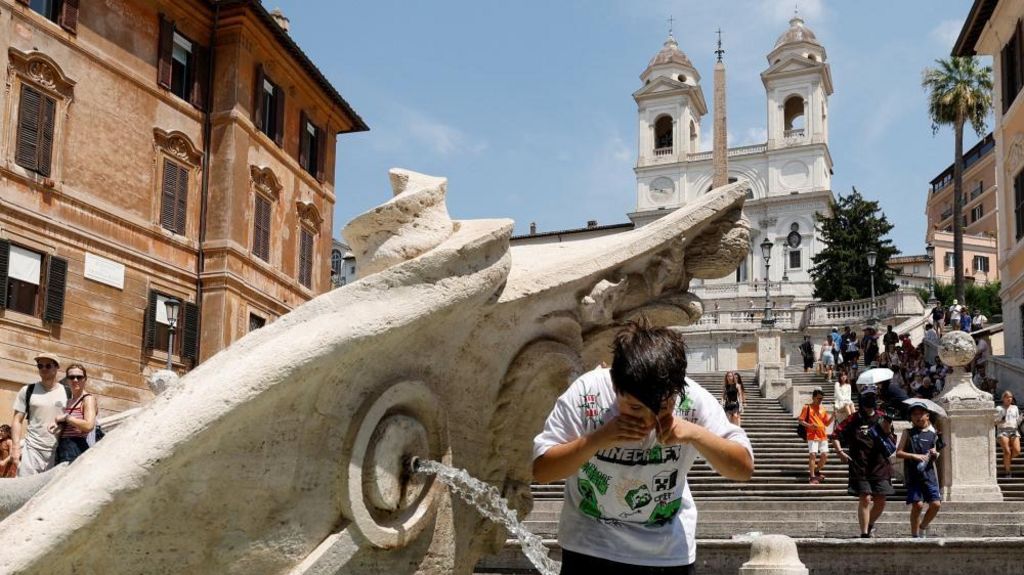
As a record-breaking heatwave scorches across the Italian peninsula, sending temperatures soaring to dangerous levels that threaten public health, the country’s Ministry of Health has issued a rare red heat alert covering all 27 of Italy’s major urban centers. The high-risk designation includes top international tourist hubs, from the ancient capital of Rome and fashion capital Milan to the coastal cities of Naples and the canal city of Venice, falling right in the middle of Europe’s peak summer holiday travel season.
While many long-term Italian residents have grown accustomed to rising summer temperatures amid the ongoing climate crisis — with some noting extreme heat is no longer an anomaly here — visitors and even Italians traveling from cooler regions have expressed shock at the intensity of the current heat event. With millions of travelers flocking to Italy this summer, the BBC consulted local site managers, tour guides, and travel experts to compile practical advice for enjoying a safe trip despite the sweltering conditions.
Simone Quilici, director of Rome’s iconic Colosseum Archaeological Park, emphasized that venturing out to open-air historical sites during the peak hot hours after midday is a critical mistake. “This isn’t an isolated heat event, it’s part of the global climate change phenomenon we’re all living with,” Quilici explained, noting that Rome has adapted to repeated summer heatwaves. To accommodate visitors during the heatwave, Italian cultural and tourism authorities have extended evening opening hours for dozens of top attractions through August: the Colosseum stays open until 11:30 PM on Fridays and Saturdays, Rome’s Pantheon is open until 11 PM daily except Thursdays, and Milan’s Sforza Castle extends closing to 7:30 PM. At the Colosseum specifically, management has installed misting cooling fans at entry points and added additional emergency medical stations to handle heat-related incidents. Quilici also said he is working with archaeologists to plant more shade-providing vegetation across the park in long-term adaptation measures.
Local tour operators have also adjusted their schedules to beat the heat. Mateo Medina, operations director for Rome-based tour company Vivicos International Travel, told reporters his firm has added new late-night tours running from 10 PM to midnight, and has seen a sharp spike in demand for early 8 AM tours before temperatures climb. For travelers looking to escape the midday sun, experts universally recommend air-conditioned cultural institutions as top alternatives to outdoor walking tours. Beyond major museums, Italy’s thousands of historic churches offer free, cool shelter while allowing visitors to engage with the country’s rich cultural and religious heritage. Air-conditioned indoor activities including hands-on cooking classes and wine tastings have also grown in popularity among heat-conscious travelers. For those who still want to enjoy the outdoors, Rome’s large public parks such as Villa Borghese, Villa Adriana and Parque de Acquedotti offer abundant tree shade, and the city’s underground Christian catacombs maintain consistently cool temperatures year-round.
In Naples, top local tour guide Marco Carrino echoes the warning against midday visits to open archaeological sites like Pompeii, advising travelers to arrive as early as possible or plan visits for cooler months of the year. He suggests diverting to Naples’ National Archaeological Museum during peak heat, which houses one of the world’s most significant collections of Roman, Greek and Egyptian artifacts. Italian travel writer Alessia Armenise shared an unexpected local hack: neighborhood supermarkets. Fully air-conditioned, supermarkets’ fresh deli counters offer affordable, made-to-order sandwiches that beat overpriced tourist-focused eateries, she says. Armenise also advises structuring days around water features — swapping coastal hikes for boat tours that let travelers enjoy shoreline views from the water while cooling off with ocean spray, and stopping for traditional Italian frozen treats like Sicilian granita or Roman grattachecca to bring down body temperature.
For travelers determined to tick major crowded sites like the Vatican off their bucket lists, experts urge advance online ticket booking to avoid long waits in sweltering direct sun, noting popular tickets often sell out days in advance. Off-the-beaten-path options also offer relief: smaller regional museums and galleries in lesser-known towns are far less crowded, often have on-site cafes where visitors can rest for hours in cool air. On particularly hot evenings, travelers can duck into local independent cinemas or historic theaters, many of which are air-conditioned and offer a chance to engage with local cultural life beyond major tourist sites. In Verona, Armenise recommends evening concerts at the ancient Verona Arena amphitheater, where cool evening temperatures make for a far more enjoyable experience than midday visits.
In Florence, art historian and local guide Dr. Agata Chrzanowksa suggests day trips to the cool hills and mountain regions north of the city, highlighting the scenic Garfagnana region as an ideal escape for travelers with access to a car. For a cool stop within the city, she recommends the Odeon Cafe and Bookstore, a renovated art-nouveau historic theater that now operates as a climate-controlled bookshop and cafe where visitors can relax for hours. In Venice, veteran tour guide Fiona Giusto says the key to beating the heat is simple common sense: planning routes around shaded stops, staying consistently hydrated, and wearing sun protection like broad-brimmed hats and high-SPF sunscreen. For cool cultural activities in Venice, Giusto recommends visits to the historic Teatro La Fenice opera house and the Ca’ Rezzonico art museum, both of which offer full air conditioning.