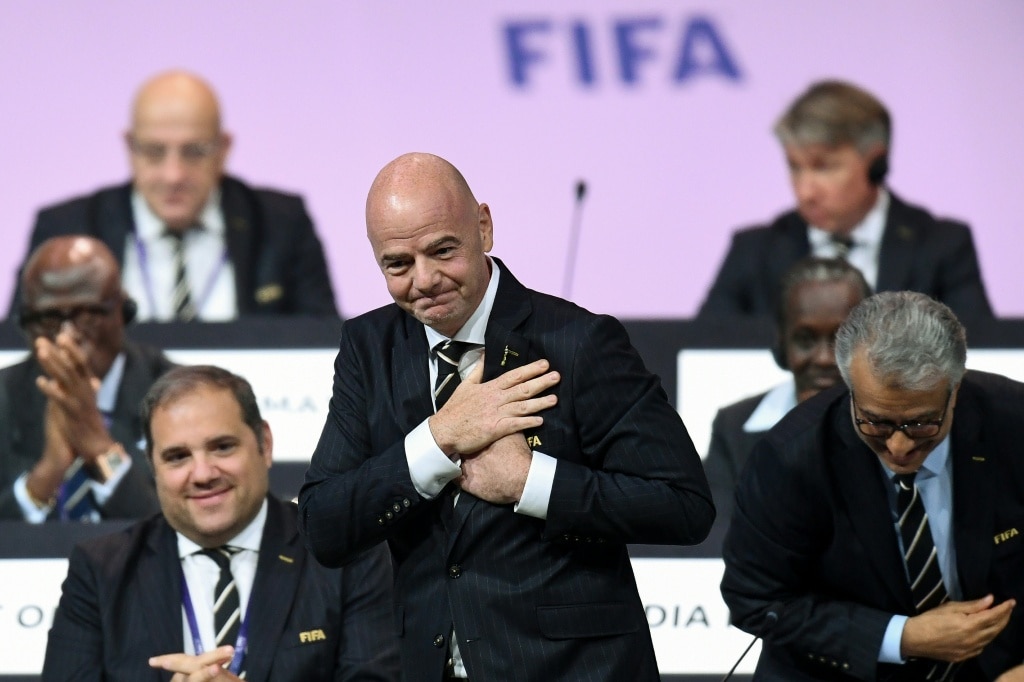
Pressure on FIFA President Gianni Infantino has escalated dramatically this week, as once-trusted allies have turned against the embattled leader following the collapse of his controversial plan to open World Cup governance to private investment. The scheme, which was officially scrapped over the weekend after triggering global backlash within football’s governing circles, has left Infantino fighting to retain control and shore up support ahead of next year’s scheduled leadership election.
The most stinging rebukes came from two figures long seen as core members of Infantino’s inner circle: Arsène Wenger, FIFA’s chief of global football development hand-picked by Infantino for the role in 2019, and FIFA Secretary-General Mattias Grafstrom. In an official statement released Tuesday, Wenger made clear his view that pulling the plug on the proposal was not just necessary but unavoidable. “The decision to withdraw the project was absolutely necessary and beyond question,” the former Arsenal manager said, adding that he had no prior involvement in the plan and only learned of its existence through media reports.
Grafstrom’s rebuke came in an internal email to FIFA staff obtained by Agence France-Presse, in which the secretary-general explicitly distanced himself from the initiative. He called the chaotic rollout and collapse of the private investment plan “a sad and reproachable series of events,” adding in a subtle rebuke of Infantino’s leadership that “Individuals, unstable moments and unfortunate episodes come and go. The institution, its mission and its responsibility towards world football continue.”
The ill-fated proposal was first unveiled by FIFA a week prior, which sought to raise $4.2 billion through a new commercial subsidiary named FIFA Forward Enterprise (FFE). Under the plan, FFE would take over operational and commercial control of flagship events including the men’s World Cup and the expanded Club World Cup, valuing the new entity at $20 billion. But the plan immediately sparked fierce pushback, with European governing body UEFA threatening to deploy the ultimate sanction: a full boycott of all FIFA competitions, including the 2026 World Cup. By Saturday, facing overwhelming opposition, Infantino was forced into a humiliating climbdown, announcing the project was being scrapped entirely.
Far from resolving the crisis, the withdrawal has only deepened challenges to Infantino’s leadership. European football’s governing body has not backed down: through its U.S.-based legal counsel, UEFA sent a formal legal notice to Infantino last Friday, seen by AFP, warning that it is actively considering litigation, arbitration and regulatory complaints over what it calls the “shabby, backroom, opaque deal.” The notice orders Infantino and FIFA to immediately preserve all documents and electronic records related to the FFE proposal, naming Wenger, Grafstrom and FIFA Chief Operating Officer Kevin Lamour (who publicly criticized the plan last Friday) as parties with knowledge of the scheme who must retain all relevant materials.
Support for Infantino among FIFA’s member associations is also crumbling. Four UEFA member unions – Wales, Finland, Sweden and Serbia – have already withdrawn their public endorsements of Infantino ahead of the March 2025 presidential election in Rabat, where he was long expected to win an unopposed fourth and final term. The Football Association of England is widely reported to be on the brink of pulling its support as well.
Infantino has retained a small core of backing, including from Morocco, co-host of the 2030 World Cup, Kuwait, Qatar (where Infantino owns a personal residence) and Lebanon, which granted him honorary citizenship earlier this year. However, the public break from Wenger and Grafstrom – who accompanied Infantino at every major event through the 2022 Qatar World Cup – has dealt a fatal blow to the narrative that the president retains the confidence of FIFA’s internal leadership. This marks the second high-profile defection in days: last Friday, Infantino’s special advisor Carlos Cordeiro, a close associate of former U.S. President Donald Trump, resigned from his post over the proposal.
For Infantino, the crisis shows few signs of abating. When he announced the withdrawal of the FFE plan, he framed the decision as a step to unify global football. But as opposition grows within FIFA’s own ranks and among leading member associations, that unifying goal appears increasingly out of reach – and Infantino’s grip on the FIFA presidency is now far shakier than it was just one week ago.