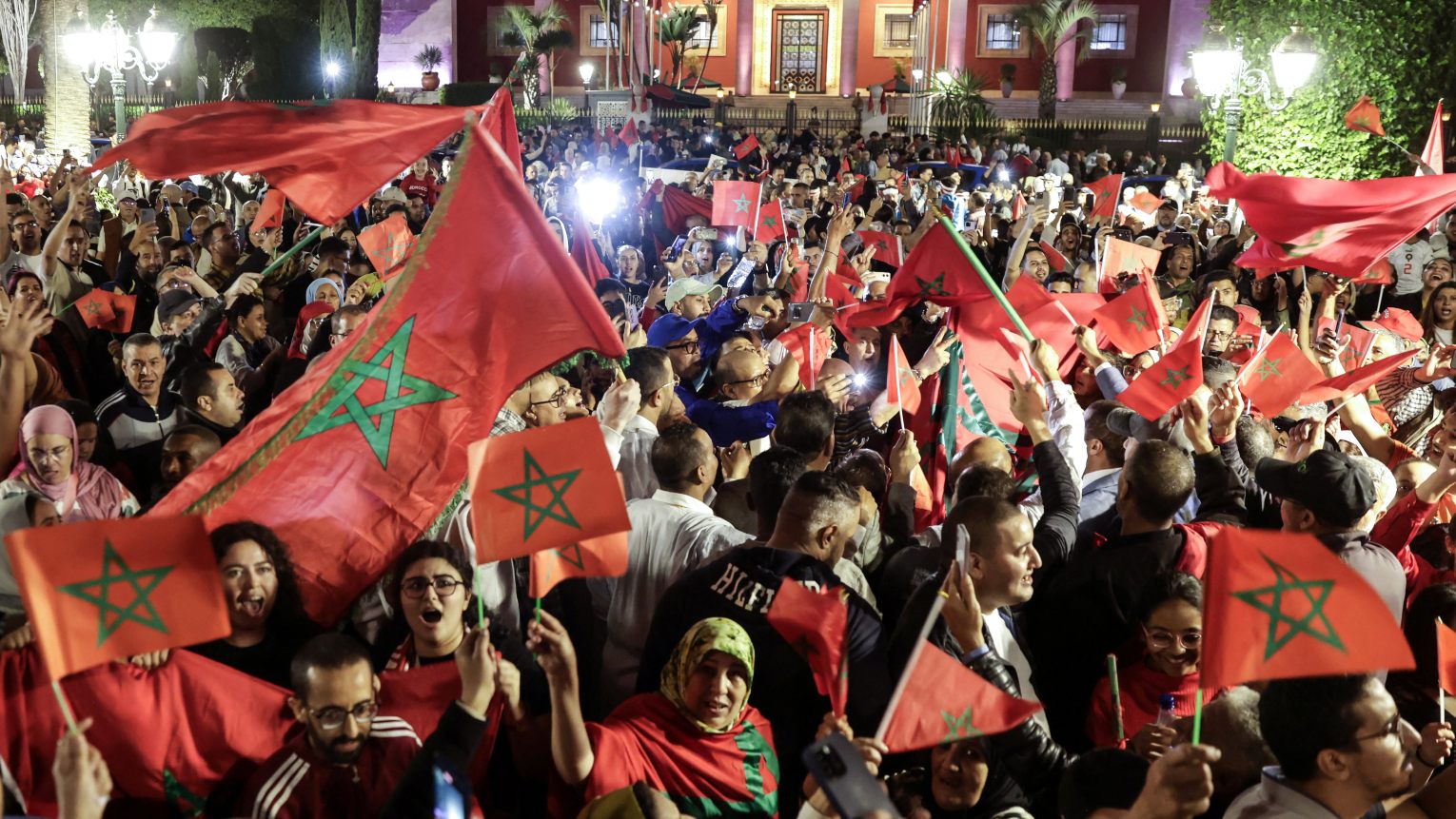
In a groundbreaking move that makes it the first Arab and African nation to join the deployment, Morocco formalized its participation in the controversial International Stabilisation Force (ISF) for Palestine in mid-July, tying its involvement to former U.S. President Donald Trump’s divisive Gaza peace plan and the equally disputed Board of Peace (BoP) created to oversee the initiative.
The signing ceremony was held in Rabat on July 15, with top Moroccan and international figures in attendance: Moroccan Foreign Minister Nasser Bourita, BoP Director General Nickolay Mladenov, senior Royal Armed Forces defense officials, and ISF Commander Jasper Jeffers. The deployment follows a direct order from King Mohammed VI, who serves as the Supreme Commander and Chief of General Staff of the Royal Armed Forces, as well as chairman of the Al-Quds Committee. Initial plans called for 500 Moroccan military personnel to be stationed at a refugee camp in Rafah, the southern Gaza city, but that number has since been cut to 200 troops according to Al Jazeera reporting. The force is set to operate in direct collaboration with the Israeli military.
Shortly after Morocco signed the participation agreement, Hamas unveiled a conditional disarmament proposal aligned with Trump’s Gaza framework. However, Israel has failed to uphold its end of the broader agreement, showing no indication of withdrawing from the Palestinian territories it has occupied illegally for decades. Instead of committing to a withdrawal timeline, far-right Israeli Finance Minister Bezalel Smotrich has pushed forward a proposal to expand illegal Israeli settlements into the Gaza Strip.
In an official statement from Morocco’s National Defence Administration, the kingdom framed its contribution as a demonstration of unwavering commitment to cross-border peace, global cooperation, and regional stability. The statement added that the move is consistent with Morocco’s status as a founding member of the BoP.
Said Saddiki, an international relations professor at Sidi Mohamed Ben Abdellah University in Fez, explained the strategic benefits Rabat stands to gain from the deployment. He noted that joining the ISF gives Morocco a chance to reclaim a high-profile diplomatic role in the Palestinian issue, complementing the decades-long work it has carried out through the Al-Quds Committee and the Bayt Mal Al-Quds Agency. While independent analysis from the Council on Foreign Relations confirms the ISF is intended to act as Gaza’s primary security force, eventually replacing the Israeli military, Moroccan officials have heavily centered public narrative around a planned field hospital the kingdom will establish as part of its ISF mission.
That field hospital framing is nothing more than political spin, according to Saadia, a leading Moroccan member of the Boycott, Divestment, Sanctions (BDS) movement and an organizer for the most recent Global Sumud flotilla. Speaking to Middle East Eye, Saadia argued that while Morocco may claim to support Palestinian interests, its involvement ultimately benefits Israel far more — pointing to the kingdom’s existing role in arms shipments to the Zionist entity as evidence. Saddiki pushed back on that criticism, framing the field hospital as first and foremost a humanitarian undertaking rather than a military one. He acknowledged that Morocco maintains warm diplomatic relations with both Palestinian and Israeli leadership, but emphasized that the current tense regional climate leaves little room for any Arab state to serve as an effective mediator. As such, he said, Morocco is far more likely to contribute through humanitarian aid and diplomatic outreach than through active negotiation. To date, Morocco’s Ministry of Defence has not released any detailed public breakdown of the specific role its troops will fill as part of the ISF deployment.
Saadia offered a far more skeptical take on the kingdom’s unstated goals. Beyond the humanitarian framing, she suggested Morocco’s role could include disarming Hamas resistance factions and even overseeing a new wave of American and Israeli colonization of the Gaza Strip. Saddiki countered that Morocco’s participation does not represent a strategic alliance against any party, nor does it come at the cost of the Palestinian cause. He added that domestically, the Moroccan government has worked to balance its foreign policy choices with widespread public support for Palestine, while noting that pro-Palestinian and anti-normalization movements have remained steadily active across the country since October 2023.
Even as the Moroccan state has openly deepened ties with Israel, many ordinary citizens have warned that any normalization agreement with the country amounts to complicity in the ongoing genocide of Palestinian people in Gaza and the occupied West Bank. Younes, a key leader of Morocco’s pro-Palestinian protest movement and a veteran organizer of the past two Global Sumud flotillas, told Middle East Eye that joining the ISF amounts to full complicity in genocide. The activist added that entering Gaza alongside Israeli forces to impose a one-sided peace and force Palestinians to surrender and disarm is a grave injustice that the Moroccan public will never accept.
Both Trump’s peace plan and the BoP have been widely condemned by grassroots activists and sovereign nations alike for violating core principles of international law. Younes argued that no genuine peace initiative can come from negotiations with Israel, noting that the country has long operated with impunity to expand its control over Palestinian land. Shams, a Rabat-based activist who requested to use a pseudonym, described Morocco’s involvement as deeply disheartening and disappointing, though she added that the decision did not come as a surprise. Shams noted that widespread opposition to normalization runs deep, particularly among younger Moroccans: “I cannot speak for all Gen Z Moroccans, but I would say that most are opposed to the Moroccan military support joining the ISF.”
Data from the 2025 Arab Index, published earlier this year by the Arab Center Washington DC, backs up that claim: the survey found that 89 percent of Moroccans oppose recognizing Israel, with just 6 percent in favor of normalization.
A Moroccan journalist who requested anonymity explained that the Moroccan state frames normalization as a strategic tool: the kingdom supports a two-state solution and cooperates with Israel in exchange for diplomatic and political backing from the United States. But the journalist added that public trust in the government’s approach is eroding fast, as the gap between official rhetoric and on-the-ground reality widens. With Israel continuing to expand illegal settlements on occupied Palestinian land, the prospect of a two-state solution grows more distant by the day.
For Shams, the addition of Moroccan military forces to the ISF will not bring peace to Gaza. “I don’t think military intervention is going to facilitate peace when the oppressor has been destroying and bombing and blockading and [committing] genocide for decades on end,” she said. She added that the U.S. and Israel will only continue to destabilize Gaza, kill Palestinian civilians, and destroy the lives of millions.
Morocco is the only North African and Arab nation contributing military troops to the ISF, joining a small coalition that includes Kosovo, Albania, Kazakhstan, Indonesia, and most recently Uganda. Neighboring Egypt has limited its involvement to training and logistical support, choosing not to deploy frontline forces. This unique position has triggered intense anger among Moroccan pro-Palestinian activists, with Younes expressing frustration over the rapid pace of normalization across the country’s public and private sectors. “Zionists in Morocco successfully penetrated every single sector within a short period,” he explained. “What we gather as voluntary efforts and popular mobilisation to face this cancer during the past years isn’t enough.” Acknowledging the gravity of his assessment, he added that Moroccan authorities have continued to push forward with normalization even as grassroots opposition grows, meaning activists must adapt their strategies and pursue new approaches to challenge the trend.
Despite growing pressure from state authorities, Morocco’s pro-Palestinian movement remains defiant. Saadia argued that governments joining the ISF are operating under a dangerous delusion, wrongly believing that alignment with the American-Israeli axis will bring them greater security and protection. Pointing to the recent escalation of conflict between the U.S.-Israeli bloc and Iran, she noted that the U.S. only prioritizes Israel’s security, with no regard for the interests of other partner nations.
(Names of interviewees have been changed to protect them from retaliation)