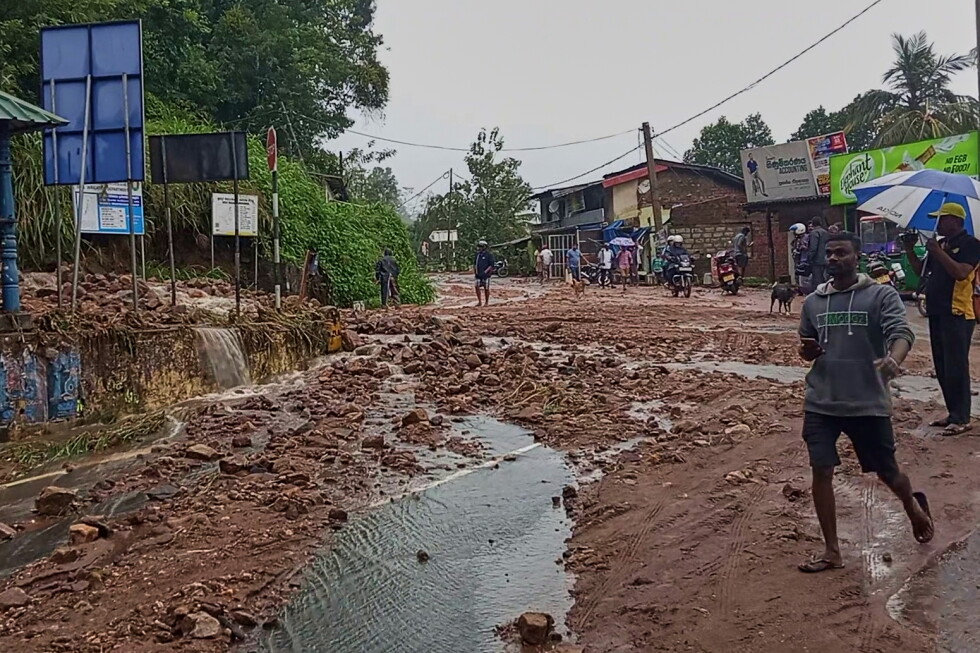
Five people have been confirmed dead and three injured after intense monsoon rains unleashed catastrophic floods and mudslides across Sri Lanka, prompting emergency authorities to shut down schools in the island nation’s mountainous tea-growing heartland this Tuesday. The downpour, which has hammered the country for 48 consecutive hours, has left a trail of destruction, submerging residential neighborhoods, agricultural fields and critical transport links, according to official updates. The Disaster Management Center (DMC), Sri Lanka’s government-led emergency response agency, reports that the worst damage is concentrated in the island’s central highland zone.
DMC spokesperson Pradeep Kodippili confirmed that the five fatalities all occurred when mudslides crashed into two separate residential properties in the central region. Along with the three injured, two additional residents remain unaccounted for as of Tuesday’s update. Preliminary damage assessments show that 129 homes have been partially or fully destroyed by the extreme weather, and more than 1,900 displaced residents have been evacuated to emergency safety shelters across the affected area.
In response to the crisis, the Sri Lankan government has deployed both navy and army personnel to carry out search and rescue operations for residents trapped by floodwaters and mudflows. Local broadcaster Hiru TV released on-the-ground footage showing service members and civilian volunteers pulling trapped residents out of inundated homes, as teams work to clear hazards ahead of expected additional rain. Footage from other local outlets also documented blocked arterial roads in central Sri Lanka, where boulders dislodged by mudslides, mud deposits and downed power poles have cut off access to multiple hard-hit communities.
This latest natural disaster comes as Sri Lanka is still grappling with the long-term recovery from the catastrophic damage inflicted by Cyclone Ditwa in November 2023. That storm killed nearly 640 people, displaced more than two million across the island, and caused an estimated $4.1 billion in infrastructure and property damage. Sri Lanka’s Central Province, which is currently bearing the brunt of the current flood and mudslide crisis, was also the worst-hit region during the November cyclone, and the national government has faced persistent challenges funding full reconstruction of damaged roads, railways and housing in the area.
For Sri Lanka, flood and mudslide events are an annual hazard that repeatedly threaten lives and livelihoods across the island. The country’s central hill regions are particularly vulnerable to deadly mudslides during the monsoon season, when heavy saturated soil gives way on steep slopes, while low-lying coastal and riverine areas face widespread flooding. These seasonal events routinely force thousands of residents to abandon their homes each year, putting repeated strain on the nation’s already stretched emergency response infrastructure.