In a landmark cabinet-approved policy announcement released Tuesday, the Japanese government has outlined a sweeping shift in national defense strategy, calling for urgent adaptation to modern combat tactics centered on drone and artificial intelligence technology — lessons drawn from ongoing conflicts in Ukraine and the Middle East — alongside a major expansion of the country’s domestic defense industrial base. The 598-page annual defense policy paper also reaffirms Japan’s position that China represents the nation’s greatest long-term strategic challenge, amid growing alarm over Beijing’s expanding military activity in the Pacific Ocean.
Over the past decade, Japan has steadily ramped up its military capabilities and defense spending, particularly along its southwestern island chain. It has already begun deploying long-range cruise missiles to establish a credible deterrent against what Japanese officials frame as increasingly assertive Chinese military moves, including growing tensions over the Taiwan Strait, where China claims sovereignty over the self-governing island.
Drawn directly from Ukraine’s widespread use of inexpensive combat drones to counter much larger invading forces, the new strategy frames adaptation to “new modes of warfare” as a non-negotiable national security priority. With nations across the globe racing to advance drone combat capabilities, Tokyo has placed top priority on developing domestically produced combat drones for coastal defense, designed to operate in tandem with the country’s new long-range missile deployments.
Defense Minister Shinjiro Koizumi emphasized the urgency of the program, noting that rapid development is the core of the initiative. Japan’s Acquisition, Technology and Logistics Agency has already shortlisted four domestic drone manufacturers from a pool of 38 applicants for an accelerated development track. The selected prototypes will undergo sea testing by the Japanese Maritime Self-Defense Force in early August ahead of a final production selection. Major industrial players have already joined the push: just last Friday, industrial giant Toshiba announced a partnership with domestic startup Pro Drone to co-develop combat drone systems.
Beyond tactical military advantages, domestic drone development also addresses a pressing demographic challenge facing Japan’s armed forces. Uncrewed weapon systems can help offset the steady decline in active-duty service members, a consequence of Japan’s decades-long population shrinkage. Still, experts warn that building a fully indigenous combat drone industry poses significant hurdles: Japan’s commercial civilian drone market is currently dominated by Chinese imports, requiring major investment to build domestic supply chains and manufacturing capacity from scratch.
Beyond drone development, the policy paper highlights growing Japanese concern over security threats across multiple regional fronts. Alongside China’s expanding Pacific presence, it cites growing joint military operations between China and Russia near Japanese territory — including coordinated bomber flights and naval maneuvers — as a severe threat to national security. It also labels North Korea’s accelerated missile development program, including its work on hypersonic weapons, plus Pyongyang’s deepening military ties with Moscow amid its invasion of Ukraine, as an “increasingly serious and pressing threat” to regional stability.
The document details multiple recent incidents that have heightened Japanese security concerns, including a December 2023 incident where Chinese fighter jets operating near southwestern Japan during aircraft carrier drills locked their targeting radars on Japanese aircraft — a move widely viewed as a preliminary step to launching a missile strike. In June 2024, two Chinese aircraft carriers were spotted near Japan’s Iwo Jima for the first time, a deployment that triggered deep alarm in Tokyo over Beijing’s ability to project military power far from its own coast, into the Pacific and disputed areas of the East China Sea. Tensions between Tokyo and Beijing rose sharply late last year after senior Japanese politician Sanae Takaichi stated that a Chinese military attack on Taiwan could meet the criteria for Japan to invoke its collective self-defense right and deploy military force.
A central pillar of the new strategy is a major push to strengthen Japan’s domestic defense industry, a sector that has remained underdeveloped for decades due to the country’s post-World War II pacifist constitution and long-standing restrictions on arms development and exports. The Japanese government is already expanding funding for defense-focused startups and research into dual-use technologies that can be adapted from commercial to military applications. Officials note that while many large established Japanese companies have historically avoided involvement with lethal weapons programs, a growing number of domestic startups are pursuing opportunities to convert commercial technologies for military use.
A landmark policy shift last year that scrapped Japan’s decades-long ban on lethal weapons exports is already unlocking new growth for the sector, Koizumi explained. Allowing international technology transfers, joint development, and export of Japanese-built weapons not only strengthens the domestic defense industrial base but also deepens security partnerships with allied nations, the defense minister added, noting that his international travel has increasingly included efforts to advance Japanese arms export deals.
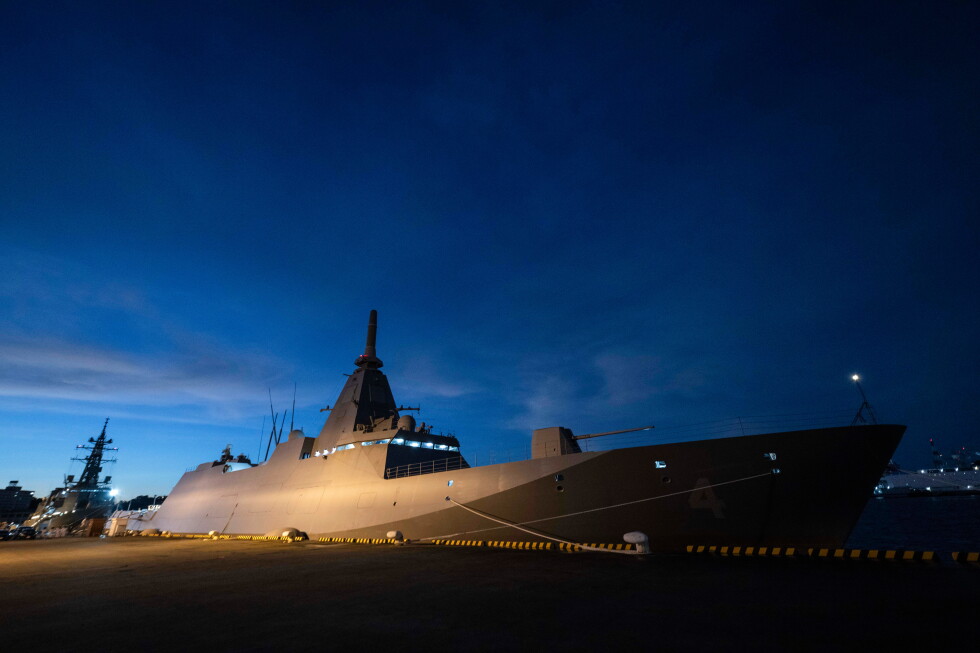
In recent months, Japan has already secured several major international defense agreements, including a deal for joint development and transfer of 11 upgraded Mogami-class frigates to Australia. Tokyo is currently negotiating a similar partnership with New Zealand, and has already finalized a deal to sell retired Japanese destroyers to the Philippines.