In the early hours of last Thursday, a massive wave of more than 60,000 migrants pushed across the border from Morocco into Spain’s North African enclave Ceuta, in one of the largest single mass crossing events in recent Mediterranean migration history. Four days later, as most adult migrants have been repatriated or voluntarily returned to Morocco, hundreds of unaccompanied migrant minors remain stranded in the territory, facing dangerous conditions and an uncertain future.
Among them is a 17-year-old girl from Tangier, whose story lays bare the human cost of this sudden migration crisis. She, her 8-year-old younger brother, and her mother joined the thousands of people who attempted to swim around the border breakwater to reach Spanish soil, all chasing the promise of better economic and life opportunities unavailable in their home country. While the teenager successfully made it through the rough Mediterranean surf to shore, her brother drowned before he could reach land. Spanish authorities pulled his small body from the water, the girl told an Associated Press photojournalist, on condition of anonymity to protect her safety as a vulnerable minor. In the chaos of the mass crossing, she was also separated from her mother, who remains missing.
In the four days since she arrived, the teen has survived on the kindness of local Ceuta residents, who shared food, clothing, and a chance to bathe with her. When she sought support at the government-run youth care center, she found the facility already overwhelmed and at full capacity. “I saw people stepping on the dead,” she recounted through a translator, who stepped in because she does not speak Spanish. “Now we are children begging on the street.”
Local official data confirms she is not alone. As of Monday, roughly 860 migrant minors remained in Ceuta after the surge, making up a large share of the 3,000 to 5,000 migrants who have avoided expulsion from the original 60,000 who crossed. Official death tolls underscore the danger of the crossing: Spanish authorities have confirmed 72 fatalities, most from drowning, and Morocco’s separate count of 11 additional deaths is not included in that total. Beyond the 17-year-old’s story, AP reporters on the ground have documented other minors begging for food in the streets of Ceuta, with resources stretched far beyond capacity.
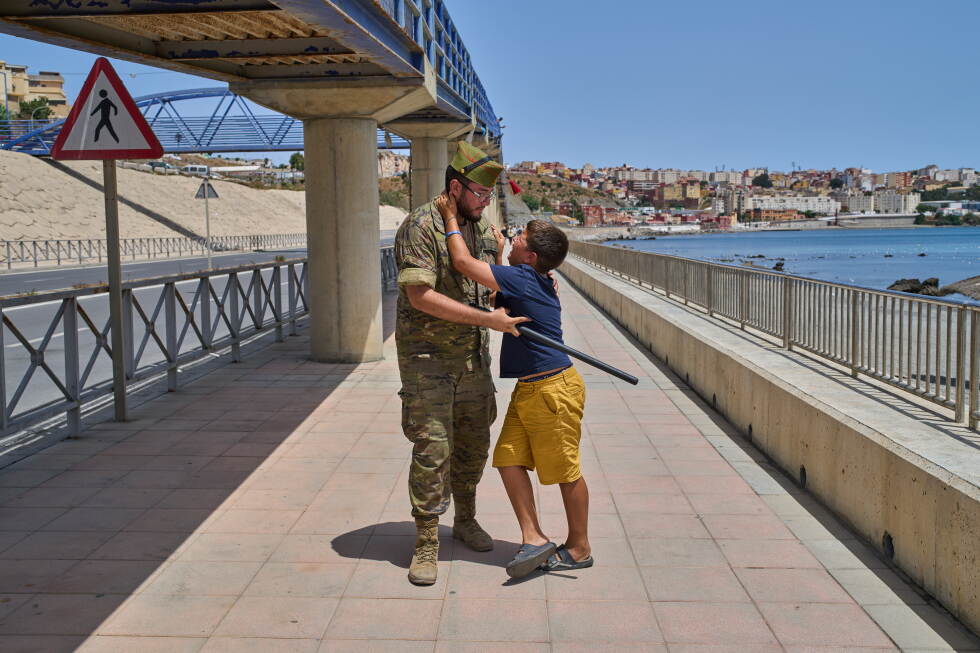
Spanish law mandates a specific legal framework for migrant care: while adult migrants can apply for asylum, most Moroccan adults face extremely low approval rates for humanitarian protection, and those rejected face expulsion. By contrast, unaccompanied migrant minors are legally required to receive state protection and care. But on-the-ground reporting shows enforcement of this rule is inconsistent. An AP journalist witnessed Spanish soldiers escorting a crying unaccompanied Moroccan boy to the border for repatriation, only halting the process at the last minute after local residents and media protested that the child qualified for protection under Spanish law.
Beyond the remaining Moroccan migrants, Ceuta’s remaining population of stranded migrants also includes people from across Africa and the Middle East: Sudanese fleeing civil war, Palestinians from Gaza, Afghans escaping instability, and people from multiple other sub-Saharan African nations.
Ceuta’s primary migrant reception center, built to hold just 600 people, has been completely filled for days, leaving hundreds of migrants to sleep on public beaches and the surrounding hills. Food and clean water are already scarce among the stranded population. Local migration activist Ramsés Mohamed Azumik, with the Ceuta-based advocacy group Asociación Elín, says the current situation is no accident. “The strategy is that hunger, thirst and exhaustion forces these people to finally decide to voluntarily return to Morocco,” Azumik explained.
For the hundreds of stranded minors, the goal of reaching mainland Spain, just across the water visible on the hazy horizon, remains out of reach for now, leaving their lives and futures hanging in the balance.