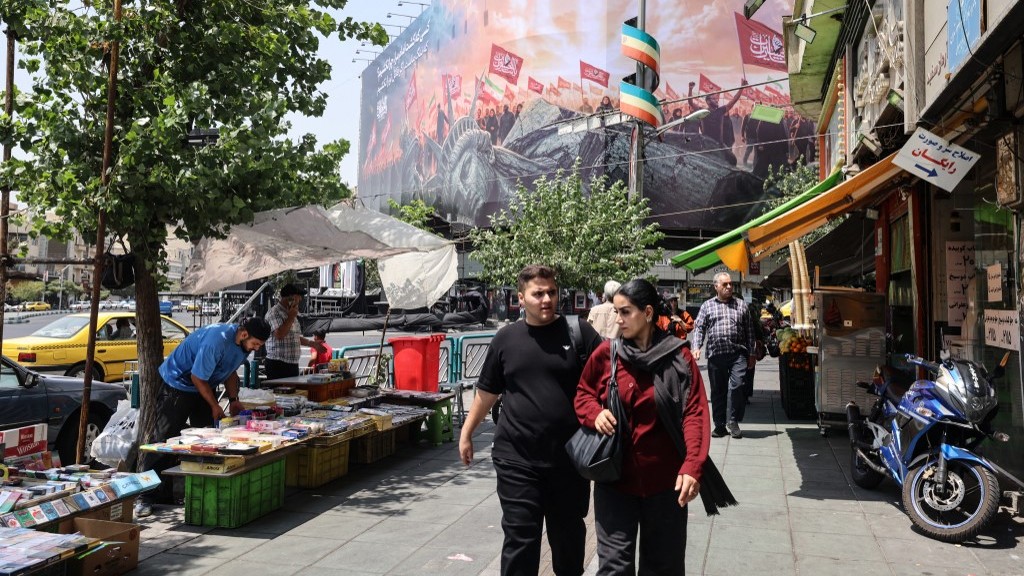
In a sharp contradiction of former U.S. President Donald Trump’s public announcement that bilateral negotiations with Iran would kick off on Monday, Tehran has firmly denied that any direct talks with Washington are currently underway. The dispute comes just days after Trump announced he would call off planned new military strikes against Iran, a decision he framed as a step to clear the way for a diplomatic agreement.
Speaking to reporters aboard Air Force One on Sunday, Trump claimed that negotiations would get underway the following afternoon, arguing that Iran had clear incentive to reach a deal. “Obviously, they don’t want to be attacked,” Trump stated. But Iran’s foreign ministry quickly pushed back on that narrative, confirming that Tehran is currently engaged in talks only with Oman focused on securing navigation through the strategic Strait of Hormuz, not with the United States.
Foreign Ministry spokesperson Esmaeil Baghaei emphasized during a formal press briefing that discussions with Oman have been constructive, with the core goal of finalizing an agreement for new safe shipping routes through the strait. “We are not currently negotiating with the United States. Our negotiations are with Oman to secure passage through the Strait of Hormuz,” Baghaei said. He called on both regional and international powers to recognize Iran’s responsible approach to the issue and engage constructively with Tehran’s efforts. Baghaei also warned that as long as the U.S. maintains its naval blockade on Iranian ports, the volatile security situation in the Strait of Hormuz will remain unchanged.
Despite the conflicting statements from the two sides, global oil markets reacted strongly to Trump’s initial announcement, with benchmark crude prices dropping sharply in trading on Monday. As of 09:15 GMT, October-delivery North Sea Brent crude, which traded as the global benchmark contract for the first time in this session, fell 4.59% to settle at $83.89 per barrel.
The diplomatic back-and-forth also follows a key phone call between Saudi Arabia’s Crown Prince Mohammed bin Salman and Trump over escalating regional tensions, confirmed by Saudi state media over the weekend. During the conversation, the crown prince stressed that prioritizing diplomatic dialogue to de-escalate conflict is critical, and that all possible efforts should be made to reach a truce that creates space for long-term diplomatic solutions. He added that such diplomatic outcomes are essential to preserving regional security and stability, and preventing the area from being pulled into a wider, more destructive conflict. The conversation came after Saudi Arabia publicly raised concerns about Trump’s original plans for military strikes on Iran.
The ongoing clash between the U.S.-Israel bloc and Iran, which launched in February, has already killed thousands of people and inflicted massive economic harm across the Gulf region, where repeated Iranian attacks have disrupted daily economic activity. The persistent threat of closure to the Strait of Hormuz, a chokepoint through which roughly 20% of global oil shipments pass, has been one of the most damaging disruptions to regional economic activity, making the permanent reopening of the waterway a top priority for all parties involved.
In a separate update on Monday, Hassan Qashqavi, spokesperson for Iran’s parliamentary National Security Committee, noted that Tehran is close to finalizing its agreement with Oman over the Strait of Hormuz. He also confirmed that Omani mediators are currently working to revive the 2015 nuclear deal-era Memorandum of Understanding between Iran and the United States.