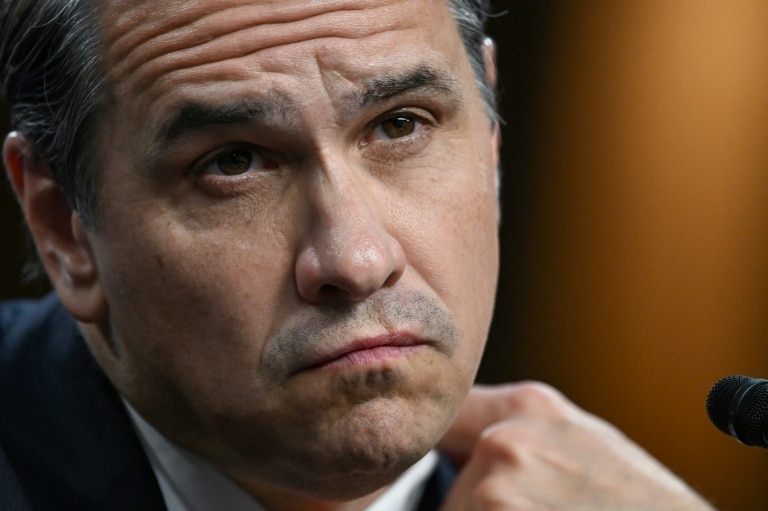
A weeks-long standoff that threatened to derail the confirmation of U.S. President Donald Trump’s pick for attorney general has been resolved, after acting Attorney General Todd Blanche announced Sunday he had struck a deal with skeptical Senate lawmakers and formally signed an order terminating the widely contested $1.8 billion anti-weaponization compensation fund.
Blanche’s announcement comes on the heels of the Senate Judiciary Committee delaying a procedural vote to advance his nomination last week, a move that followed mounting opposition from two key Republican senators: John Cornyn of Texas and Thom Tillis of North Carolina. The pair had publicly pledged to block Blanche’s confirmation until the Trump administration fully walked back its plan for the fund, which was created to compensate individuals who claim they were targeted by politically motivated prosecutions.
In a public post on X shared Sunday, Blanche laid out the outcome of weeks of negotiations with committee leaders and rank-and-file senators. “My team and I have met with committee members and Senators over the past several weeks and addressed any concerns or outstanding questions,” Blanche wrote. “We have enjoyed good faith discussions, and as a result issue the following order and update with regard to the May IRS settlement.”
Attached to Blanche’s post was a signed executive order that formally invalidates the previous May 18, 2026 order that established the Anti-Weaponization Fund. “The Attorney General’s May 18, 2026 Order establishing the Anti-Weaponization Fund… is rescinded and shall have no force or effect,” the order reads. “This Order establishes, beyond any doubt, that there is no Fund.”
The controversial fund grew out of an extraordinary legal settlement between Trump and his own administration over the unauthorized disclosure of Trump’s personal tax records several years ago. As part of the original terms, the agreement granted sweeping protection from future tax audits and government legal claims to Trump, his immediate family, and his affiliated business entities. From the moment the fund was unveiled, critics across the political spectrum raised sharp objections, arguing it lacked a clear foundation in U.S. law, included almost no provisions for public oversight, and could be exploited to provide payouts and legal protection to Trump loyalists — even including defendants convicted of crimes connected to the January 6, 2021, assault on the U.S. Capitol.
While Blanche had previously offered verbal assurances that the fund would not move forward, Cornyn and Tillis refused to accept informal commitments. The pair insisted on a binding written order that ruled out any future revival of the fund and included specific language to narrow the scope of the broad tax protections granted to Trump and his associates in the original settlement. As of Sunday evening, neither senator had issued a public response to Blanche’s announcement.
The Senate Judiciary Committee is now scheduled to hold its long-delayed vote on Blanche’s nomination on Tuesday. The impasse had grown so tense in recent days that Trump suggested Thursday he could temporarily pull Blanche’s nomination — the former personal lawyer to the president — and re-nominate him after Cornyn and Tillis leave their Senate seats at the end of January, when new members of Congress are sworn in.