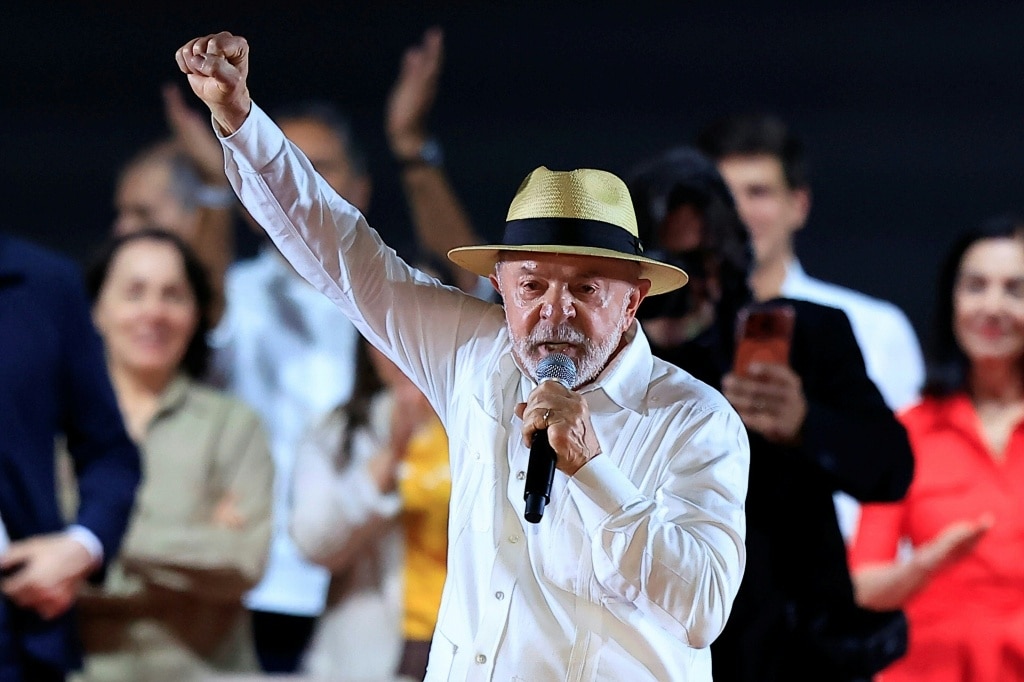
At 80 years old, Brazil’s sitting President Luiz Inacio Lula da Silva officially launched his campaign for a fourth presidential term Sunday at the Workers’ Party (PT) convention in Sao Paulo, declaring he remains “in great shape” to lead the nation through a period of global and domestic political upheaval.
A towering figure of Latin America’s progressive left, Lula has framed his 2024 October election campaign as a fight to defend Brazilian sovereignty against external interference and stem the rising tide of far-right politics across the globe. While US President Donald Trump was never named directly during the convention’s proceedings, Lula and other senior leftist speakers centered their message on shielding Brazil from outside threats, a reference to ongoing trade and diplomatic tensions between Brasilia and the Trump White House.
“I want to be prepared so that no one invades this country,” Lula told assembled party members, while calling for increased public investment in Brazil’s national defense. He also pushed back against widespread speculation about his age and fitness for office, noting that his consistent exercise routine and active lifestyle keep him ready to serve. “I want to fight against old age. I don’t want to be shuffling along,” he added.
Lula’s political career is one of the most dramatic comeback stories in modern Latin American politics. A former metalworker and union organizer, he first held the presidency from 2003 to 2010, before a controversial set of corruption convictions saw him jailed and barred from politics. Those convictions were eventually annulled, and he reclaimed the presidency in 2022, returning to power after years on the political sidelines. Today, he remains one of Brazil’s most polarizing figures: supporters credit his signature social programs with lifting millions of Brazilians out of poverty and expanding access to housing and social services, while critics point to persistent issues of violent crime and systemic corruption, and note that the PT has held the presidency for 17 of the last 24 years.
For many of Lula’s base supporters, his policies have been transformative. “I’m here today because Lula’s policies changed my life and my family’s. Thanks to him, we own our own home today,” 51-year-old social worker Cristiane Rosa Julho told AFP on the sidelines of the convention.
Brazil’s electoral rules allow presidents to serve two consecutive terms, and permit a return to candidacy after a break in service with no lifetime cap on total terms. Lula has stressed that this campaign will be his last, saying that after a fourth term, he and his wife 59-year-old Rosangela will retire to focus on personal life. “We’re going on vacation to focus on romance for another 20 years,” he joked.
Lula’s leading challenger in the upcoming race is 45-year-old Senator Flavio Bolsonaro, eldest son of far-right former Brazilian President Jair Bolsonaro. Flavio stepped into the presidential race after his father was convicted of orchestrating a coup attempt to block Lula’s 2023 inauguration. The entire Bolsonaro family maintains close political alliances with Donald Trump, who has already thrown his support behind several winning far-right candidates across Latin America, as well as Argentina’s libertarian President Javier Milei.
Tensions with Washington have been a key flashpoint in the early days of the campaign. In July, the Trump administration imposed two new rounds of tariffs on Brazilian exports, citing claims of unfair trade practices. Last year, the Bolsonaro family publicly welcomed earlier tariffs the Trump administration put in place as retaliation for Jair Bolsonaro’s criminal trial; those duties were largely rolled back after diplomatic negotiations. Lula has made clear he will not tolerate foreign meddling in Brazil’s politics or its natural resources, which hold massive reserves of critical rare earth minerals that are in high demand globally. “In Brazil, we do not accept anyone sticking their nose where it does not belong,” Lula said last week, adding at the convention: “neither the Chinese, nor the Americans, nor the French are going to get their hands on our rare earths.”
Speaking at the convention, Lula’s running mate Vice President Geraldo Alckmin took aim at the Bolsonaro camp’s longstanding questioning of Brazil’s electronic voting system, concerns that Flavio repeated publicly just last week. “Anyone who doesn’t believe in the popular vote shouldn’t even run for president. The electronic voting machine is so competent that it won’t accept votes from Argentines or Americans,” Alckmin said, in a veiled jab at foreign influence on the Brazilian race.
Recent polling from the Datafolha institute shows the race remains extremely tight: the poll finds 48% of likely voters would back Lula in a head-to-head second round runoff, compared to 43% who would support Flavio Bolsonaro, leaving the race far from settled ahead of the October vote.