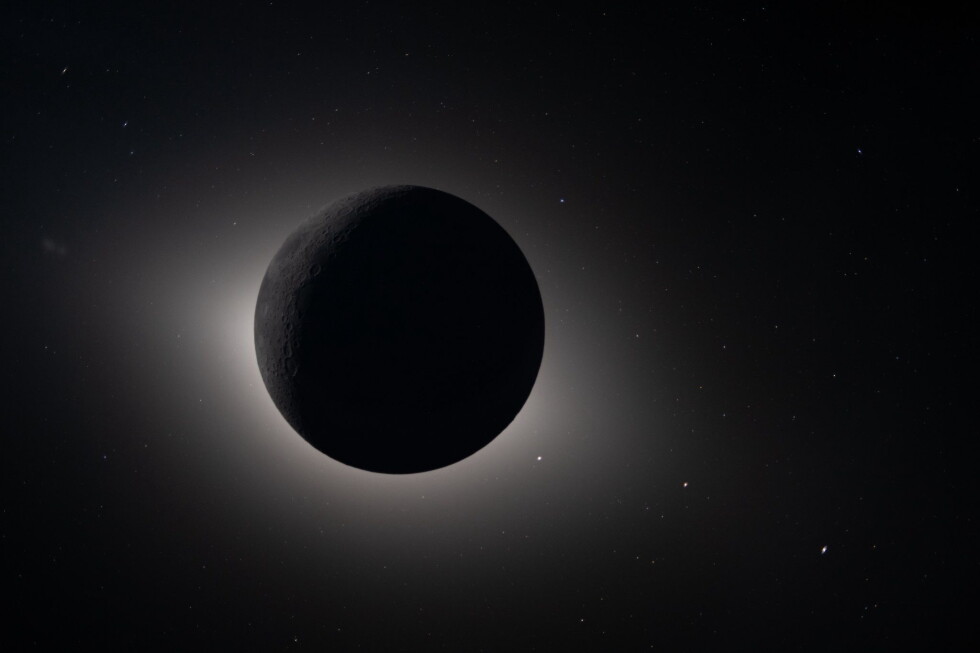
After more than a century without a total solar eclipse crossing its mainland, Spain is poised to welcome a breathtaking celestial event on August 12, capped by an even longer dramatic astronomical showcase next summer. To amplify the spectacle, the once-in-a-generation eclipse will coincide with two other extraordinary sky phenomena: a six-planet alignment and the peak of the annual Perseid meteor shower, creating a rare triple treat for stargazers across the Northern Hemisphere.
When the sun, moon, and Earth fall into perfect straight-line alignment on August 12, daytime darkness will descend across parts of the Iberian Peninsula, Greenland, and Iceland near the hour of sunset. The moon’s dark, sun-blocking shadow, called the umbra, will begin its journey near the North Pole and track southward across 8,260 kilometers (5,130 miles) of mostly open Atlantic Ocean, taking 90 minutes to complete its path. The longest period of totality, clocking in at 2 minutes 18 seconds, will occur off Iceland’s west coast. By the time the umbra reaches coastal Portugal and mainland Spain, where crowds of astronomy enthusiasts are already gathering, totality will narrow to just around one minute before the eclipse concludes in the Mediterranean Sea. This event acts as a preview for an even longer total solar eclipse coming in 2027, which will offer up to six and a half minutes of totality as it crosses from southern Spain through North Africa and into the Middle East.
While only viewers along the narrow path of totality will get to experience the full, jaw-dropping effect of the total eclipse, hundreds of millions of people across a vastly larger geographic area will be able to view a striking partial eclipse. The partial shadow of the moon will reach as far north as Alaska and Siberia, covering most of Canada, the northern United States, nearly all of Europe, and large swathes of West Africa. The degree of coverage decreases the further a viewer is from the path of totality: Dublin will see 94% of the sun blocked, Oslo will see 83%, Montreal 18%, New York 9%, and just 2% coverage will be visible in Norfolk, Virginia. Astronomers stress that proper eye protection via certified special eclipse glasses is non-negotiable for any viewing of a partial eclipse, even when only a tiny fraction of the sun is visible.
The celestial magic does not end with the eclipse. Before dawn on August 12, six planets will align into a visible arc stretching across the pre-sky, and after nightfall, the annual Perseid meteor shower will reach its peak under a dark new moon. Forecasters note that bright streaking meteors could even pass through the frame of totality, with bright planets and distant stars visible in the darkened sky during the event.
Eclipse-chasing enthusiasts from around the world are already planning their viewing spots, and many are chasing extra rare phenomena alongside the main event. Michael Zeiler, a veteran eclipse mapmaker who is attending his 13th total solar eclipse, will be positioned on a cruise ship in a Greenland fjord serving as a guest lecturer. He plans to point a video camera north to capture the northern lights if they appear during totality, calling a large solar outburst that triggers auroras the “icing on the cake” for his experience. Zeiler notes that his excitement stems from chasing these extremely rare celestial events.
Major scientific organizations from across the globe are also leaning into the moment, planning public watch parties, live broadcasts, and cutting-edge research. The European Space Agency (ESA) will host a public celebration in Leon, Spain, and stream live coverage from the Astrophysical Observatory of Javalambre, with NASA, the Italy-based Virtual Telescope Project, and other groups also offering global live coverage. ESA Science Director Carole Mundell emphasized that the eclipse is more than just a scientific event or an astronomical alignment: it is a shared human experience that connects all people to the broader cosmos. Two of ESA’s space telescopes will observe the eclipsed sun and its faint outer atmosphere, the corona. While the agency’s Proba-3 mission — a pair of satellites that create artificial solar eclipses for research — will be in the wrong orbital position to observe the natural eclipse from Earth, it will attempt to capture before-and-after imagery of the sun for comparison.
U.S. university research teams supported by NASA are also conducting atmospheric studies, launching more than 60 high-altitude balloons from sites in Spain and Iceland to measure changes in Earth’s atmosphere during the brief period of cooling and darkness caused by the eclipse. Project lead Angela Des Jardins of Montana State University noted that even just a few minutes of totality is enough to cause measurable atmospheric changes from the moon’s cold shadow. On a NASA high-altitude research plane, Southwest Research Institute scientist Amir Caspi will chase the eclipse’s shadow at 740 kph (460 mph), extending the total eclipse observation time to nearly three minutes for his team. Four specialized cameras will capture the corona across nine different wavelengths, with Caspi expecting to collect thousands of high-quality scientific images during the 180 seconds of extended observation. Even though the natural eclipse is short, Caspi emphasized that the data gathered will be incredibly valuable for solar research.
For astronomy fans in Spain, this event is just the first of a rare run of celestial shows. In 2027, an exceptionally long total solar eclipse will cross the southern tip of Spain on August 2, offering up to 6 minutes 23 seconds of totality before tracking across Morocco, Algeria, Libya, Egypt, Saudi Arabia, Yemen, and Somalia. Then in January 2028, an annular “ring of fire” eclipse will complete a unique three-eclipse sequence for the country, what ESA’s Mundell calls a “lucky coincidence.”
This rarity of this week’s event makes it all the more special: mainland Spain’s last full total solar eclipse occurred in 1912, just two days before the sinking of the Titanic. That 1912 event was a rare hybrid eclipse that shifted between annular and total, offering only a few seconds of totality for most of the mainland, leading many astronomers to date the last major total eclipse to 1905. For Andrei Zhukov of the Royal Observatory of Belgium, who has led more than 60 simulated artificial total eclipses as part of the Proba-3 mission over the past two years, any eclipse — natural or artificial — is a cause for excitement. “We’re looking forward to more eclipses, natural or artificial,” Zhukov said.
This report was produced by The Associated Press Health and Science Department, which receives educational funding from the Howard Hughes Medical Institute Department of Science Education and the Robert Wood Johnson Foundation. The AP retains full editorial control over all content.