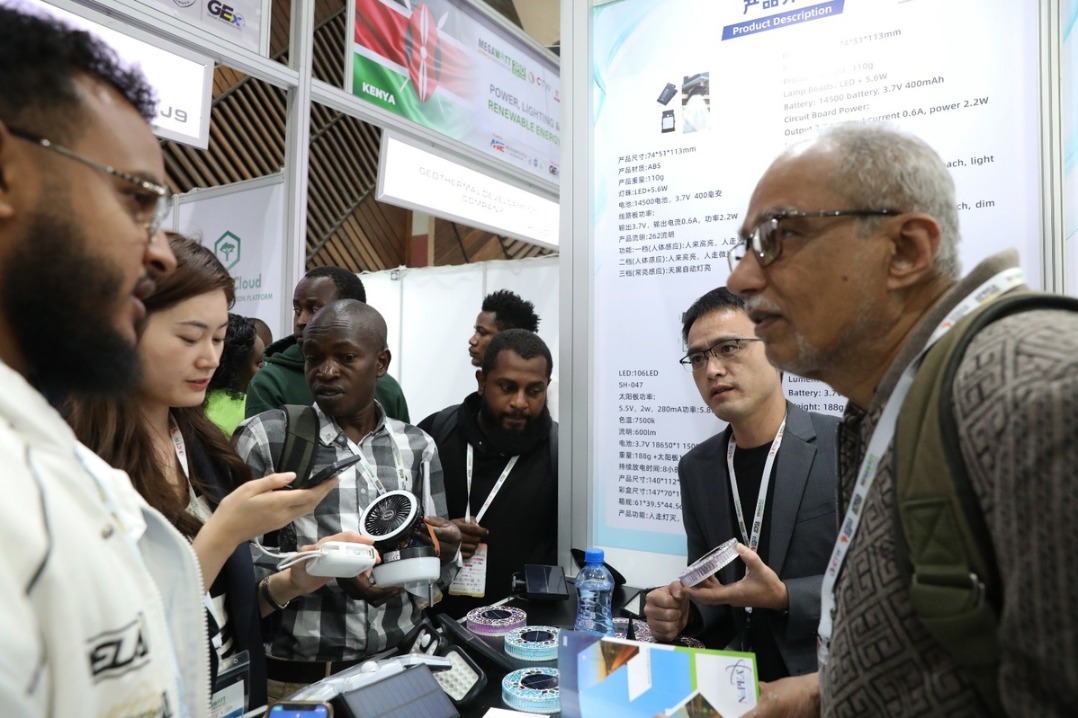
NAIROBI, Kenya – As East African nations race to scale up renewable energy adoption and cut carbon emissions, Kenya is actively courting Chinese capital and technical partnership to build a domestic clean energy manufacturing sector, advance its national energy transition, and cement its status as the region’s leading green industrial hub. The announcement came during Kenya Trade Week 2026, where dozens of Chinese clean energy firms showcased their latest solar power, grid infrastructure and electric mobility products to local industry stakeholders and government officials.
Thomas Karungu, alternate director to the principal secretary at Kenya’s State Department for Energy, outlined the country’s value proposition for foreign investors in a recent address, noting that Kenya holds unique advantages for clean energy investment: it boasts one of the highest shares of renewable energy in its national electricity mix on the continent, with abundant untapped solar, geothermal, wind and hydropower resources. Complementing these natural assets are its strategic position as a gateway to the East African Community’s 300-million-plus consumer market, a rapidly growing domestic energy demand, and a slate of recently updated government policies designed to lower barriers for clean energy project development and manufacturing investment.
Karungu emphasized that China, as a global leader in renewable energy innovation, large-scale equipment manufacturing, grid infrastructure deployment and energy storage technology, is uniquely positioned to support Kenya’s clean energy goals. Through local production, targeted technology transfer and cross-border industrial partnerships, Chinese firms can help Kenya turn its natural resource advantages into long-term industrial and economic gains, he added.
The Kenyan government is prioritizing partnerships that foster local industrial capacity, Karungu explained. This includes supporting local assembly of clean energy equipment, domestic production of core components, knowledge and technology transfer, joint research and development initiatives, technical skills training for local workers, and the build-out of a localized regional supply chain. Specifically, the government is welcoming Chinese investment across a wide range of high-priority sectors: solar panel manufacturing, transformer and smart meter production, high-voltage transmission equipment, electric vehicle charging infrastructure, geothermal energy development, mini-grid deployment for off-grid rural communities, clean cooking technology, waste-to-energy projects, and digital electricity network management.
These investments will deliver far-reaching benefits beyond expanding renewable energy access, Karungu noted. They will create thousands of local manufacturing and technical jobs, build long-term sustainable technical capacity within Kenya, and allow the country to become a central manufacturing and distribution hub for clean energy equipment serving the entire East African region.
To meet the country’s rapidly growing domestic electricity demand, the Kenyan government has laid out an ambitious infrastructure expansion plan: by 2030, it aims to modernize and extend the national high-voltage transmission network by roughly 8,000 kilometers, and add approximately 12,000 megavolt-amperes of additional transmission capacity to the grid. Delivering this large-scale infrastructure push will require massive capital input, cutting-edge technology, specialized technical expertise, strong institutional collaboration, and sustained public-private partnership, Karungu said.
“For global investors, financiers and clean energy project developers, Kenya has set a clear, unwavering direction for its energy transition,” Karungu stated. “Achieving our goal of universal electricity access, expanding our transmission network and meeting the rising energy demand of our growing economy will require substantial, active participation from the private sector.”
Chinese firms already active in the Kenyan market say the country offers strong untapped business potential, even amid fierce competition among Chinese clean energy suppliers. Cao Wenjing, a representative of a Chinese renewable energy company that entered the Kenyan market in 2025 after expanding across other major African markets including Nigeria, South Africa and Zimbabwe, noted that competition in the sector is intense, as most global clean energy equipment suppliers hail from China. Even so, Kenya’s exceptional solar resources, relatively high domestic electricity rates, and rapidly growing demand for both grid modernization and new renewable energy capacity continue to create attractive business opportunities for foreign firms, Cao added.