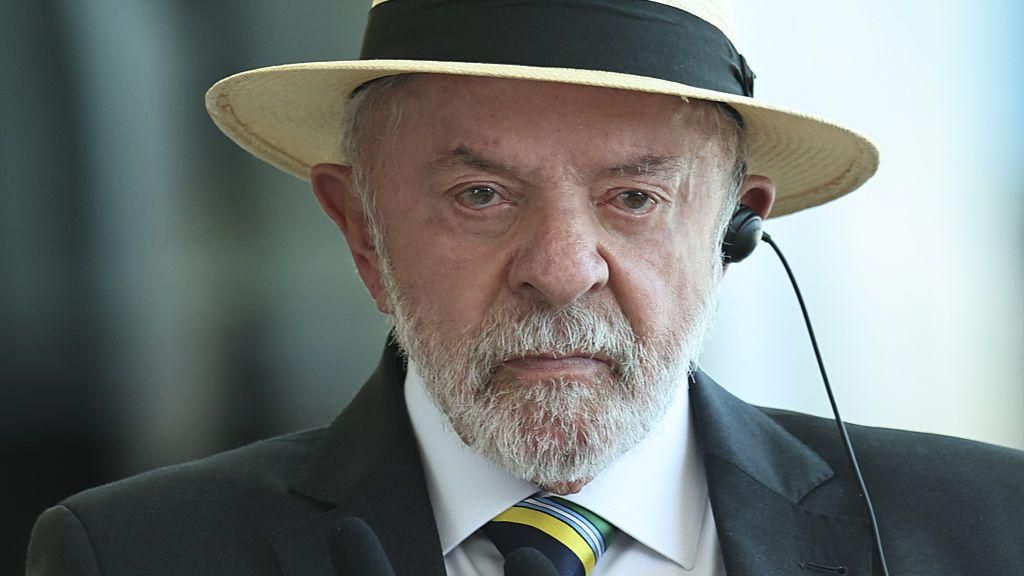
Rising diplomatic tensions between Brazil and the United States have taken a sharp turn after Brazilian President Luiz Inácio Lula da Silva announced his administration has denied entry visas to two senior U.S. State Department officials, accusing the pair of plotting to meddle in Brazil’s upcoming October general election.
Speaking to reporters Wednesday, Lula framed the visa denial as a necessary defense of Brazilian sovereignty: “We had to deny visas to two individuals they were sending to Brazil to interfere in our electoral process.” The two officials in question are Riley M. Barnes, Assistant Secretary of State for Democracy, Human Rights, and Labor, and Samuel Samson, Deputy Assistant Secretary in the same department. They were scheduled to travel to Brazil in late July for a trip the U.S. described as focused on freedom of expression, religious liberty, and election integrity. The trip also included a planned meeting with Flávio Bolsonaro, the right-wing opposition candidate in October’s election.
Flávio Bolsonaro is the eldest son of former Brazilian President Jair Bolsonaro, a polarizing far-right figure who was convicted last year of plotting a coup attempt following his 2022 election loss to Lula, and sentenced to 27 years in prison. Jair Bolsonaro was already barred from running for public office before his conviction, after years of spreading unsubstantiated claims that Brazil’s electronic voting system was vulnerable to rigging. His baseless claims of widespread fraud after his 2022 defeat inspired his supporters to storm Brazil’s Congress, Supreme Court, and Presidential Palace on January 8, 2023 — an event widely compared to the January 6 U.S. Capitol riot.
In a recent meeting with foreign diplomats, Flávio Bolsonaro repeated unfounded questions about Brazil’s voting system, claiming the country’s electronic voting machines shared origins with those used in Venezuela, and citing an outdated CIA document referencing fraud in that country. He later walked back the comments, claiming he merely supported the presence of more international election observers, rather than questioning the integrity of Brazil’s system. But the meeting reinforced Brazilian authorities’ concerns that U.S. officials would lend legitimacy to false claims about the election, prompting the visa decision.
The U.S. State Department has dismissed Lula’s accusations of election interference as a “baseless lie.” But Brazilian authorities have pushed back, noting that Flávio Bolsonaro’s claims have already been thoroughly refuted by the country’s Superior Electoral Court. Independent election experts have long ranked Brazil’s electronic voting system, first implemented nationwide in 1996, as one of the most secure in the world. No cases of systemic fraud have ever been recorded in the country’s modern electoral history.
The system includes multiple layers of security to protect integrity: it uses biometric fingerprint scanning to verify voter identity, preventing double voting and impersonation. Every machine produces a paper record of votes cast that can be cross-checked against the electronic tally, and all results are subject to independent third-party audits. In the lead-up to every election, independent cybersecurity experts are invited to attempt to hack the system to identify and address any potential vulnerabilities, as a public confidence-building measure.
October’s election will see the 80-year-old incumbent left-wing President Lula da Silva seek re-election, facing off against Flávio Bolsonaro, who has already received high-profile endorsements from Argentine President Javier Milei and Israeli Prime Minister Benjamin Netanyahu. The visa dispute is the latest flashpoint in the ongoing partisan battles over Brazilian electoral integrity that have roiled the country’s politics since the 2022 election.