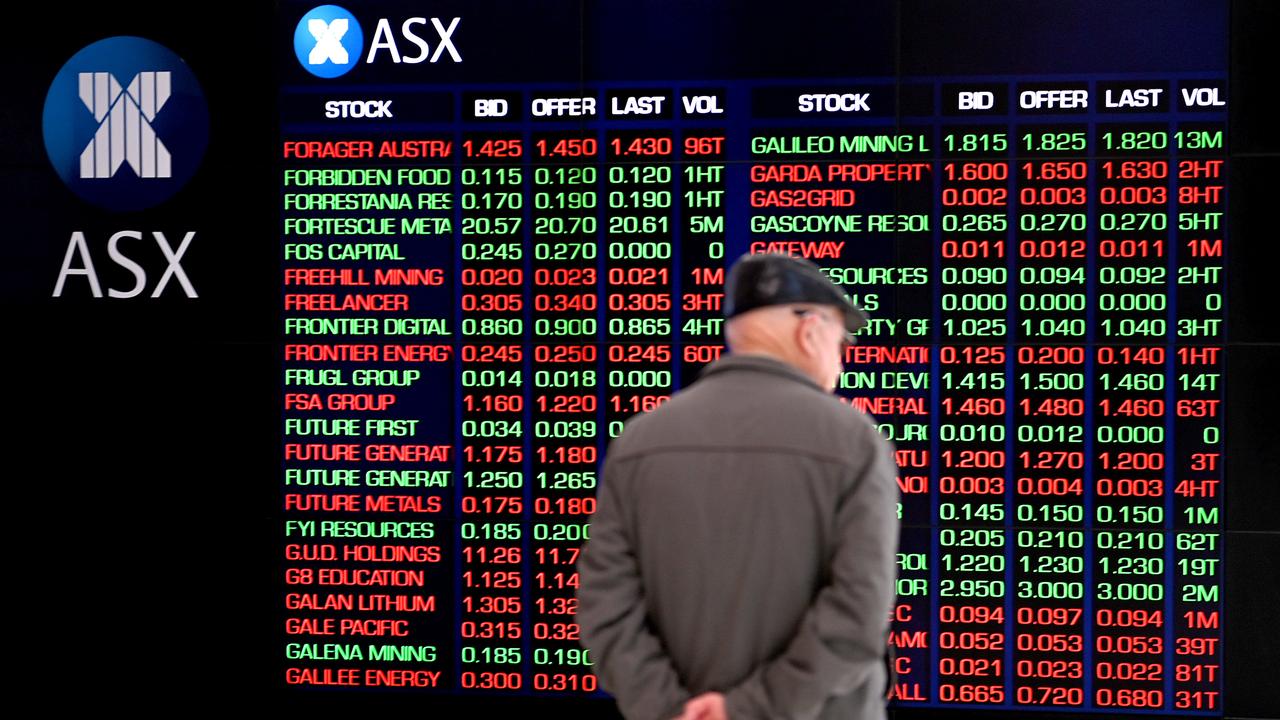
Australia’s benchmark stock index, the ASX 200, has broken its three consecutive session winning streak, closing deep in negative territory on the back of growing geopolitical instability in the Middle East and a sharp overnight downturn on U.S. markets that rippled through global trading. By the closing bell, the ASX 200 shed 70.90 points, or 0.78%, to settle at 8967.70, while the broader All Ordinaries index fell 77 points, or 0.84%, to 9122.70. The Australian dollar also weakened in tandem with risk-off sentiment, sliding to 69.50 U.S. cents by market close.
Nine out of 11 tracked sectors finished the session in negative territory, led by steep drops in materials and consumer discretionary stocks. Among the country’s three largest mining firms, performance was split: BHP fell 1.71% to $59.15, Fortescue Metals Group dropped 1.15% to $18.86, while Rio Tinto bucked the broader trend to gain 1.83% to $168.41. Gold mining stocks also faced heavy selling pressure, with Northern Star Resources declining 3.29% to $20.02 and Evolution Mining falling 3.07% to $11.06, dragged down by a pullback in global gold prices. In the consumer discretionary space, major retail names all posted losses: Wesfarmers fell 1.53% to $89.22, JB Hi-Fi dropped 1.58% to $80.51, and Harvey Norman declined 1.79% to $4.94.
Against the broad market downturn, the information technology sector emerged as the lone bright spot, posting broad gains to offset some of the broader index losses. Leading the tech rally, logistics software firm WiseTech Global surged 6.67% to $37.89, while accounting software provider Xero gained 1.43% to $71.48 and enterprise software provider TechnologyOne added 1.11% to $30.99.
Tony Sycamore, senior market analyst at IG, explained that the Australian selloff followed a clear negative lead from Wall Street, where investor sentiment was rattled by shifts in U.S. monetary policy outlook and growing geopolitical risks. “Wall Street’s decline came as investors digested the Federal Reserve’s decision to keep rates on hold, which saw long-end bond yields climb to a 19-year high on concerns about a potential policy error,” Sycamore noted. He added that downward pressure was amplified by two key developments: a rebound in global oil prices driven by renewed Middle East tensions, and a continued pullback in semiconductor stocks that pushed the Nasdaq 100 into official correction territory.
Despite the day’s sharp losses, Sycamore pointed out that the Australian benchmark remains on track to extend its winning streak to four consecutive monthly gains, with the index up nearly 2% through the first 30 days of July. “July once again lives up to its reputation as the best-performing month of the year, with an average return of 2.73 per cent over the past decade,” he said.
Geopolitical tensions directly contributed to market volatility, as Brent Crude oil prices rose another 1.3% to $US91.89 a barrel following a new wave of U.S. military strikes against Iranian-backed militias operating in Iraq. The oil price rally stoked fresh investor concerns that persistent energy cost pressures could force central banks to keep interest rates higher for longer, fueling broader inflation risks.
In individual company news, a handful of stocks outperformed the broader market despite the negative sentiment. National Australia Bank (NAB) gained 0.85% to close at $41.55, even after the bank disclosed that home lending applications fell 15% in the June quarter compared to the preceding three months. Pizza chain Domino’s Australia surged 9.08% to $19.59 after the company released preliminary unaudited results showing underlying net profit after tax would come in between $118 million and $122 million, matching the guidance the firm previously provided to the market. Lithium producer Pilbara Minerals also gained 2.68% to $4.21, after reporting record annual production and sales, with June quarter revenue rising 31% to $743 million.