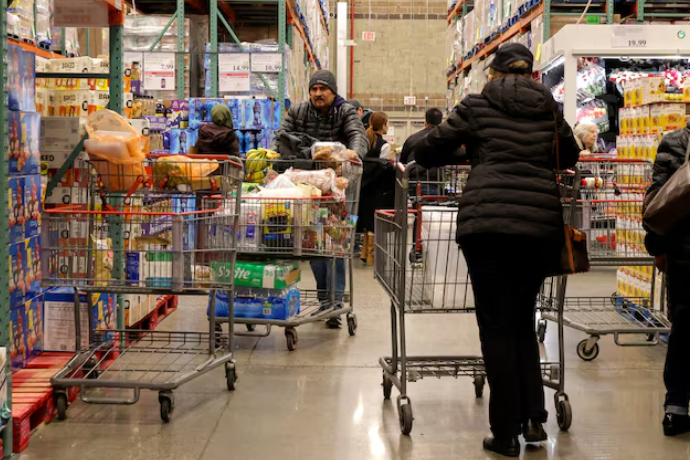
As the United States gears up for its 2026 fall midterm congressional elections, skyrocketing everyday costs have emerged as the top concern driving voter sentiment, with new sweeping tariffs and ongoing geopolitical instability tied to the Iran conflict fueling price hikes across food, energy, housing and consumer goods.
Ahead of the high-stakes vote, which comes two years into the current presidential term and serves as a critical public referendum on the sitting administration’s policy agenda, widespread voter anxiety over the cost of living has upended campaign messaging from both major US political parties. Multiple recent independent polls confirm that economic hardship is shaping up as the defining issue for voters heading to the polls in November.
A July 16 Washington Post-IPSOS survey of registered voters found that a clear majority – 54% of respondents – identified the economy and persistent high inflation as the most important factors that will guide their congressional vote this cycle. When it comes to trust in economic governance, however, voters are deeply divided: a separate Pew Research Center poll conducted July 23 shows just a one-point gap between parties, with 37% of respondents viewing Democrats as holding better economic policies, compared to 36% favoring Republicans.
This November’s election will put all 435 seats in the US House of Representatives and 35 of the 100 Senate seats up for grabs, alongside dozens of statewide contests for governor and hundreds of local government races. While the presidency is not on the ballot, political analysts universally frame the results as a key barometer of public approval for the current White House agenda.
Last week, the Trump administration rolled out new Section 301 tariffs ranging from 10% to 12.5% on imports from more than 60 global trade partners, set to take effect July 24. The levies are imposed on the grounds that these nations have not done enough to stop forced labor in supply chains, with China set to face the full 12.5% additional import rate, and at least 17 other trading partners facing a 10% duty. This new round of tariffs replaces temporary 10% levies first enacted in February, which expired after the U.S. Supreme Court struck down earlier tariffs implemented under the 1977 International Emergency Economic Powers Act.
Data from the Office of the United States Trade Representative shows that U.S. goods imports from China fell 29.7% year-over-year to $308.4 billion in 2025, following years of escalating trade tensions between the two world powers.
Speaking on the economy during a campaign stop with autoworkers in Michigan this week, President Donald Trump defended his administration’s record, touting what he called an extraordinary economic turnaround over the past 18 months. “We had the single greatest year we’ve ever had as a country. We’re not going to let these people destroy it,” Trump said at the General Motors Proving Ground Monday. “In 18 months, we’ve turned this country completely around,” he added, noting he had a plan to bring down rising fuel prices in the coming months despite ongoing geopolitical disruption.
Democrats have hammered the administration over its trade policies, arguing that the new round of tariffs is directly passing higher costs onto American consumers and making daily life unaffordable for working- and middle-class households. That narrative resonates with many ordinary Americans already stretching their budgets to cover basic needs.
Riche Jackson, a 60-year-old New Yorker living with diabetes, told China Daily that he now carefully curates every purchase to stay within budget, only shopping at discount retailers to offset rising prices. “Everything is more expensive. I have diabetes, so I have to choose what I eat carefully,” Jackson said. “I do have insurance though, so that covers my medical. I find food, stuff for the house, anything I buy costs more now than a few years back. I think that the tariffs are making things cost more. So many stores are expensive, I go to the ones that charge less to make sure I stay in my budget.”
Yusuf Scott, a 43-year-old Brooklyn resident who holds a full-time 9-to-5 job plus a side security gig to cover expenses, said his rent alone jumped by $500 when he renewed his lease earlier this year. Even with two incomes, Scott says many of his neighbors cannot keep up with rising costs, a trend he argues has fueled an increase in petty crime and shoplifting. “I think the impact of the tariffs are very bad because it’s increasing the crime. People steal, they’re shoplifting because they can’t afford some things. I think that is messed up and I think they [the government] need to do something about it. Talk to other countries. Lower them or get rid of them,” Scott said. He added that a one-bedroom apartment in New York City now rents for an average of $2,500, putting stable housing out of reach for many low-income residents.
Official inflation data from the U.S. Bureau of Labor Statistics, released July 17, confirms persistent upward pressure on consumer prices. The seasonally adjusted Consumer Price Index for All Urban Consumers fell 0.4% in June, but rose 3.5% over the 12-month period ending in June. Housing costs, the single largest expense for most American households, have climbed 3.3% over the past year.
Beyond tariffs, rising gasoline prices have compounded financial strain for drivers across the country, driven by ongoing conflict between the U.S. and Iran and persistent shipping disruptions in the Strait of Hormuz, the strategic waterway that carries roughly 20% of the world’s global oil supply. As of July 29, the average national price for a gallon of regular gasoline stood at $4.10, according to American Automobile Association data.
Geopolitical tensions with Iran have see-sawed for months: in June, the two sides signed a memorandum of understanding to pause military hostilities and launch a 60-day negotiating window, bringing a temporary lull in conflict. Still, oil markets remain volatile, pushing up fuel prices for consumers. Trump blamed Iran for the price hikes this week, saying prices rose because “they didn’t behave,” but reiterated he had a plan to bring costs down quickly.
For many retirees and working Americans, the cumulative effect of rising prices across every category of spending has forced difficult trade-offs. Charles Patterson, 68, a New York resident, told China Daily that he has had to pick up extra work to cover rising costs for food and clothing. “Prices are ridiculous. It’s just going up more and more. I’m spending more money on clothes and food. I’m sick of the tariffs raising prices. I get extra money anyhow I can. You gotta work more. We’re all doing the best we can,” Patterson said.