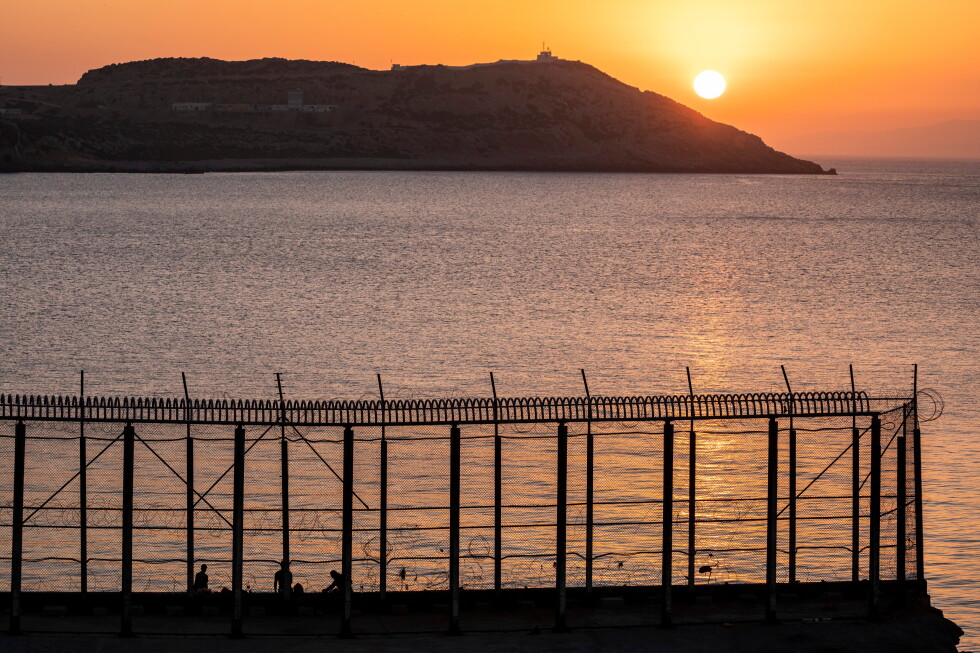
CEUTA, Spain — The small Spanish autonomous territory of Ceuta, nestled on Morocco’s northern coast, is grappling with an extraordinary crisis of irregular migration, as hundreds of migrants have taken to swimming across the short strait separating Morocco from the enclave, stretching local border security and reception infrastructure to its breaking point, local government officials confirmed Wednesday.
While summer months typically bring an uptick in maritime migration attempts due to calm, favorable weather conditions, Ceuta’s leadership says the current volume of people attempting the dangerous swim is far outside normal patterns. Over the past several days alone, more than 1,500 migrants — including both adults and unaccompanied minors — have successfully reached Ceuta’s shores via the crossing, Juan Jesús Vivas, the president of Ceuta’s regional government, told reporters. The territory’s dedicated migrant reception centers are already completely overwhelmed and operating far beyond their designed capacity, he added, with hundreds of new arrivals forced to sleep outside the facility’s walls.
Vivas also noted the deadly risks inherent in this crossing attempt: over the past year alone, at least 60 bodies of migrants who died attempting the journey have been recovered from the surrounding waters.
Spain’s national interior ministry, which holds federal oversight of border management and irregular migration tracking, declined to immediately confirm the total number of crossings or successful arrivals, instead directing media requests to the ministry’s upcoming bimonthly migration report, scheduled for public release on August 3. Speaking in an interview with Spanish broadcaster laSexta, Interior Minister Fernando Grande-Marlaska acknowledged the crisis qualifies as an “extraordinary, exceptional situation,” but stressed that authorities are responding with all permanent resources already deployed to the enclave. Spain’s Civil Guard, national Maritime Rescue Service, and the Red Cross have all been mobilized to intercept swimmers in open water and transport them to shore for processing.
Local and migrant rights activists report the vast majority of those attempting the crossing are Moroccan nationals, with a smaller contingent of Algerian migrants who had previously been residing in Morocco while organizing their journey to the European Union.
To date, there is no clear consensus on what has driven this sudden massive surge in crossings. Vivas pointed to a recent ruling from the Spanish Supreme Court, issued earlier this month, that bars authorities from immediately turning back sea arrivals without first conducting formal due process — a different standard than that applied to migrants who cross the land border by scaling Ceuta’s perimeter fence. But that explanation is disputed by independent migrant rights advocates.
Omar Naji, president of the Moroccan Association of Human Rights in Eastern Morocco, argues that most migrants planning the crossing would not have been aware of the nuanced legal ruling, making it an unlikely trigger for the surge. Naji instead drew a parallel to the 2021 Ceuta border crisis, when more than 8,000 migrants entered the enclave over just 48 hours. That event came shortly after a high-level diplomatic meeting between Spanish Prime Minister Pedro Sánchez and Algerian President Abdelmadjid Tebboune, mirroring the timing of the current surge.
The 2021 crisis was widely linked to a diplomatic dispute between Spain and Morocco: at that time, Morocco was accused of intentionally relaxing its border controls to allow mass crossings after Spain allowed Brahim Ghali, leader of the Polisario Front — the pro-independence movement seeking sovereignty for the disputed territory of Western Sahara — to enter Spain for medical treatment. That incident triggered a major diplomatic rift between Madrid and Rabat that lasted for months.
This week, however, Grande-Marlaska struck a positive note regarding relations with Morocco, saying Moroccan authorities are actively cooperating with Spanish efforts to manage the crisis. “Our relationship with the kingdom is close and based on loyalty,” he told laSexta, adding that “they are also limiting irregular departures” from their coast.
Reporting from Casablanca, Morocco, contributed by AP journalist Akram Oubachir.