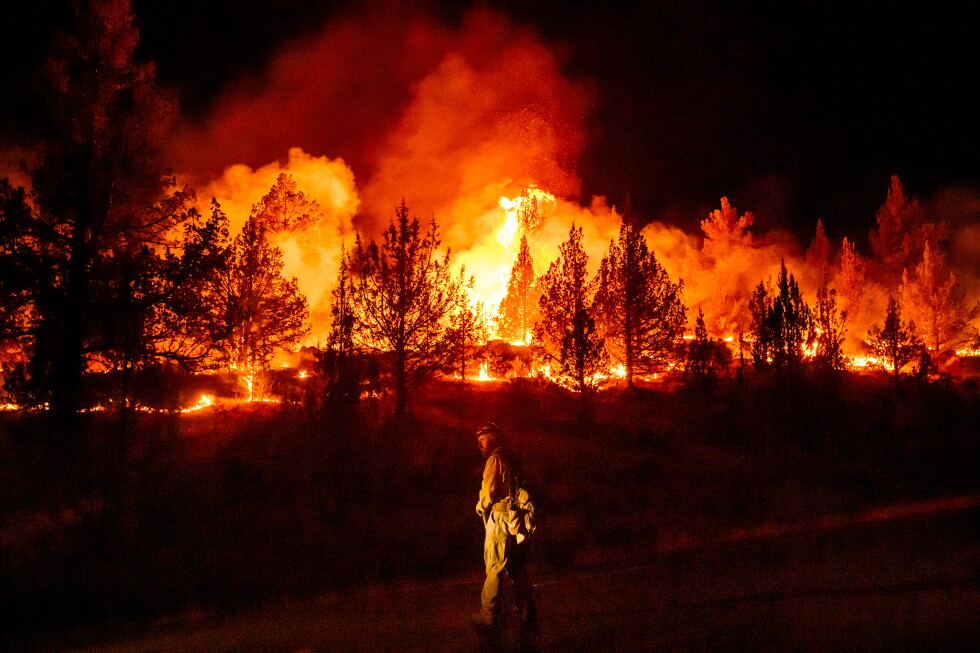
This summer, headlines from across the Northern Hemisphere have painted a grim picture of out-of-control wildfires: Spain is battling its largest recorded blaze, Canadian and American wildfire seasons are far outpacing historical averages, and thick smoke has choked entire regions, creating hazardous air quality for millions. Yet hidden beneath these alarming regional events is a counterintuitive global trend: according to the European Union’s Copernicus Climate Change Service, total global wildfire carbon emissions hit a 25-year low in 2025, driven by dramatic declines in fire activity across Africa and Asia.
Experts emphasize that these two opposing trends are not contradictory — both are rooted in human activity reshaping fire patterns across the planet. “It does seem like a paradox because we’re talking increases in fires, yet the global numbers have been going down and down. But they’re both true,” explained Mike Flannigan, a fire scientist at Canada’s Thompson Rivers University.
Regional data bears out the growing severity of wildfires in wealthy Northern Hemisphere nations. Spain’s ongoing wildfire has already scorched more than 500 square kilometers (193 square miles), making it the largest in the country’s recorded history, while total area burned across Europe is just slightly below the all-time record set earlier this decade. In North America, data from national wildfire monitoring centers shows total burned land this summer is at least 25% higher than the 10-year average, and more than double the levels seen 30 years ago. Jennifer Balch, a fire scientist at the University of Colorado, noted that wildfires across these regions are growing more extreme in every measurable way: size, intensity, spread speed, and frequency. “Extreme wildfires are on the rise globally in different parts of the world. And that’s the piece that you know has us shaking in our boots,” Balch said.
The global decline in total fire activity, by contrast, is driven by shifting human land and fire management practices across the world’s most fire-prone continents. Statistics from Copernicus show that Africa and Asia account for more than three-quarters of all global carbon emissions from vegetation burning, while North America and Europe contribute less than one-eighth. This means changes in African and Asian fire activity overwhelmingly shape global totals.
“Africa dominates the global fire activity,” said Park Williams, a water and fire scientist at the University of California, Los Angeles. “So if there’s a trend in Africa, then that’s going to be the trend in the global fire activity. In sub-Saharan Africa, fire activity over the last 25 years has gone down pretty dramatically.”
Traditionally, annual large-scale grassland fires swept across African savannas, contributing the single largest share of global burned area. But John Abatzaglou, a fire scientist at the University of California Merced, explained that expanding agriculture and residential development have reduced the scope of these traditional burns, while human-built barriers also limit the spread of any fires that do start. In Asia and the Amazon, where fire has long been used as a low-cost tool to clear forest for agricultural land, shifting demographic and land use patterns have also cut the number of intentional burns. “It really is all driven by human demographic change,” Williams said.
For the worsening extreme wildfires seen in North America and Europe, scientists say the primary human driver is climate change. Burning fossil fuels for energy has raised global average temperatures, creating hotter, drier conditions that are ideal for large, intense wildfires to ignite and spread. Five separate experts interviewed by The Associated Press confirmed this link between human-caused warming and more extreme fire activity.
Hotter temperatures don’t just dry out vegetation — they also eliminate the natural overnight recovery period that once allowed forests and firefighters to gain the upper hand on blazes. “Hotter temperatures mean humans ‘have our foot on the gas pedal’ for bigger fires, but we also have lost the brakes on fire’ because warmer and wetter nights don’t give forests — or firefighters — time to recover during darkness like they used to,” Balch said.
Flannigan added that rising temperatures pull more moisture out of soil and vegetation, turning plant material into ready fuel for fires, and have extended the length of the wildfire season across North America, especially in northern boreal forests. Where once just a handful of days each year had conditions suitable for large wildfires, now entire months carry high fire risk. When more extreme fires hit densely populated regions, they also cause far greater economic and human harm, destroying higher-value property and displacing more communities, Flannigan noted.
Abatzaglou added that while North America has a long history of successful aggressive fire suppression, climate change has made blazes so intense and frequent that traditional suppression strategies are no longer sufficient to keep them under control.
Looking ahead, scientists warn that the developing strong El Niño event will likely worsen wildfire activity in coming months across tropical regions. El Niño, a cyclical weather pattern marked by warmer ocean surface temperatures in the central and eastern Pacific, typically creates drier, hotter conditions that favor more intense wildfires across tropical zones. “The most predictable outcome of El Niño is going to be more tropical fire, specifically tropical forests,” Williams said, noting that increased fire activity is likely in the Amazon, Southeast Asia, and the Western Pacific.
While El Niño is expected to bring more rain and reduce the risk of large forest fires in the western United States, Abatzaglou noted that increased rainfall can also spur extra grass growth in arid desert regions, creating extra fuel that can ignite into devastating grass fires later — a pattern that contributed to major destructive blazes in Los Angeles in 2025 and Hawaii in 2023.
Regardless of El Niño’s impact, scientists agree that communities across North America and Europe will need to improve long-term wildfire planning and adaptation to address the worsening trend of extreme blazes. Key strategies include intentional prescribed burns to reduce excess built-up vegetation that can fuel large out-of-control fires. “It’s not a question of whether our landscapes are going to burn, it’s the question of when they’re going to burn,” Balch said.
This reporting on climate and wildfires from The Associated Press receives financial support from multiple private foundations, with AP retaining full editorial control over all content.